Small Chicken Feet Peeling Machine
The CFP-101 small chicken feet peeling machine strips the yellow skin and toe pads from chicken feet at 100-300 kg per hour.
This site uses cookies for analytics and to improve your experience. By clicking Accept, you consent to our use of cookies. Learn more in our privacy policy.

The CFP-101 small chicken feet peeling machine strips the yellow skin and toe pads from chicken feet at 100-300 kg per hour.
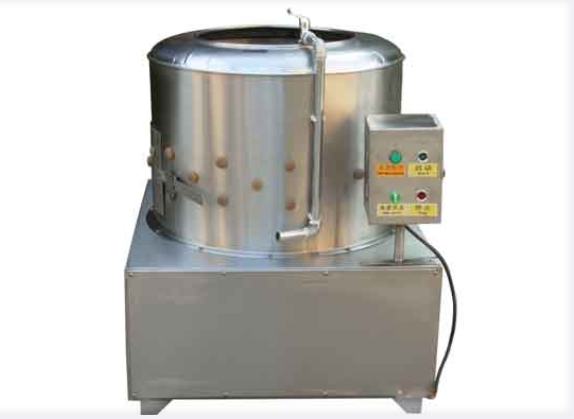
Sample output from the Small Chicken Feet Peeling Machine. Ask us for real production photos matched to your exact product and capacity.

The CFP-101 small chicken feet peeling machine strips the yellow skin and toe pads from chicken feet at 100-300 kg per hour. Compact 95 kg tabletop design with single-phase 220V power supply.
| Model | Capacity | Configuration |
|---|---|---|
| CFP-101 Compact | 100-300 kg/h | For small workshops and restaurant supply chains. Single-phase 220V compatible, 95 kg weight. |
| CFP-001 Standard | 300-800 kg/h | Mid-scale poultry plants. 800 mm abrasive roller, 180 kg weight. |
| CFP-201 Industrial | 800-1,500 kg/h | Industrial slaughter lines. 1,200 mm roller, SUS316L option for Japan export. |
Typical values — each model is configured to your product, cut size, and line speed.
Chicken feet processing plants removing the outer yellow skin on smaller feet ahead of cooking, freezing, or export packing. For the full range, see the processing hub.
Size by feet weight per hour. The compact peeler does 100 to 300 kg per hour in a 95 kg tabletop format on single-phase 220V, suited to small workshops and restaurant supply chains. The standard model covers 300 to 800 kg per hour with an 800 mm roller, and the industrial model reaches 800 to 1,500 kg per hour on a 1,200 mm roller.
Recommended, not mandatory. A 60-second dip in 65°C water lifts skin removal from about 95% to 99%, and the difference shows up as rework when you skip it. If you scald, budget a tank and water heating alongside the peeler. Without scalding the machine still runs, but expect more yellow skin left on the pads.
Start with the abrasive roller. Typical service life is 1,500 to 2,000 hours, about 12 months of single-shift use, and a worn roller is the most common cause of falling removal rates. Then verify the scald, because cool water leaves skin anchored. If you are running duck or very large feet, the larger roller option is the fix.
The spray system draws roughly 50 L of clean water per hour, and the recirculation option cuts that to about 15 L per hour, which matters where water is metered. The abrasive roller is the only significant consumable, replaced in minutes with basic tools. Daily rinse-down of the frame keeps residue from setting.
The standard flow is scald, peel, cut, then blast freeze, and the peeler sits between the scald tank and the cutter. It ships fully assembled with a 10-minute setup video, so commissioning is a matter of placing it, connecting water, and powering it. Footprint is small enough for existing prep rooms.
Yes. We provide installation and commissioning support, and 12 months of after-sales service, including spare parts help and technical response.

 7 * 24 Support
 Remote Support
 Global Coverage