Large Chicken Feet Peeling Machine
The CFP-201 large chicken feet peeling machine processes 800 to 1,500 kg of chicken feet per hour — the workhorse of industrial poultry slaughter by-product recovery lines.
This site uses cookies for analytics and to improve your experience. By clicking Accept, you consent to our use of cookies. Learn more in our privacy policy.

The CFP-201 large chicken feet peeling machine processes 800 to 1,500 kg of chicken feet per hour — the workhorse of industrial poultry slaughter by-product recovery lines.
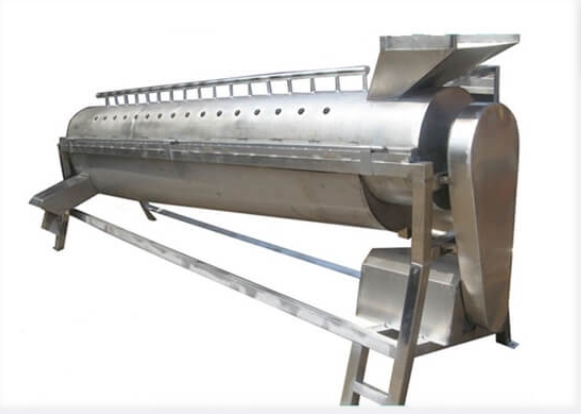
Sample output from the Large Chicken Feet Peeling Machine. Ask us for real production photos matched to your exact product and capacity.
The CFP-201 large chicken feet peeling machine processes 800 to 1,500 kg of chicken feet per hour — the workhorse of industrial poultry slaughter by-product recovery lines. Three-phase 380V motor, integrated continuous water spray, and 98% skin-removal rate.
| Model | Capacity | Configuration |
|---|---|---|
| CFP-101 Compact | 100-300 kg/h | For small workshops. Single-phase 220V, 95 kg. |
| CFP-001 Standard | 300-800 kg/h | Mid-scale poultry plants. 800 mm abrasive roller. |
| CFP-201 Industrial | 800-1,500 kg/h | 1,200 mm abrasive roller. SUS316L option for Japan MAFF export. |
Typical values — each model is configured to your product, cut size, and line speed.
Chicken feet processing plants removing the outer yellow skin on larger feet ahead of cooking, freezing, or export packing. For the full range, see the processing hub.
The industrial peeler processes 800 to 1,500 kg of feet per hour on a 1,200 mm abrasive roller with a three-phase 380V motor, and it needs an upstream scald tank sized to the same rate, since scalding at 60 to 65°C for 60 to 90 seconds is the precondition for the 98% skin removal the machine delivers.
No. Fully frozen feet at -18°C damage the abrasive roller and ruin removal quality. Pre-thaw to 0°C minimum before peeling. If your operation receives frozen feet, plan thawing capacity and time into the schedule, then scald, then peel. Fresh or chilled feet from the processing line feed the machine directly.
The OEM roller runs approximately USD 380 to 450 and a swap takes about 30 minutes, so most plants change it on a planned schedule rather than waiting for removal rates to fall. One spare roller in stock removes the risk of line downtime. Roller life depends on feed volume and how well frozen product is kept out.
Roughly 200 to 300 L per hour with the standard spray. The recirculation option cuts fresh water demand to about 50 L per hour by cleaning and reusing spray water, which both lowers the bill and reduces the load on your drainage. The discharge carries skin particles, so plan screening before it leaves the room.
The standard build suits most poultry processing plants, and an all-contact SUS316L version is available for plants supplying the EU and Japan, where buyers and inspectors expect the higher alloy. The machine also connects to existing line heights with integration flanges, so an export upgrade usually means the new unit plus a flange check rather than line surgery.
Yes. We provide installation and commissioning support, and 12 months of after-sales service, including spare parts help and technical response.

 7 * 24 Support
 Remote Support
 Global Coverage