Industrial Meatball Forming Machine
The MBF-001 meatball forming machine produces uniform solid meatballs at 150-300 kg per hour.
This site uses cookies for analytics and to improve your experience. By clicking Accept, you consent to our use of cookies. Learn more in our privacy policy.

The MBF-001 meatball forming machine produces uniform solid meatballs at 150-300 kg per hour.
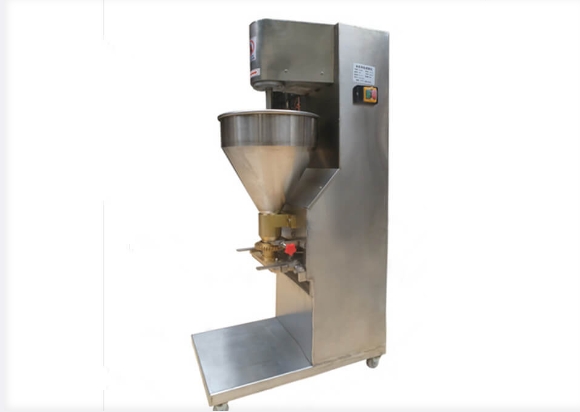
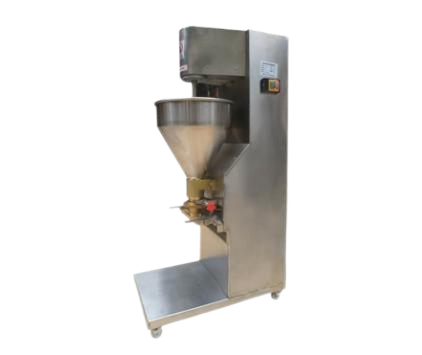
Sample output from the Industrial Meatball Forming Machine. Ask us for real production photos matched to your exact product and capacity.
The MBF-001 meatball forming machine produces uniform solid meatballs at 150-300 kg per hour. Standard sizes 16/22/25 mm — suitable for chicken meatballs, fish flesh balls, shrimp balls, beef meatballs, and vegetarian varieties. SUS304 stainless throughout with quick-release parts for fast sanitation.
| Model | Capacity | Configuration |
|---|---|---|
| MBF-101 Compact | 80-150 kg/h | Restaurant chains, supermarket food courts. 16/22 mm molds. 0.37 kW. |
| MBF-001 Standard | 150-250 kg/h | Meat processors. 16/22/25 mm molds. ±1.5 g tolerance. 0.75 kW. |
| MBF-201 Industrial | 250-350 kg/h | Frozen-meatball plants. 16/22/25 mm + custom. ±1 g tolerance. 1.1 kW. |
Typical values — each model is configured to your product, cut size, and line speed.
Frozen meatball producers forming consistent balls for retail bags and foodservice. For the full range, see the processing hub.
The standard model forms 150-250 kg per hour at plus or minus 1.5 g per ball, and the industrial model runs 250-350 kg per hour at plus or minus 1 g for retail-bag programs where weight consistency is the spec. Compact units cover 80-150 kg per hour for food courts. Tolerance matters more than headline speed for retail packing.
The machine needs fine-emulsified batter from a bowl chopper, not coarse-ground meat. Coarse particles will not bind into a smooth surface and the balls crack. Moisture is the second lever: 10-15% ice water gives the best forming, below 8% the balls crack, above 20% they flatten. Fix the batter and the former holds its tolerance.
Usually hopper cavitation, air drawn into the batter. Refill before the hopper level drops below 30% and the rate holds. Second check: forming head clogs, which is why the routine includes a head inspection every 2 hours. Between those two habits, throughput stays flat across the shift, and both checks fit inside normal operator rounds.
Standard molds are 16, 22, and 25 mm, and most plants keep all three on a quick rack, since a swap takes 30 seconds with no tools. Custom sizes are available for the industrial model. Molds are the only meaningful spare: one full set on the shelf covers size changes and damage.
It forms raw balls only. The standard pairing is a 90°C water blanching tank to set the surface, then a blast freezer for frozen retail product. Chilled programs skip the freezer for a chilled chain instead. We confirm the discharge height against your blancher infeed so the balls transfer without handling.
Yes. We provide installation and commissioning support, and 12 months of after-sales service, including spare parts help and technical response.

 7 * 24 Support
 Remote Support
 Global Coverage