Industrial Fish Flesh Separator
The FDB-001 fish flesh separator extracts boneless fish mince through a stainless steel rotary drum with screening holes — separating flesh from bones, skin, and scales.
This site uses cookies for analytics and to improve your experience. By clicking Accept, you consent to our use of cookies. Learn more in our privacy policy.

The FDB-001 fish flesh separator extracts boneless fish mince through a stainless steel rotary drum with screening holes — separating flesh from bones, skin, and scales.
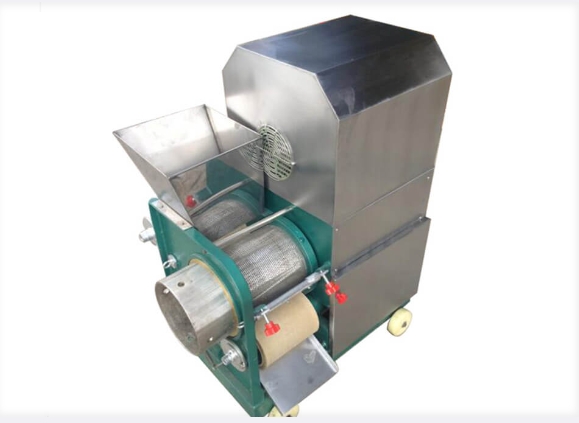
Sample output from the Industrial Fish Flesh Separator. Ask us for real production photos matched to your exact product and capacity.

The FDB-001 fish flesh separator extracts boneless fish mince through a stainless steel rotary drum with screening holes — separating flesh from bones, skin, and scales. Throughput from 180 to 1,500 kg per hour across 5 model sizes. Extracted flesh is ready for fish balls, surimi, fish noodles, fish gelatin, and fish dumplings.
| Model | Capacity | Configuration |
|---|---|---|
| FDB-150 Compact | 180 kg/h | Small restaurants, fish-ball shops. General steel. 1.5 kW. |
| FDB-200A Standard | 250 kg/h | Mid-scale. General steel construction. 2.2 kW. |
| FDB-200B SUS304 | 250 kg/h | Same capacity as 200A but SUS304 stainless. 2.2 kW. Export grade. |
Typical values — each model is configured to your product, cut size, and line speed.
Surimi and fish paste plants separating flesh from bone and skin. For the full range, see the processing hub.
Set expectations by input condition. Whole round fish yield 60-70% boneless mince; deheaded and gutted fish yield 75-85%; bony species such as mackerel and sardines run lower at 50-55%. If your number sits below these bands, drum hole size and feed consistency are the first things to check, not the machine.
It sets texture. The 3 mm drum is standard and suits most fish-ball applications. The 5 mm drum gives a coarser texture for fish sticks and surimi blocks. The 2 mm drum produces very fine paste for fish sausage. Drums are interchangeable, so plants running two textures hold both and swap by product.
Usually the highest-value use of the machine. Frames left after filleting still carry 25-35% boneless mince that otherwise goes to fish meal at commodity price. Separating that mince and selling it into fish-ball or surimi products upgrades the same raw material one value step, which is why frame recovery programs pay for the machine quickly.
Bones, skin, and scales discharge through a separate chute at 30-40% of input weight, kept apart from the mince stream. The material suits fish-meal plants or pet-food raw material, and most sites route it by conveyor or cart straight to collection. Clean separation of the two streams is what makes both saleable.
Mechanically it works on chicken frames, pork backfat, and beef trimmings, with thorough cleaning between species. The practical constraint is HACCP: most plans require one machine dedicated per species, so plants running fish and meat buy two separators rather than sharing one. Model choice matters too, with SUS304 builds for export-grade fish lines.
Yes. We provide installation and commissioning support, and 12 months of after-sales service, including spare parts help and technical response.

 7 * 24 Support
 Remote Support
 Global Coverage