Industrial Vacuum Meat Tumbler
The VMC-001 vacuum meat tumbler processes pickled meat — beef, chicken, pork, seafood — through a rotating drum with internal steel paddles.
This site uses cookies for analytics and to improve your experience. By clicking Accept, you consent to our use of cookies. Learn more in our privacy policy.

The VMC-001 vacuum meat tumbler processes pickled meat — beef, chicken, pork, seafood — through a rotating drum with internal steel paddles.
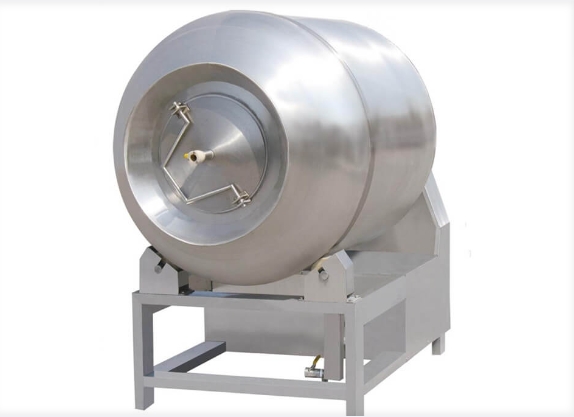
Sample output from the Industrial Vacuum Meat Tumbler. Ask us for real production photos matched to your exact product and capacity.

The VMC-001 vacuum meat tumbler processes pickled meat — beef, chicken, pork, seafood — through a rotating drum with internal steel paddles. Mechanical massaging under vacuum absorbs brine 30-50% faster than static marinating. Produces moist, flavorful, tender products in 20-40 minutes per batch.
| Model | Capacity | Configuration |
|---|---|---|
| VMC-101 Compact | 100 kg/batch | Artisanal delis, restaurant chains. 200L drum. 0.75 kW. |
| VMC-001 Standard | 300 kg/batch | Mid-scale meat plants. 600L drum. 2.2 kW. 0.06-0.08 MPa vacuum. |
| VMC-201 Industrial | 1,000 kg/batch | High-volume processors. 2,000L drum. 5.5 kW. Bidirectional rotation. |
Typical values — each model is configured to your product, cut size, and line speed.
Marination lines tumbling brine and seasoning into meat under vacuum for an even cure. For the full range, see the processing hub.
Size by batch, not by hour, because tumbling is a batch process. The compact drum takes 100 kg, the standard 300 kg in a 600 L drum at 0.06-0.08 MPa vacuum, and the industrial 1,000 kg with bidirectional rotation. Count the batches your schedule needs per day, including load and unload, and that sets the drum.
20-40 minutes typical, by species: chicken 20-25, pork 25-30, beef 30-40. Longer is not better, because over-tumbling breaks muscle fibers and turns meat mushy. The three signs of a good tumble are uniform color with no white spots, a sticky surface from extracted protein, and meat that is tender but springs back when pressed.
Yes, the two steps compound. Injection delivers an 8-15% yield lift up front into solid muscle, and vacuum tumbling adds another 5-10% by massaging brine deep into the meat, for a combined 15-25%. Vacuum itself opens the muscle structure and lifts absorption 30-50% over atmospheric tumbling, while cutting oxidation at the same time.
The vacuum pump oil change is the anchor item: every 1,000 operating hours, about 6 months single shift, using food-grade vacuum pump oil only. Around that, daily rinse of the drum interior and a weekly check of the door seal cover the routine. Seal condition matters, since a leaking door shows up as slow vacuum pull-down.
Yes, just run rotation with the vacuum pump off. Seafood and marinated wings benefit, because full vacuum can crush delicate tissue, and plain rotation still works seasoning into the product. For everything sturdier, vacuum is the setting that pays, and the machine returns to vacuum duty with no hardware change.
Yes. We provide installation and commissioning support, and 12 months of after-sales service, including spare parts help and technical response.

 7 * 24 Support
 Remote Support
 Global Coverage