Industrial Brush Potato Washing Peeling Machine
The BPP-001 uses 8-12 rotating nylon brushes to wash and peel potatoes, carrots, beets, and cassava in a single pass.
This site uses cookies for analytics and to improve your experience. By clicking Accept, you consent to our use of cookies. Learn more in our privacy policy.

The BPP-001 uses 8-12 rotating nylon brushes to wash and peel potatoes, carrots, beets, and cassava in a single pass.

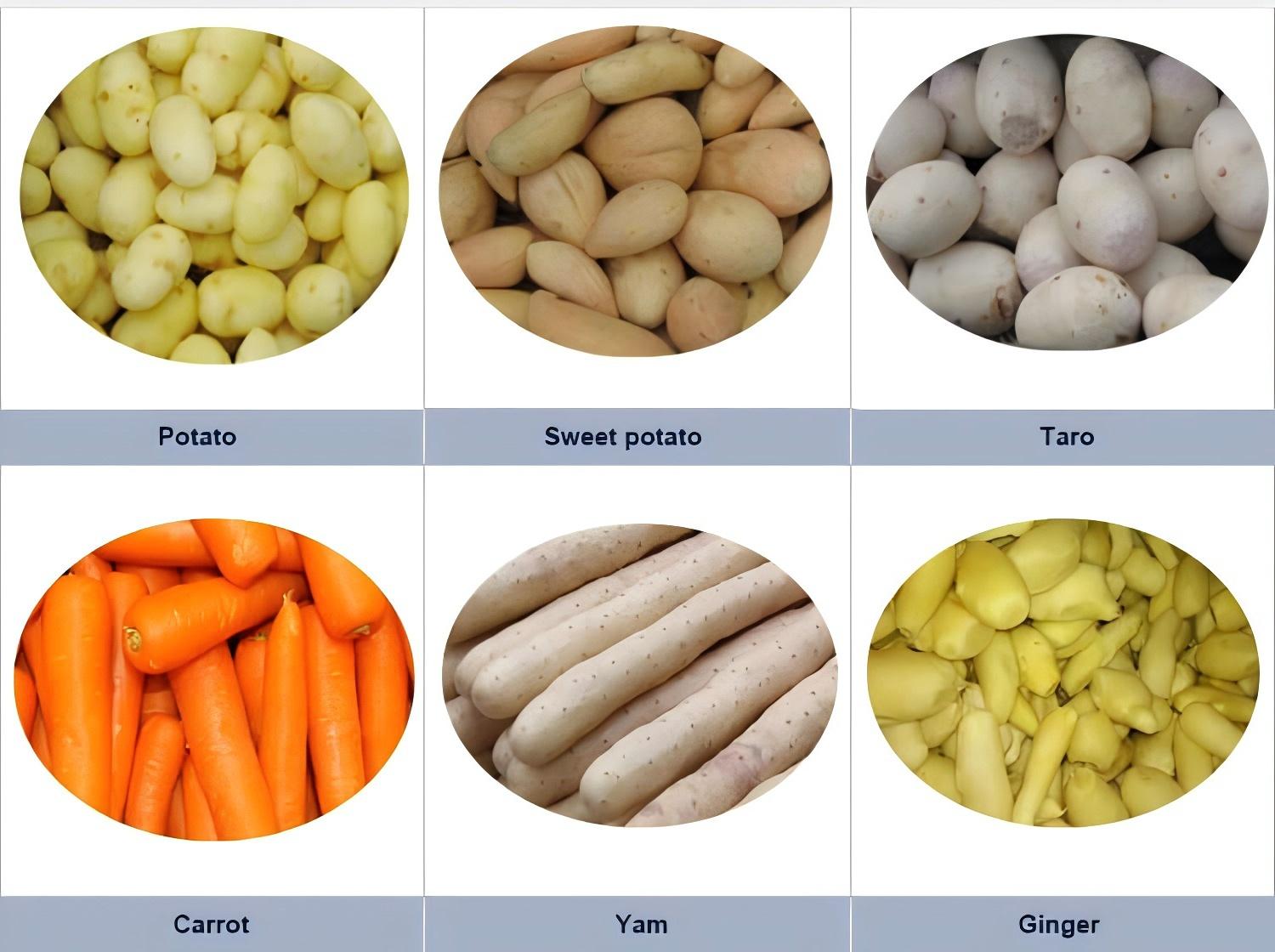
Sample output from the Industrial Brush Potato Washing Peeling Machine. Ask us for real production photos matched to your exact product and capacity.

The BPP-001 uses 8-12 rotating nylon brushes to wash and peel potatoes, carrots, beets, and cassava in a single pass. 500-3,000 kg/h. Gentler than carborundum — preferred for premium produce markets.
| Model | Capacity | Configuration |
|---|---|---|
| BPP-101 Compact | 500 kg/h | 6 brushes. Small plants. 0.75 kW. |
| BPP-001 Standard | 1,500 kg/h | 8 brushes. Mid-scale. 2.2 kW. |
| BPP-201 Industrial | 3,000 kg/h | 12 brushes. Industrial. 4.0 kW. Adjustable brush pressure. |
Typical values — each model is configured to your product, cut size, and line speed.
Fresh-cut potato lines, starch-plant prep, and packhouses washing and peeling root vegetables continuously. For the full fresh-produce range, see the fruit and vegetable processing hub.
Six brushes on the compact frame wash and peel 500 kg/h at 0.75 kW. The standard eight-brush machine runs 1,500 kg/h at 2.2 kW, and the twelve-brush industrial unit reaches 3,000 kg/h at 4.0 kW with adjustable brush pressure. Potato, carrot, beet, and cassava process in a single pass, and the water spray cleans as brushes peel.
Brushes are gentler with lower peel loss but a longer cycle time; carborundum is more aggressive, faster, and gives up slightly more flesh. Premium produce markets generally choose brush peeling for appearance and yield. Most operators run this machine as a combined washer-peeler in one pass, which removes a whole process step from the line.
Brush life runs 1,500 to 2,000 hours, about 12 months on a single shift. Replacement brushes cost USD 12 to 18 each, and the machine carries 6 to 12 depending on model, so a full set is a routine consumable budget line. Inspect monthly for worn or glazed filament, since worn brushes quietly raise peel loss before they fail.
Yes. Brush hardness swaps between soft, medium, and hard in about 10 minutes with no tools. Soft brushes take kiwi, where peel removal runs 92% or better, medium suits standard potatoes and carrots, and hard handles aggressive root skin. Cassava is the exception: its thick woody skin needs two passes, typically this machine followed by a screw peeler.
It sits after elevating and before cutting, cooking, or packing, doing wash and peel in one station. Fresh-cut potato lines, starch plant prep, and packhouse root lines are the typical placements. Infeed and discharge match standard elevators, so it drops into existing layouts. Tell us your upstream soil load, since heavy dirt may justify a pre-rinse stage.
Yes. We provide installation and commissioning support, and 12 months of after-sales service, including spare parts help and technical response.

 7 * 24 Support
 Remote Support
 Global Coverage