Industrial Almond Peeling Machine
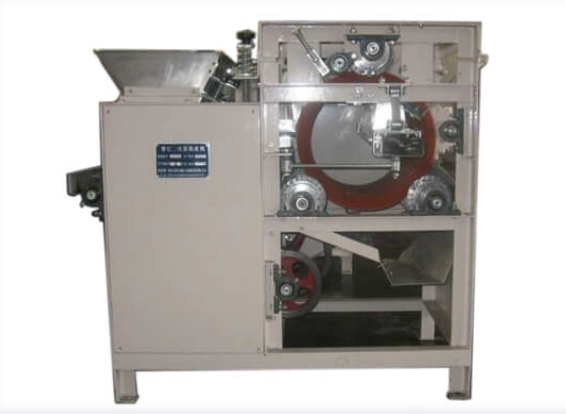
The ALP-001 blanches and peels almonds, removing the brown skin after hot-water blanching.
This site uses cookies for analytics and to improve your experience. By clicking Accept, you consent to our use of cookies. Learn more in our privacy policy.

The ALP-001 blanches and peels almonds, removing the brown skin after hot-water blanching.
Sample output from the Industrial Almond Peeling Machine. Ask us for real production photos matched to your exact product and capacity.
The ALP-001 blanches and peels almonds, removing the brown skin after hot-water blanching. 200-800 kg/h. Rubber roller friction achieves 95%+ peel rate for premium white almond production.
| Model | Capacity | Configuration |
|---|---|---|
| ALP-101 | 200 kg/h | Small almond processors. 0.75 kW. |
| ALP-001 | 500 kg/h | Mid-scale. 1.5 kW. 95% peel rate. |
| ALP-201 | 800 kg/h | Industrial. 2.2 kW. Continuous blanch + peel. |
Typical values — each model is configured to your product, cut size, and line speed.
Almond paste and marzipan producers blanching and peeling kernels ahead of grinding. For the full range, see the processing hub.
Blanching comes first: hot water at 90 to 95°C for 2 to 3 minutes softens the skin so the rollers can rub it free. Under-blanched almonds are the main cause of a low peel rate, because the skin simply will not release. Treat blancher and peeler as one step in your sequence, and the 95%+ peel rate follows when water temperature is held steady.
Yes. California varieties peel best, which is why most volume blanching lines run on them. Other varieties still work, with the roller pressure recalibrated for their skin adherence. Because pressure also governs breakage, calibrated roller pressure keeps broken kernels under 3%. If you run mixed origins, peel a test batch per lot before committing it, and record the setting that worked.
An air separator lifts the freed skins off the kernel stream and collects them separately. The skins are suitable for animal feed, so there is a small by-product value rather than waste. Keeping skins air-separated also protects the kernel stream, since skins carried forward show up as dark specks in almond paste and marzipan, exactly where buyers reject them.
Yes, on the same principle: hazelnuts blanch first and then pass the friction rollers. The setup differs in roller gap and pressure for the rounder kernel. If hazelnut paste is part of your program alongside almond, one machine covers both with a settings change rather than a second purchase. Ask us to confirm the changeover procedure for your two nuts.
Daily washing, since blanching is a wet process and residue sets hard, plus a monthly check on roller condition with an eye to replacement timing. Rubber rollers are wear parts: as they smooth out, peel rate falls before anything visibly breaks. Keeping one spare roller set available means the swap happens on your schedule instead of the machine’s.
Yes. We provide installation and commissioning support, and 12 months of after-sales service, including spare parts help and technical response.

 7 * 24 Support
 Remote Support
 Global Coverage