Industrial Broad Bean Cutting Machine
The BBC-001 slits broad beans (fava beans) for frying — creates the characteristic split for crispy fried broad bean snacks.
This site uses cookies for analytics and to improve your experience. By clicking Accept, you consent to our use of cookies. Learn more in our privacy policy.

The BBC-001 slits broad beans (fava beans) for frying — creates the characteristic split for crispy fried broad bean snacks.
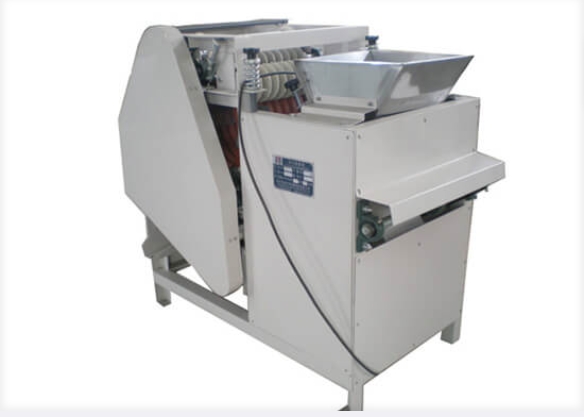
Sample output from the Industrial Broad Bean Cutting Machine. Ask us for real production photos matched to your exact product and capacity.
The BBC-001 slits broad beans (fava beans) for frying — creates the characteristic split for crispy fried broad bean snacks. 200-800 kg/h.
| Model | Capacity | Configuration |
|---|---|---|
| BBC-101 | 200 kg/h | Small snack producers. 0.55 kW. |
| BBC-001 | 500 kg/h | Mid-scale fried broad bean plants. 1.1 kW. |
| BBC-201 | 800 kg/h | Industrial. 1.5 kW. Auto-feed. |
Typical values — each model is configured to your product, cut size, and line speed.
Fried broad bean snack producers slitting beans ahead of frying. For the full range, see the processing hub.
Dried favas are too hard and brittle to slit cleanly, so a soak of 4 to 8 hours rehydrates them until the blade parts them without shattering. This is what underpins the 92 to 95% usable yield. Under-soaked beans crack and crumble at the blade; over-soaked ones go soft and slit raggedly. Soak time is a recipe parameter worth locking down per bean lot.
It depends on the finished snack. A single slit is the standard cut, the classic fried broad bean with the characteristic split that fries into a crisp butterfly. Cross-cutting produces the smaller, crispier fried snack pieces. Blade sets swap in about 5 minutes with no tools, so if your range includes both products, one machine covers both cuts without a second line.
Yes, chickpeas run with a blade adjustment for their smaller, rounder shape, which makes the machine useful across a fried legume snack range. Expect to re-set blade gap and feed guides when switching beans, and run a test pass before committing a lot. Keep the settings noted per bean type so operators return to proven cuts instead of re-trialing.
Between 92 and 95% of feed emerges as usable slit beans, with the balance lost to beans too small to slit, split wrongly, or crushed. Sorting your raw beans by size before soaking lifts the top end of that band, because uniformly sized beans present to the blade more consistently. The figure is worth tracking per lot to catch blade wear early.
A daily wash, mandatory with soaked beans, and a monthly blade inspection complete the schedule. Blades are the wear part and the 5-minute tool-free swap keeps replacement trivial. Judge blade sharpness by cut quality rather than a calendar: ragged slit edges mean the edge is gone. Bearings and drive are light duty at 0.55 to 1.5 kW across the range.
Yes. We provide installation and commissioning support, and 12 months of after-sales service, including spare parts help and technical response.

 7 * 24 Support
 Remote Support
 Global Coverage