Industrial Sorting Machine for Peanuts and Almonds
The SPA-001 optical sorter removes defective, discolored, and foreign-material nuts at 1,000-3,000 kg/h.
This site uses cookies for analytics and to improve your experience. By clicking Accept, you consent to our use of cookies. Learn more in our privacy policy.

The SPA-001 optical sorter removes defective, discolored, and foreign-material nuts at 1,000-3,000 kg/h.
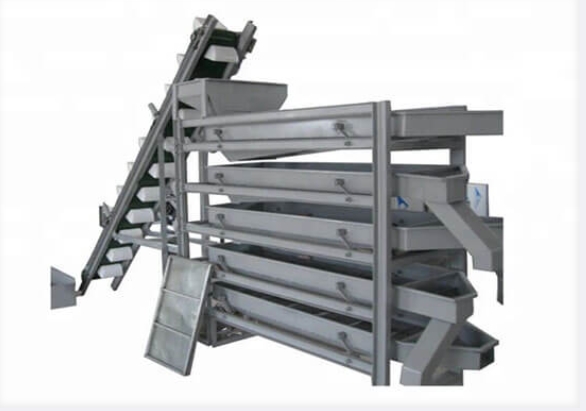
Sample output from the Industrial Nut Optical Sorting Machine. Ask us for real production photos matched to your exact product and capacity.

The SPA-001 optical sorter removes defective, discolored, and foreign-material nuts at 1,000-3,000 kg/h. CCD camera + air-jet ejector. 99.5% accuracy.
| Model | Capacity | Configuration |
|---|---|---|
| SPA-101 | 1,000 kg/h | Single camera. Small operations. |
| SPA-001 | 2,000 kg/h | Dual CCD camera. Mid-scale. 99.5% accuracy. |
| SPA-201 | 3,000 kg/h | Quad camera + shape + size detection. Industrial. |
Typical values — each model is configured to your product, cut size, and line speed.
Nut plants removing discolored and defective kernels optically ahead of packing. For the full range, see the processing hub.
Three families: color defects such as mold and discoloration, shape defects such as broken and shriveled kernels, and foreign material including stones, shell fragments, and glass. Screens and graders handle size only, so this is the stage where the defects that trigger customer rejections actually leave the stream. Accuracy runs 99.5% on color, 98% on shape, and 99% on foreign material.
About 30 seconds, because switching nut types is a camera profile change rather than a mechanical reset. Each profile carries its own color baselines, so an almond lot does not inherit peanut rejection thresholds. For plants running mixed schedules, this is what makes one sorter serve both products without scheduling batches around a long changeover window.
The air-jet ejectors need about 0.5 cubic meters per minute at 0.6 MPa from your compressed air system, so most plants connect an existing compressor with a dryer and filter. Clean, dry air matters here: moisture in ejector valves is a common cause of misfires and premature valve wear. Size the feed with margin, since starving the ejectors costs sorting accuracy.
Lanes run at roughly 750 kg/h each. The dual-camera mid-scale model handles about 2,000 kg/h, and the four-lane SPA-201 reaches 3,000 kg/h with shape and size detection added. One lane per 750 kg/h of realistic peak intake is the planning rule, and remember that foreign-material-heavy lots deliberately slow feed to keep rejection accuracy up.
After final cleaning and before packing, so the last thing that touches the product stream is a machine verifying it. Optical sorting is wasted on uncleaned product, since shells and dust trigger rejections of good kernels. Position it where an operator can reach the optical glass for cleaning, and plan accept and reject outlets that match your packing arrangement downstream.
Yes. We provide installation and commissioning support, and 12 months of after-sales service, including spare parts help and technical response.

 7 * 24 Support
 Remote Support
 Global Coverage