Industrial Peanut Kernel Splitting Machine
The PSK-001 splits peanut kernels into halves with 96% accuracy.
This site uses cookies for analytics and to improve your experience. By clicking Accept, you consent to our use of cookies. Learn more in our privacy policy.

The PSK-001 splits peanut kernels into halves with 96% accuracy.
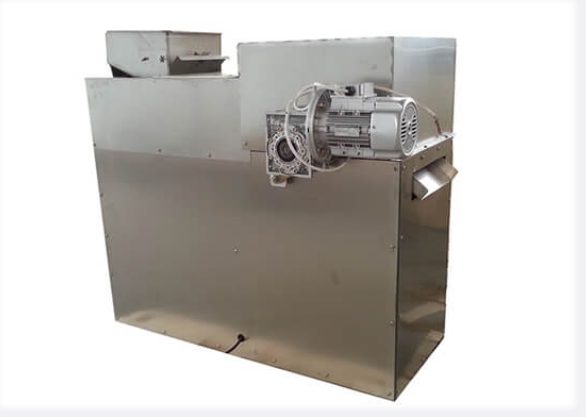
Sample output from the Industrial Peanut Kernel Splitting Machine. Ask us for real production photos matched to your exact product and capacity.
The PSK-001 splits peanut kernels into halves with 96% accuracy. 200-800 kg/h. For peanut butter, candy, and baking industries.
| Model | Capacity | Configuration |
|---|---|---|
| PSK-101 | 200 kg/h | Small nut processors. 0.55 kW. |
| PSK-001 | 500 kg/h | Mid-scale. 1.1 kW. 96% split accuracy. |
| PSK-201 | 800 kg/h | Industrial. 1.5 kW. Auto-feed. |
Typical values — each model is configured to your product, cut size, and line speed.
Peanut processors splitting kernels into halves for snacks, bakery, and export. For the full range, see the processing hub.
96 to 97% clean halves with under 3% broken kernels on properly prepared feed, which is the grade candy and baking buyers specify. Halves for brittle and cluster products need uniformity above all, and a consistent split is what delivers it. The 96% accuracy holds when kernels are soaked and the rollers are in good condition.
A warm water soak of around 30 minutes before feeding. Soaked kernels part along their natural split line; dry kernels shear unevenly and raise the broken rate. Consistency matters too: mixed-moisture kernels split at different quality levels within one run, so soak uniformly and drain before feeding. This single preparation step is the difference between 96% clean halves and a disappointing lot.
With roller adjustment only, no part changes, so an almond batch follows a peanut batch after a settings change and a clean-down between the two nuts. That makes the machine useful for plants whose peanut and almond volumes do not each justify a dedicated splitter. Verify the first output after switching, since almond kernels run larger and need a different gap.
Compare your daily kernel throughput with shift length: 200 kg/h over a short single shift suits small processors, 500 kg/h covers mid-scale, and 800 kg/h with auto-feed serves plants splitting continuously. Power draw is small across all three, 0.55 to 1.5 kW. If you also peel or roast in-house, match the splitter’s rate to that equipment so kernels flow without buffering.
The rollers. Monthly inspection catches wear, and a roller change takes about 5 minutes with no tools, so replacements are an operator task rather than a service event. Worn rollers announce themselves through a drifting broken rate before any visible damage. Auto-feed models add a feed mechanism worth a quick weekly check. Otherwise it is simple mechanical duty with no consumables beyond rollers.
Yes. We provide installation and commissioning support, and 12 months of after-sales service, including spare parts help and technical response.

 7 * 24 Support
 Remote Support
 Global Coverage