Industrial Palm Nut Peeling Machine
The PLP-001 removes the fibrous outer husk from palm nuts.
This site uses cookies for analytics and to improve your experience. By clicking Accept, you consent to our use of cookies. Learn more in our privacy policy.

The PLP-001 removes the fibrous outer husk from palm nuts.
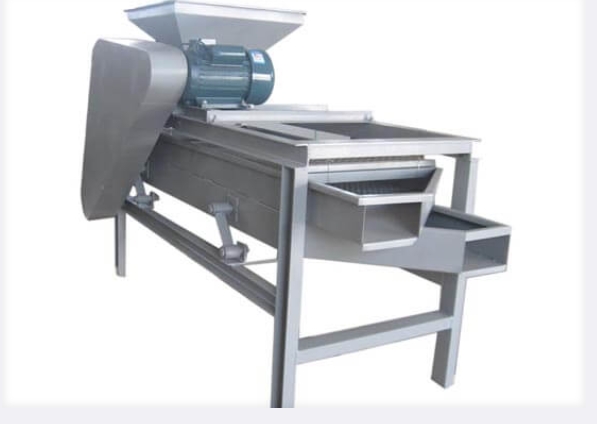
Sample output from the Industrial Palm Nut Peeling Machine. Ask us for real production photos matched to your exact product and capacity.
The PLP-001 removes the fibrous outer husk from palm nuts. 300-1,200 kg/h. Specialized for palm oil mill by-product recovery lines.
| Model | Capacity | Configuration |
|---|---|---|
| PLP-101 | 300 kg/h | Small palm oil mills. 1.5 kW. |
| PLP-001 | 600 kg/h | Mid-scale. 2.2 kW. Fiber removal + washing. |
| PLP-201 | 1,200 kg/h | Industrial. 3.0 kW. Continuous feed. |
Typical values — each model is configured to your product, cut size, and line speed.
Palm oil mills and kernel plants shelling palm nuts ahead of kernel separation. For the full range, see the processing hub.
It sits in by-product recovery, after oil extraction, taking the palm nuts the mill would otherwise treat as waste and stripping the fibrous mesocarp off them. The cleaned nuts then hold value for kernel processing. This machine covers husk removal only; for cracking the shells underneath, the NCP-701 cracking plant is the matching next step.
All three commercial varieties, Dura, Tenera, and Pisifera, process on the same settings range, though their differing shell and fiber thicknesses may call for roller adjustment between lots. Tenera, the common plantation hybrid, runs the heaviest volumes in practice. Whatever the mix arriving from the mill, a short test on each lot confirms the setting before you commit throughput.
The spray wash system uses around 100 L/h, so connections are modest, but plan the drains: the wash water carries fiber and residue. Fiber itself is discharged separately, and it is suitable for biomass fuel, which most mills value as boiler feed. Separating the fiber stream at the machine keeps both the water loop and the fuel by-product clean and sellable.
Husk removal and shell cracking are different mechanical problems. Rollers here are built to strip soft fibrous material without damaging the nut inside; a cracker needs controlled impact to break a hard shell without crushing the kernel. Combining the two would compromise both tasks. The practical line is this machine for fiber, then the NCP-701 plant for the shells.
A daily wash, essential with fiber and oil residue that sets hard, and a monthly roller inspection for wrapping and wear, since palm fiber is abrasive. Mills running high hours should keep a spare roller set on hand. Power draw runs 1.5 to 3.0 kW across the range, small compared with mill equipment, so this unit is cheap to keep in service.
Yes. We provide installation and commissioning support, and 12 months of after-sales service, including spare parts help and technical response.

 7 * 24 Support
 Remote Support
 Global Coverage