Industrial HFFS Horizontal Form Fill Seal
Horizontal flow wrapper: wraps individual products in film.
This site uses cookies for analytics and to improve your experience. By clicking Accept, you consent to our use of cookies. Learn more in our privacy policy.

Horizontal flow wrapper: wraps individual products in film.
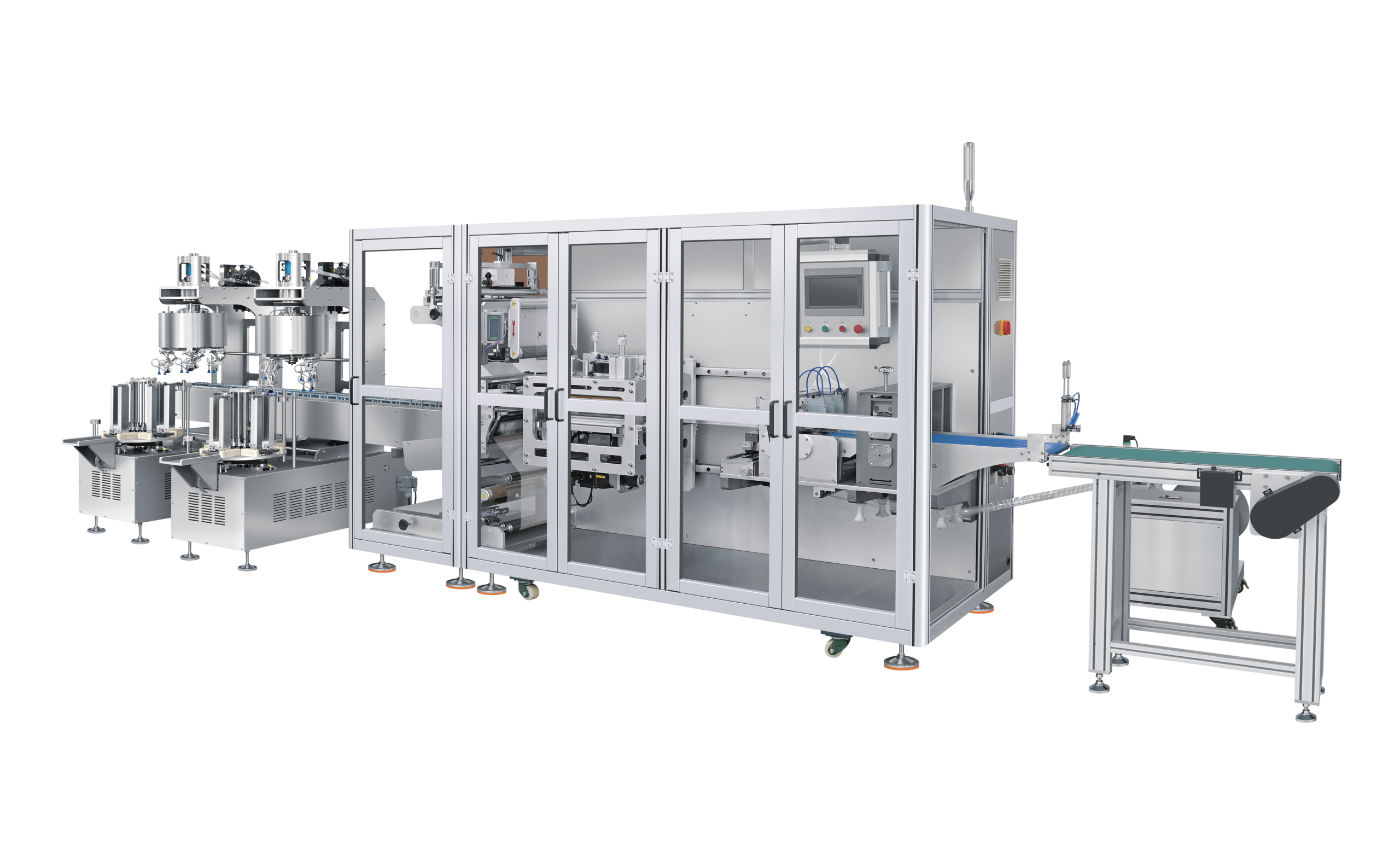
Sample output from the Industrial HFFS Packaging Machine. Ask us for real production photos matched to your exact product and capacity.
Horizontal flow wrapper: wraps individual products in film. 30-180 packs/min. For biscuits, chocolate bars, bread, soap.
| Model | Capacity | Configuration |
|---|---|---|
| HFF-101 | 30 packs/min | Small bakery. |
| HFF-001 | 100 packs/min | Mid-scale. Servo-driven. |
| HFF-201 | 180 packs/min | Industrial high-speed. |
Typical values — each model is configured to your product, cut size, and line speed.
Bakery, chocolate, and solid-food producers wrapping products horizontally in pillow bags. For the full range, see the processing hub.
Servo drive pays back in changeover and precision. Product length, film cut position, and seal timing are set digitally instead of with cams and gears, so format changes drop from an hour to minutes, and print registration holds tighter across speed changes. Mechanical drive still makes sense on long single-product runs where the format never moves and simplicity is the virtue.
The working envelope reaches about 300mm in product length, 120mm width, and 60mm height. Within that, infeed spacing does the real work: products need consistent pitch between them so the end seal closes on film, not product. Long or fragile items often run better with infeed support. Measure your largest SKU plus packaging before sizing, not just the average.
Use cold-seal film. It carries a cohesive coating that bonds under pressure alone, so no heated jaws touch heat-sensitive product, and line speed can even rise since there is no dwell for heat transfer. The trade is cost per meter and shorter shelf life versus heat-seal laminates. For mixed ranges, the machine runs both film types, changed by jaw and parameter set.
A fin seal folds the film into a fin at the bottom and is the standard, forgiving setup. A lap seal overlaps the two film layers flat, which uses measurably less film per pack and gives a slimmer profile. On high-volume lines the film saving from a lap seal is real money across a year. Both run on the same machine with guide changes.
Blade sharpening weekly, because dull knives pull film and wreck cut registration, plus monthly chain lubrication. Seal jaws and rollers get a daily wipe of film residue. Rotary end seals run at set pressure and temperature, so check both against the recipe card. Blades, jaw coverings, and heaters are the spares that keep a wrapper from stopping a whole line.
Yes. We provide installation and commissioning support, and 12 months of after-sales service, including spare parts help and technical response.

 7 * 24 Support
 Remote Support
 Global Coverage