Industrial Liquid Filling Machine
Gravity/pressure liquid filler for water, juice, oil, milk.
This site uses cookies for analytics and to improve your experience. By clicking Accept, you consent to our use of cookies. Learn more in our privacy policy.

Gravity/pressure liquid filler for water, juice, oil, milk.

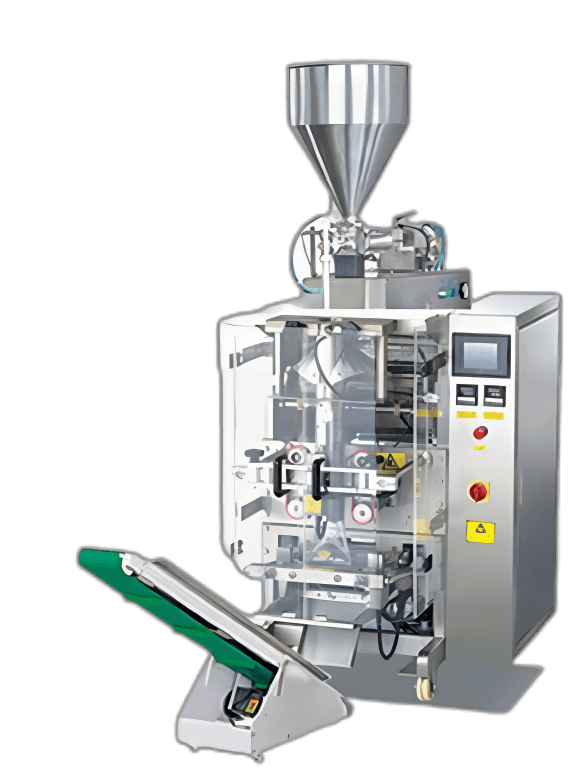
Sample output from the Industrial Liquid Filling Machine. Ask us for real production photos matched to your exact product and capacity.

Gravity/pressure liquid filler for water, juice, oil, milk. 500-12,000 bottles/h. Multi-head gravity or pressure filling.
| Model | Capacity | Configuration |
|---|---|---|
| LQF-101 | 500 bph | 4-head gravity. Small. |
| LQF-001 | 4,000 bph | 12-head pressure. Mid-scale. |
| LQF-201 | 12,000 bph | 24-head isobaric. Industrial. |
Typical values — each model is configured to your product, cut size, and line speed.
Beverage, sauce, and edible oil producers filling thin liquids into bottles and jars by volume or weight. For the full range, see the processing hub.
Match the principle to the product. Gravity suits thin liquids like water and juice, pressure handles more viscous flows, isobaric fills carbonated drinks without flattening them, and vacuum suits oils cleanly. Products from 1 to 500 cP cover this range, and anything thicker moves to a piston filler. Tell us viscosity and carbonation, and the principle is settled.
The range spans 500 to 12,000 bottles per hour: 4-head gravity at the entry level, 12-head pressure mid-scale, and a 24-head isobaric at industrial rates. Your honest figure depends on bottle size, fill height, and how filling syncs with capping downstream, so we quote against your actual bottle rather than a nameplate peak, and plan some margin below maximum for steady running.
Yes, food-grade seals are rated to 90C, which covers typical hot-fill processes for juice and sauce. Hot fill changes more than seals: bottle handling, level accuracy, and cooling all shift, so the configuration is confirmed against your actual fill temperature. Filling by volume or weight keeps accuracy despite temperature-driven density changes.
The design is CIP-ready with spray balls and recirculation, so cleaning solution cycles through product contact surfaces without full disassembly. Daily CIP between runs is standard practice for dairy and juice, and the valve cluster is built for it. Monthly valve seal checks and an annual filling tube replacement round out the schedule, with seals as the routine consumable.
Drips come from three usual places. Valve seals worn or seated with product residue, solved by the monthly seal check and daily CIP. Fill valve closing speed mismatched to the product, which draws a tail after cut-off. And low-viscosity product needing anti-drip nozzles or bottom-up filling on foam-prone liquids. Fix the valve first, it is the cause most of the time.
Yes. We provide installation and commissioning support, and 12 months of after-sales service, including spare parts help and technical response.

 7 * 24 Support
 Remote Support
 Global Coverage