Industrial Breading Machine
Breading machine: applies dry breadcrumbs (Panko, cracker meal, flour) to batter-coated product.
This site uses cookies for analytics and advertising. Accept them all, decline them all, or choose which ones you allow. Learn more in our privacy policy.

Breading machine: applies dry breadcrumbs (Panko, cracker meal, flour) to batter-coated product.
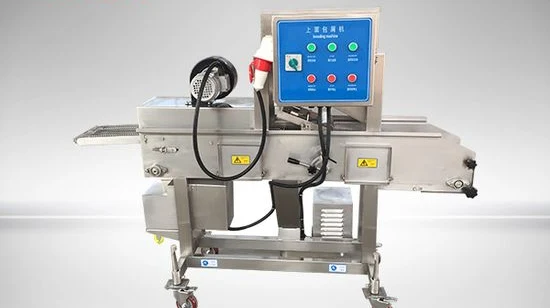
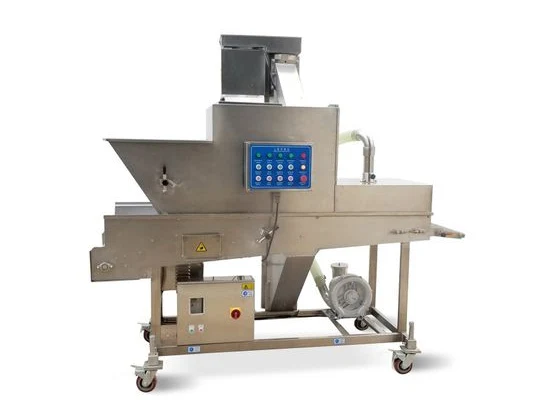
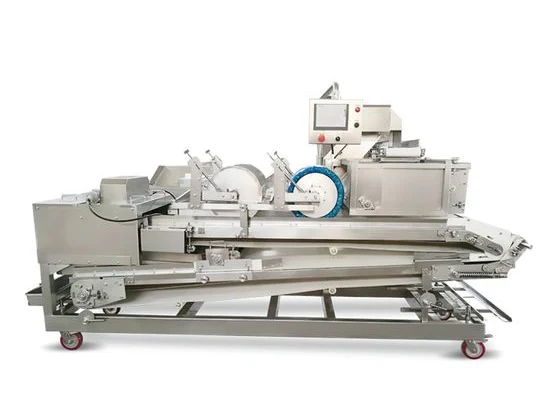
Sample output from the Industrial Breading Machine. Ask us for real production photos matched to your exact product and capacity.
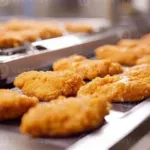
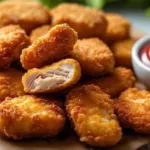

Breading machine coating patties and nuggets with breadcrumbs from a hopper and bottom belt; runs standalone or after the battering machine.
| Model | Belt width | Power | Dimensions | Weight | Voltage |
|---|---|---|---|---|---|
| BRD-101 | 200 mm | 1.28 kW | 1680×550×1400 mm | 100 kg | 380 V |
| BRD-701 | 400 mm | 1.9 kW | 2100×750×1500 mm | 180 kg | 380 V |
| BRD-201 | 600 mm | 2.4 kW | 2500×950×1600 mm | 260 kg | 380 V |
Food factories breading nuggets, burger patties and potato cakes. For the full range, see the coating hub.
Panko for a flaky Japanese-style coating, fine cracker meal for a tight, smooth coat, coarse free-flow crumb for heavy texture, and plain flour for predusting. Hopper and bed settings change between them rather than needing separate machines. If you run panko and flour in the same week, the changeover is a settings and cleaning job. We confirm every crumb on your list during specification.
Product passes under a crumb curtain from the top hopper and through a crumb bed from below, giving full coverage around the piece. An air blower and vibration then strip excess crumb, which returns to the hopper through a filter screen, so pickup stays on target and crumb waste stays low. Curtain density, bed depth, and blower pressure are the three setpoints stored per product.
Drain and clear the crumb in use, clean the hopper and bed, then load the next medium and recall its setpoints. Between allergen-bearing coatings, the change is a full clean rather than a quick clear. Because excess crumb is recovered to the hopper, product changeovers waste little material. Sequencing runs from light to heavy coatings shortens the day’s cleaning total.
Yes, the hopper adjusts to a flour setting, so one machine runs a flour predust before batter, which improves adhesion on wet surfaces. Some high-speed plants keep a dedicated preduster for capacity reasons, but for mixed or mid-speed programs one machine doing both jobs saves floor space and capital. We set the configuration against your line speed and product sequence.
The classic line is batter applicator, then breading machine, then continuous fryer, with conveyor speeds matched so the wet, battered surface meets the crumb curtain consistently. Too much gap and the batter skins over and picks up less; too little and crumb washes back into the batter tank. We size the pair together, 200 to 3,000 kg/h matched, and set the transfers.
Yes. We provide installation and commissioning support, and 12 months of after-sales service, including spare parts help and technical response.

 7 * 24 Support
 Remote Support
 Global Coverage