High-Sensitivity Industrial Metal Detectors
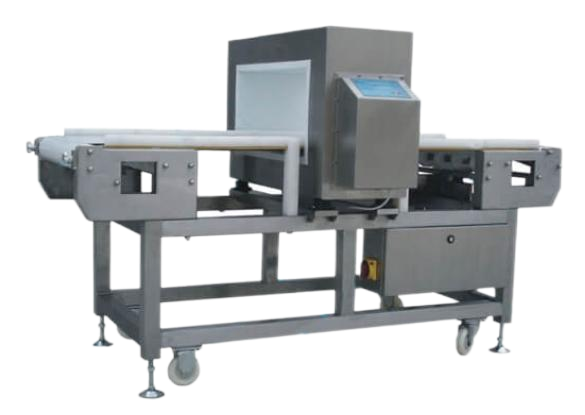
Ensure absolute food safety and protect your processing equipment. Our conveyor-belt metal detectors accurately identify ferrous, non-ferrous, and stainless steel contaminants down to 0.6mm, ensuring full compliance with HACCP and IFS standards.

Feature
Ultra-High Sensitivity (0.6mm) :
Utilizes advanced dual-channel detection technology to accurately identify minute metallic contaminants (Fe ≥ 0.6mm, Non-Fe ≥ 1.0mm, SUS ≥ 1.2mm), preventing product recalls and brand damage.Intelligent Self-Learning System :
Features an intuitive touchscreen interface that automatically memorizes the “product effect” of up to 100 different items (e.g., salty, wet, or frozen foods), eliminating false alarms.IP65 Washdown Protection :
Built with a fully sealed, food-grade SUS304 stainless steel frame. Easily withstands daily high-pressure washdowns required in meat, seafood, and dairy processing facilities.Automated Rejection Systems :
Can be optionally equipped with various automated reject mechanisms (air blast, flipper arm, drop-down belt) to instantly remove contaminated products without stopping the production line.
Advantages of the metal detector
1. the detection sensitivity is high. We can achieve a maximum detection sensitivity of 0.6 mm for iron. Sensitivity is optimal when the detection probe is placed on the surface of the conveyor belt. Actual detection sensitivity is determined by the specific product being inspected and the on-site working environment.
2. Wide adaptability: The metal detector can adapt to working conditions involving high and low temperatures. Even under relatively poor working conditions, it maintains excellent detection performance.
3. convenient adjustment of detection parameters: Adjusting the detection parameters on the metal detector is convenient and visually intuitive; the consistency and stability of the detection parameters are very good. For the same inspection product, the inspection parameters do not change over time.
4. the waterproof and dustproof performance is good. Depending on the order, it can meet IP-65 waterproofing requirements.


Structure of industrial Metal Detector
The basic function of a metal detector is to detect whether a non-metallic medium contains metallic contaminants. The presence of metallic contaminants directly affects product quality and may also directly impact the critical safety of production equipment. If food contains metallic contaminants, this may pose an immediate threat to personal safety or health.
The metal detector comprises 4 series: H, L, P, T. It is suitable for food, pharmaceuticals, the chemical industry, plastics, synthetic fibers, and mining, as well as a wide variety of other applications.
| Item | Specification |
|---|---|
| Detection Method | Electromagnetic Induction |
| Tunnel Width (mm) | 400 / 500 / 600 (Customizable) |
| Tunnel Height (mm) | 100 / 150 / 200 / 250 |
| Detection Sensitivity | Fe ≥ 0.6mm, Non-Fe ≥ 1.0mm, SUS304 ≥ 1.2mm |
| Belt Speed | 10 – 32 m/min (Adjustable) |
| Alarm Method | Sound & Light Alarm, Belt Stop, or Auto-Reject |
| Protection Grade | IP65 (Waterproof & Dustproof) |
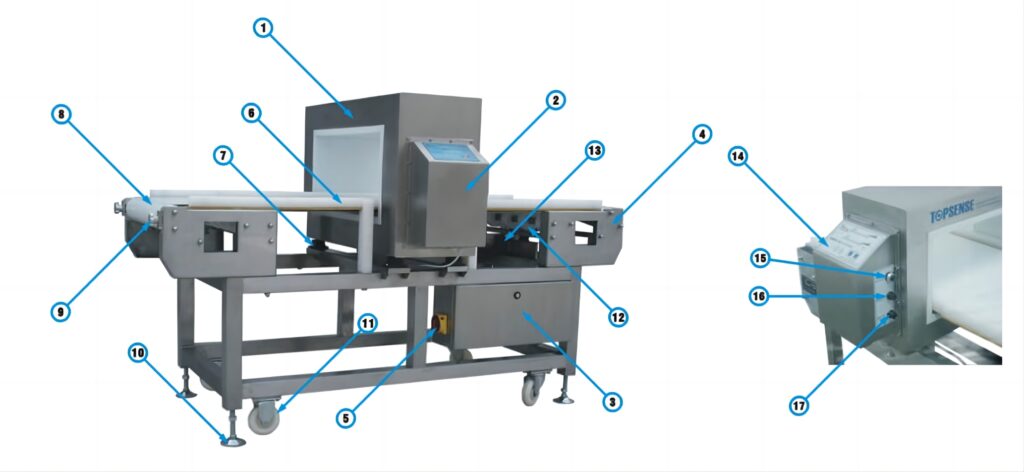
Basic Structure of the H Series

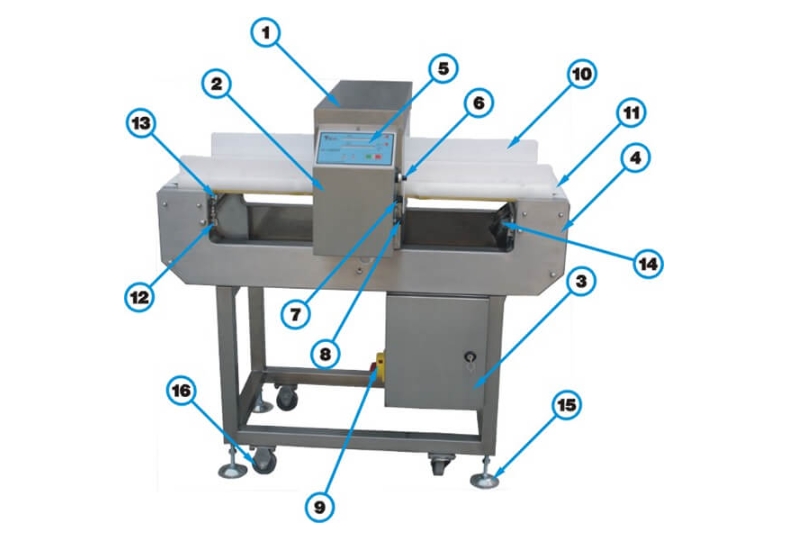
Basic structure of the L series

FAQ
Q: Does salt, moisture, or freezing temperatures in the food cause false alarms? (Product Effect)
A: No. Salty or wet foods (like fresh meat or pickles) naturally conduct electricity, which confuses basic detectors. Our machine features an advanced ‘Self-Learning’ algorithm that maps and ignores your specific product’s signal, ensuring zero false alarms.
Q: Will the detector continue to operate reliably in a cold, damp seafood processing room?
A: Absolutely. The main detection head and control box are encapsulated in epoxy resin, and the entire frame meets IP65 waterproof standards. It is purpose-built to thrive in wet, cold, and harsh industrial environments.
Q: What happens when the machine detects metal?
A: By default, the belt stops immediately, and a loud buzzer/flashing light alerts the operator. However, we highly recommend adding an automated Rejector (such as an air-jet or pneumatic pusher) to automatically kick the bad product off the line without stopping production.