
Cassava & Potato Starch Production Line
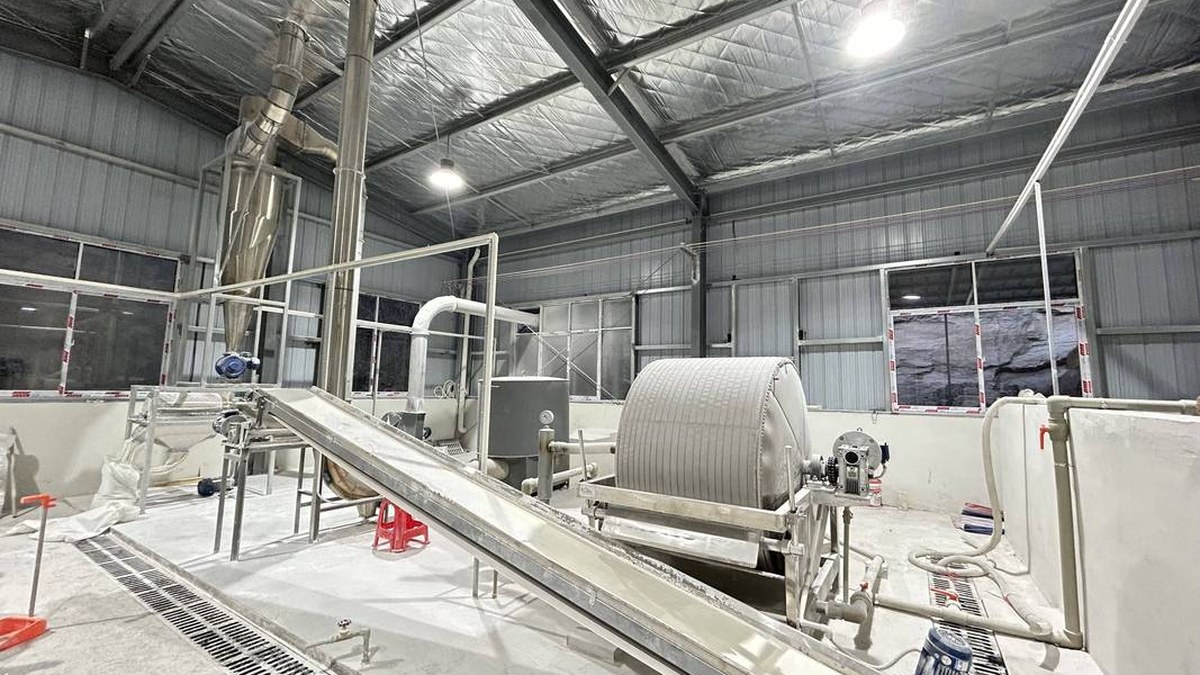
Complete starch plants from 2 t/day to 100 t/day starch output: rasping, fiber separation, hydrocyclone refinement, dewatering, flash drying. Cassava and potato routes.
Two Raw Material Routes
Cassava (24–30% starch yield) and potato (14–22%) lines from the same engineering team — rasping and refinement stages configured per tuber.
Refinement Depth Built In
9–16 stage hydrocyclone stations for protein and fine fiber removal — food-grade whiteness from the first campaign.
Campaign-Ready Engineering
Lines designed for seasonal harvest windows: fast re-commissioning, wear-part programs matched to campaign length.
Water Loop Design
Process water recycle systems cutting fresh-water demand — the #1 opex lever in starch plants.
How a Starch Production Line Is Configured
Starch extraction follows one logic whichever tuber you run: break the cell structure, wash the starch out, then refine, dewater, and flash-dry it. Capacities from 2 t/day pilot to 100 t/day starch output.
Cassava vs Potato: Same Logic, Different Stress Points
| Stage | Cassava Route | Potato Route |
|---|---|---|
| Raw material intake | Roots deteriorate in 24–48 h — plant must sit at the farm belt | Campaign season 100–150 days/year; potatoes store weeks, campaign planning is easier |
| Cell rupture | Rasper: 20–30 t/day roots per unit, blade tip speed ~50 m/s | Rasper or grinding mill; potato tissue is softer, rasper load lower |
| Fiber separation | Centrifugal sieves, 3–4 stages with counter-current wash | Centrifugal sieve + fiber washing, potato pulp pressed for feed |
| Protein removal | Hydrocyclone station 9–16 stages | Hydrocyclone station; protein water (fruit water) concentrated for feed |
| Dewatering | Vacuum rotary filter or scraper centrifuge to ~40% moisture | Vacuum filter; peeler centrifuge on smaller lines |
| Drying | Flash dryer, inlet 160–180 °C, starch exit temp ≤60 °C | Flash dryer, same temperature discipline |
The Numbers That Set Plant Size
| Parameter | Cassava | Potato |
|---|---|---|
| Starch yield from raw | 24–30% of fresh root weight | 14–22% (typical 16–18%) |
| Raw input for 50 t/day starch | ~170–200 t/day roots | ~280–320 t/day potatoes |
| Fresh water, closed loop | 8–15 m³/t starch | 5–12 m³/t starch |
| Campaign length | Near-continuous where harvest allows | 100–150 days/year typical |
Where Starch Projects Fail
| Failure | Root Cause | Design Answer |
|---|---|---|
| Grey starch, low whiteness | Hydrocyclone stages under-dimensioned; SO₂ control missing | Full refinement study at quotation; food-grade sulphitation option |
| Rasper wear kills uptime | Silica in roots; sand removal skipped | Desander + rasper blade program priced with the plant |
| Sludge lagoons overflow | Process water treated as waste | Water recycle loop + pulp dewatering for feed sales |
| Campaign misses | Commissioning in-season | Dry commissioning before harvest; wet commissioning with first roots |
Frequently Asked Questions
~35–40 t/day fresh roots, 2–4 MW steam and power depending on dryer fuel, and 15–25 operators. (typical range, project-dependent)
Front-end (rasper, sieves) differs in configuration; lines are designed per tuber. Shared: hydrocyclones, dewatering, flash dryer — dual-crop plants exist but cost more upfront.
Yes — fruit water can be concentrated (evaporation) to potato protein liquor for feed. Adds capex; justified above ~30 t/day lines.
Different process families (slurry steeping / wet milling). We focus on tuber starch; ask us for a referral if you need corn.
Same line, different refinement depth and quality control (whiteness ≥ 88–92, viscosity spec, micro). Grade is decided by hydrocyclone count and process discipline.
50 t/day complete plant: 150–240 days including structure, piping, and commissioning with your raw material.
Get Your Custom Quote
Tell us your target capacity and end market — get a fixed-price quote within 24 hours.
