Belt Fryer
We provide an extensive range of food frying solutions—regardless of your project’s uniqueness, our professional expertise will deliver the optimal option for you.
This site uses cookies for analytics and to improve your experience. By clicking Accept, you consent to our use of cookies. Learn more in our privacy policy.

We provide an extensive range of food frying solutions—regardless of your project’s uniqueness, our professional expertise will deliver the optimal option for you.
Used for frying peanuts, beans, nuts, French fries, and puffed foods, belt fryers serve diverse snack-making needs.
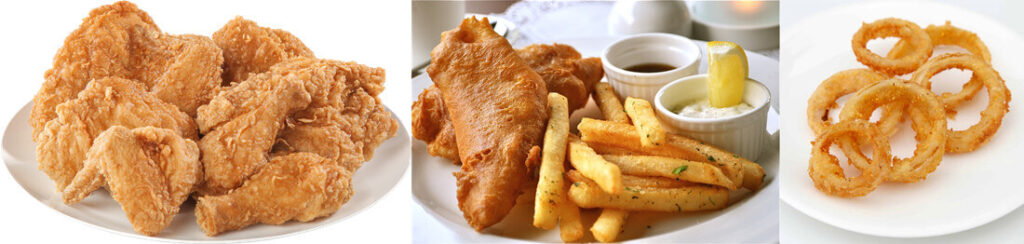

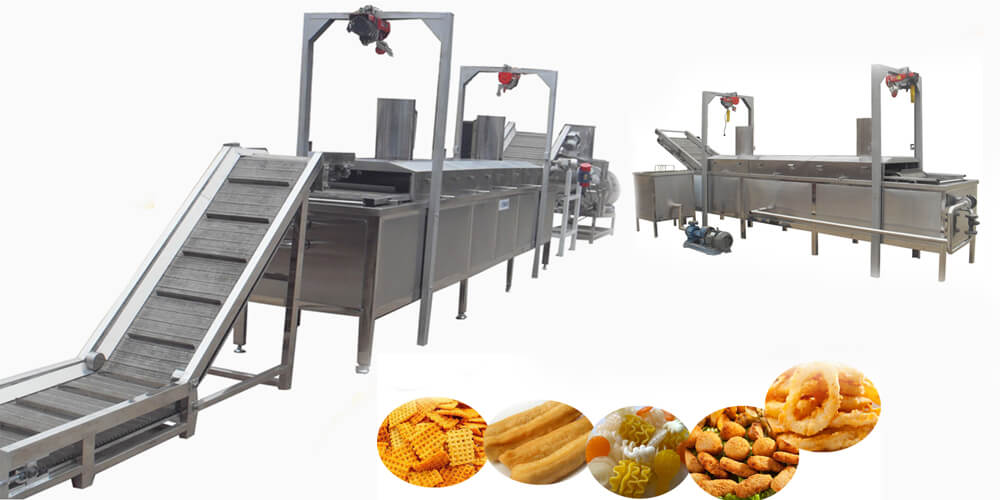
This automatic belt frying machine is typically used for frying various foods that require relatively large processing capacity, such as meat, fish, seafood, vegetables, poultry, and wheat feed. Equipped with a conveyor belt, it enables continuous operation, featuring automatic feeding and discharging.
Model | Performance | Weight | Abmessung(mm) |
BF-4000 | 57.37kw/380V | 500kg | 4200*1080*1380 |
BF-5000 | 72.37kw/380V | 560kg | 5200*1080*2000 |
BF-6000 | 87.37kw/380V | 620kg | 6200*1080*2000 |
BF-7000 | 102.37kw/380V | 680kg | 7200*1080*2000 |
BF-8000 | 117.37kw/380V | 740kg | 8200*1080*2000mm |
Fried foods are crispy right out of the fryer, but as they cool, released steam can soften their outer crust. Storing hot foods in airtight containers—even in the fridge—can also make them lose crispiness.
An automatic belt fryer can fry various foods—including snack pellets, potato chips, sweet potatoes, taros, peanuts, fish, dough snacks, green peas, fava beans, and broad beans.
In a continuous frying machine, a conveyor belt transports food through hot oil continuously, which secures even frying results and high production efficiency.
Its benefits include high frying capacity, consistent product quality, reduced labor costs, and the ability to efficiently fry a broad range of foods.
Regular maintenance involves cleaning the belt and frying chamber, checking and replacing the oil, inspecting and maintaining the heating elements, and verifying the proper operation of the conveyor system—all to prevent breakdowns and ensure food safety.
Yes, there are various models available—each is designed for different production capacities and specific food types. Some models are suitable for products like potato chips, while others are tailored for snacks and nuts.
Common safety functions include temperature regulation, emergency stop buttons, oil level indicators, and automatic shut-off mechanisms, ensuring no overheating and protecting operator safety.
Absolutely, Esper Foodtech offers customization services to satisfy specific production requirements—these include tweaks to belt speed, frying time, and oil temperature tailored to different kinds of food.

 7 * 24 Support
 Remote Support
 Global Coverage