Industrial Donut Fryer and Glazer
Forms, fries, turns, and glazes in one continuous line — 1,200–12,000 pcs/h typical, double-sided glaze curtain.
This site uses cookies for analytics and to improve your experience. By clicking Accept, you consent to our use of cookies. Learn more in our privacy policy.

Forms, fries, turns, and glazes in one continuous line — 1,200–12,000 pcs/h typical, double-sided glaze curtain.
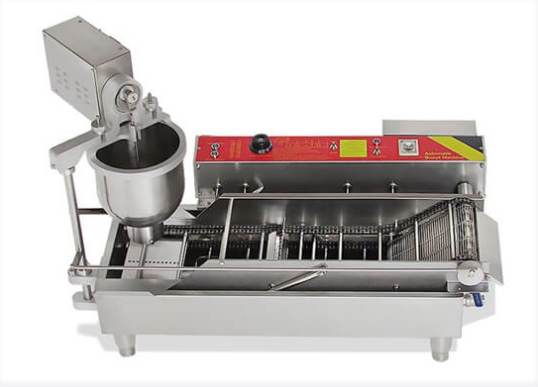
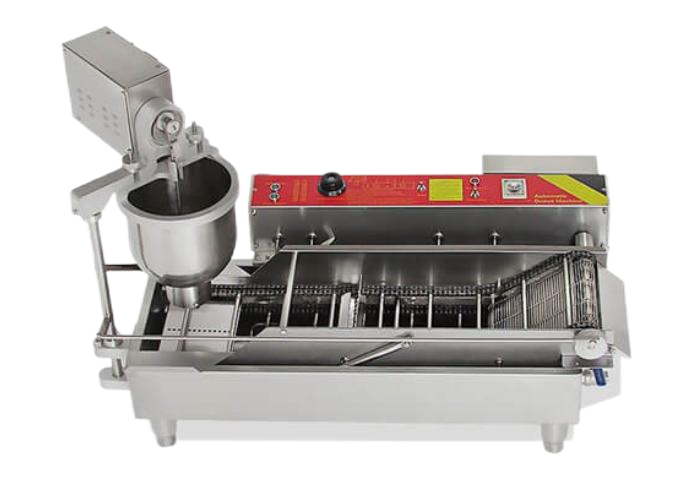
The DON series forms, fries, turns, and glazes donuts in one continuous line — 1,200–12,000 pieces per hour typical, ring donuts 40–80 mm, with a glaze curtain that coats both sides. For donut chains and bakery plants.
The depositor drops ring dough straight onto the fryer belt; donuts flip automatically at the halfway point for even frying on both sides; the glaze curtain coats top and bottom as they pass; cooling finishes them for packing. One line, one operator.
| Model | Output | Donut sizes | Glazing | Filling |
|---|---|---|---|---|
| DON-301 | 1,200–3,000 pcs/h | 40–80 mm rings | Curtain | — |
| DON-701 | 3,000–6,000 pcs/h | 40–80 mm + mini head | Curtain | Optional |
| DON-901 | 6,000–12,000 pcs/h | Full range | Double curtain | Optional |
Typical values — depositor head and fryer length configured to your product and shift output.
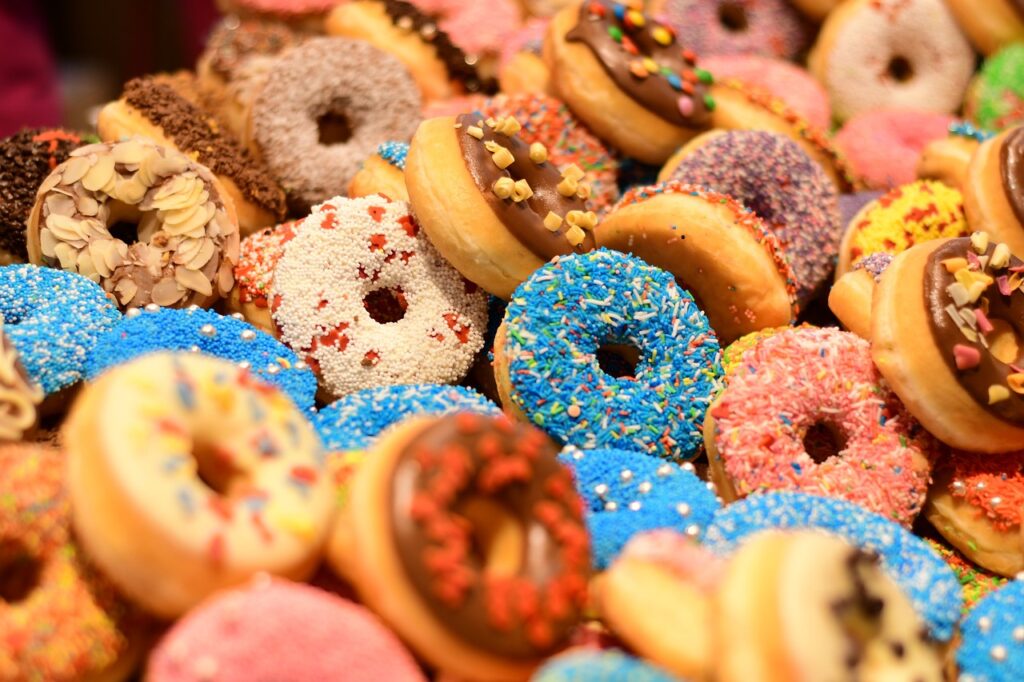
Chocolate, sugar, maple, and vanilla glazes run on the curtain — coating both sides in one pass, with the excess recovered and filtered back to the tank.
Vegetable shortening or canola oil, with a standard filtration system holding oil life. Daily drain and filter, weekly deep clean — the schedule ships with the line.
Batter and dough mix in the SPM spiral mixer or PLM planetary mixer ahead of the depositor. The rest of the sweet-goods range is on the bakery equipment hub.
The fryer side handles both, but the feeding differs. Cake donut batter is deposited straight from a hopper into the fry oil. Yeast donuts are cut proved pieces, so they need a proofer and a cutter upstream of the same fryer. Decide your mix of the two up front, because the upstream equipment differs even when the fryer is shared.
Work from sales, not the machine peak. Pieces per hour you can actually sell, times the hours you want to run, plus finishing time for glazing and cooling, sets the machine size. Buffer 20% for rush days. Undersizing saves little and creates queues at the fryer; oversizing wastes oil capacity that sits heating.
Typical frying runs around 180 to 190°C, with lower temperatures soaking oil into the product and higher ones browning the crust before the center cooks. Oil life is managed by turnover: filter daily, top up with fresh oil, skim crumbs that carbonize, and track total polar material if your market requires it.
Oil temperature is the first suspect: a fryer running below range seals the crust slowly, so the donut drinks oil before it sets. Batter or dough consistency is the second, because under-mixed or over-mixed product fries differently. Calibrate the thermostat against a probe, then standardize the mix, and greasiness usually disappears.
Donuts need to cool before glazing or sugar, or the coating melts or slides off. A cooling conveyor followed by a glaze waterfall and a topping station completes the line. Floor space for cooling is the part most startups underestimate, so plan the full flow from fryer to box, not just the fryer.
Yes. We provide installation and commissioning support, and 12 months of after-sales service, including spare parts help and technical response.

 7 * 24 Support
 Remote Support
 Global Coverage