Industrial Hard Candy Depositor
Hard candy depositing line: cooks sugar syrup, deposits into silicone molds, cools, demolds.
This site uses cookies for analytics and advertising. Accept them all, decline them all, or choose which ones you allow. Learn more in our privacy policy.

Hard candy depositing line: cooks sugar syrup, deposits into silicone molds, cools, demolds.
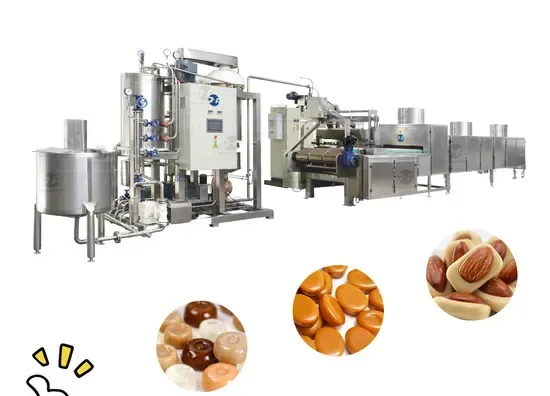
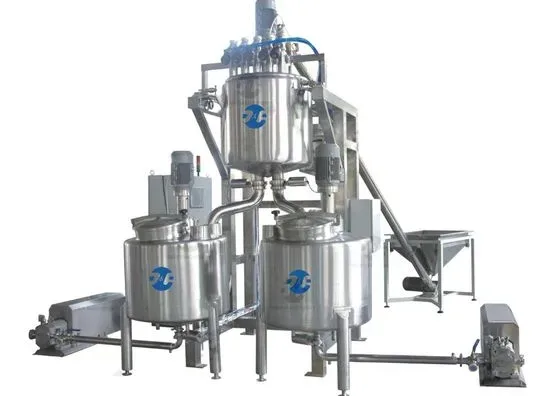
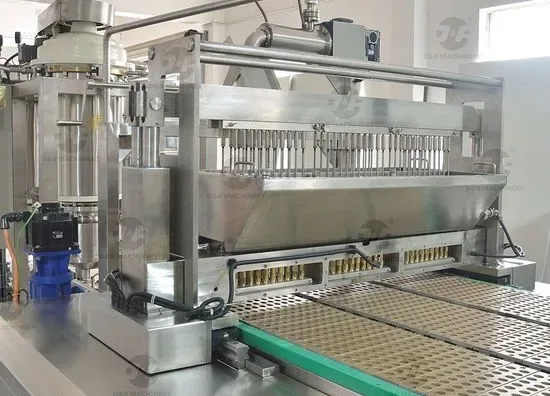
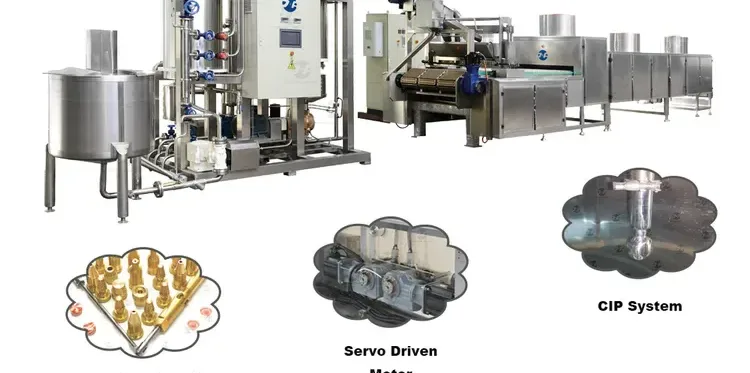
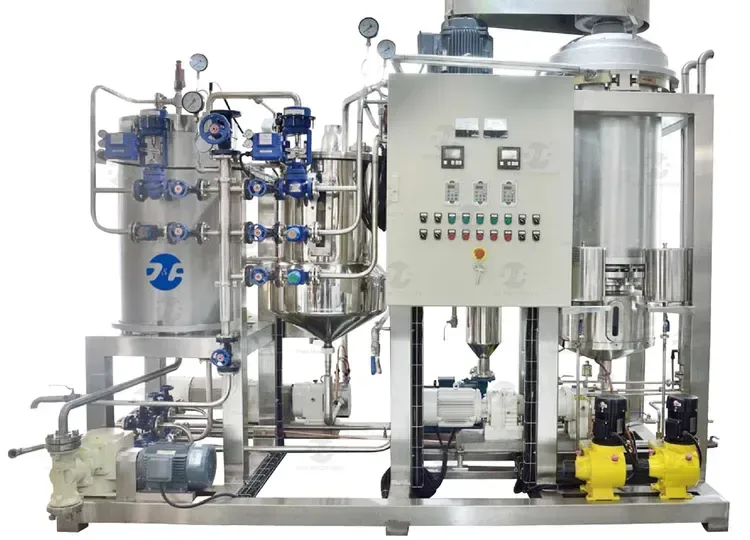
Sample output from the Industrial Hard Candy Depositor. Ask us for real production photos matched to your exact product and capacity.


Servo-driven hard candy depositing line with microfilm cooker: transparent, center-filled, two-color and striped candy at 300–800 kg/h.
| Model | Capacity (per 5 g candy) | Power | Compressed air | Voltage | Weight | Dimension |
|---|---|---|---|---|---|---|
| HCD-101 | 300 kg/h | 30 kW | 0.5 m³/min, 0.4–0.6 MPa | 380 V | 6,000 kg | 13,000×2,000×2,700 mm |
| HCD-701 | 500 kg/h | 38 kW | 0.5 m³/min, 0.4–0.6 MPa | 380 V | 6,000 kg | 13,000×2,000×2,700 mm |
| HCD-201 | 800 kg/h | 45 kW | 0.5 m³/min, 0.4–0.6 MPa | 380 V | 6,000 kg | 13,000×2,000×2,700 mm |
Candy plants producing hard drops and lollipops at industrial rate. For the full range, see the confectionery hub.
Hard candy syrup cooks at 140-160°C depending on type, and at that level a few degrees change final moisture, color, and shelf stability. The vacuum cooking option lowers process temperature, which protects delicate flavors and colors that full atmospheric heat would damage. Temperature control here is quality control, not a convenience feature.
An inline dosing pump adds flavor, color, and acid after cooking, on the way to the depositor. Dosing after the cook means heat-sensitive ingredients never see 150°C, and inline metering holds the ratio steady across the whole run instead of varying bowl to bowl. Recipe changeover is a parameter set on the panel, not a re-plumb.
Food-grade silicone handles syrup at cooking temperature, flexes for clean demolding, and does not mark the candy surface. Molds are inspected quarterly and replaced as cavity detail wears, because a worn cavity shows up as dull faces and sticking pieces. Silicone is also light, which matters when operators handle mold sets all shift.
Yes, with the dual-piston configuration: one piston deposits the shell, the second fills the liquid center, the format used for filled drops and similar pieces. It is specified at order time together with your product list, because filled work needs different mold sets and longer cooling than solid candy.
Sugar systems must be cleaned completely or carbon builds up. The monthly valve strip and clean is the deep job, with hot flushing of the depositing path between flavor and color changes as the daily routine. Hygiene here is both food safety and product clarity: old syrup left in a valve shows as dark streaks in the next run.
Yes. We provide installation and commissioning support, and 12 months of after-sales service, including spare parts help and technical response.

 7 * 24 Support
 Remote Support
 Global Coverage