Industrial Cheese Vat
Cheese vat for curd forming, cutting, and whey drainage.
This site uses cookies for analytics and advertising. Accept them all, decline them all, or choose which ones you allow. Learn more in our privacy policy.

Cheese vat for curd forming, cutting, and whey drainage.
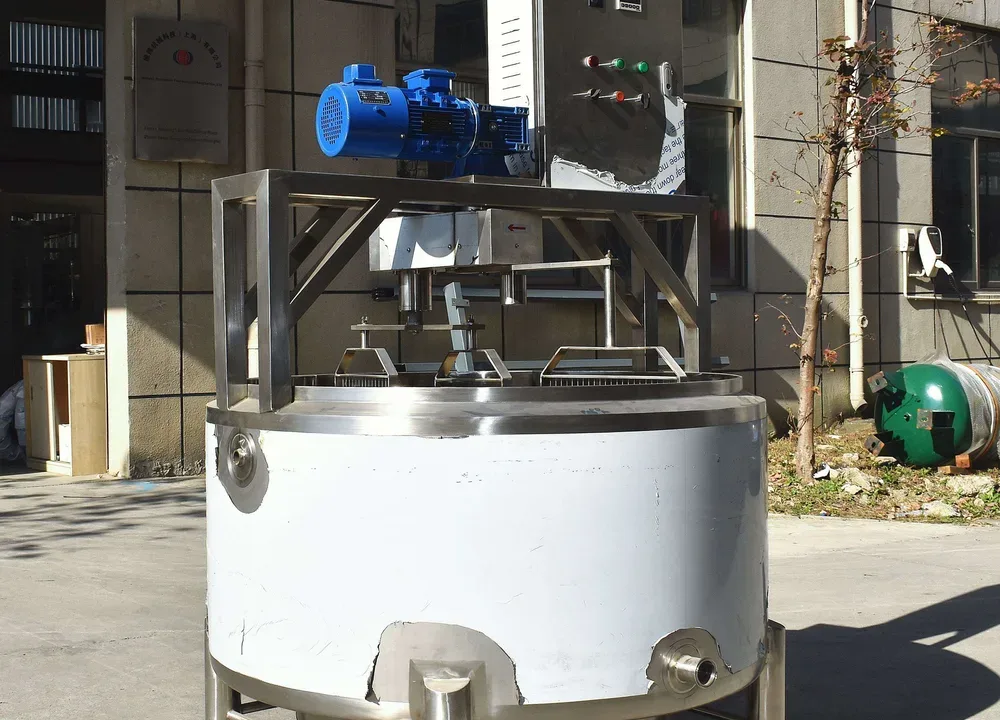
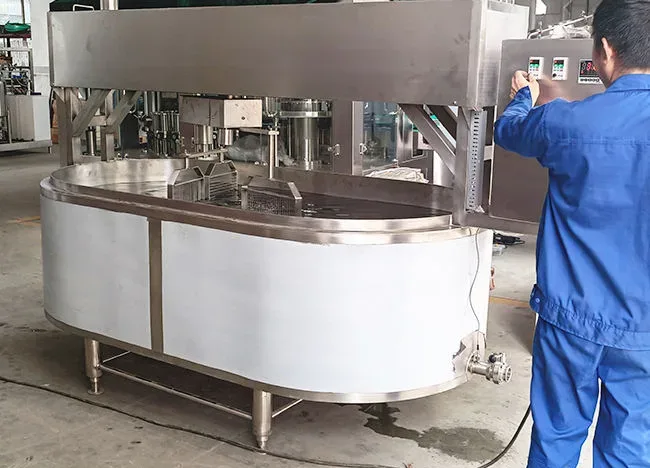
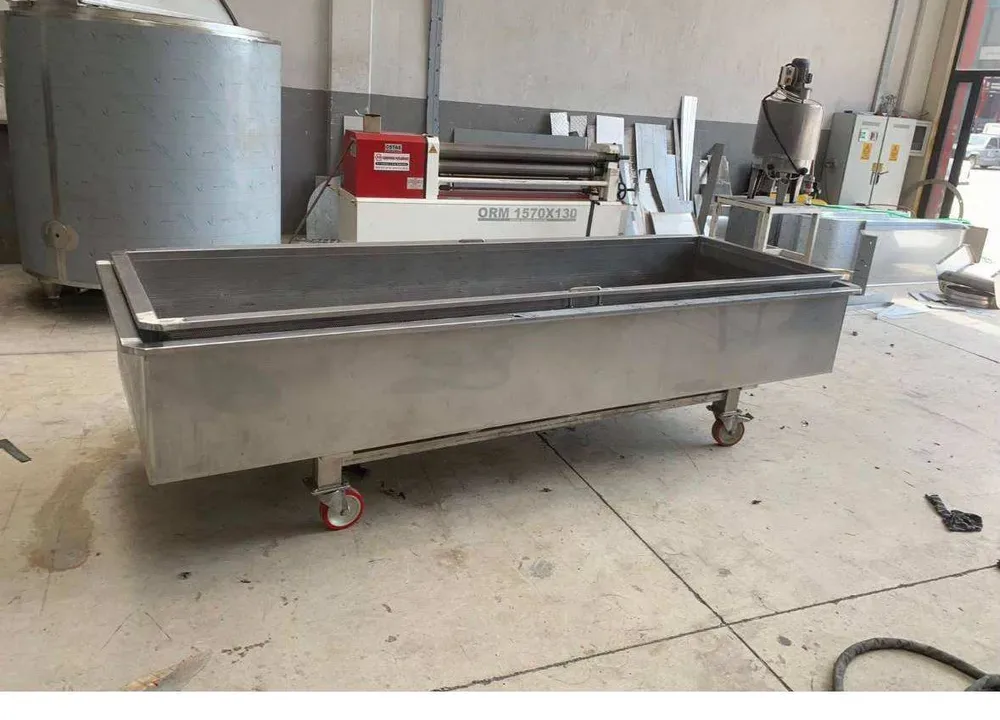
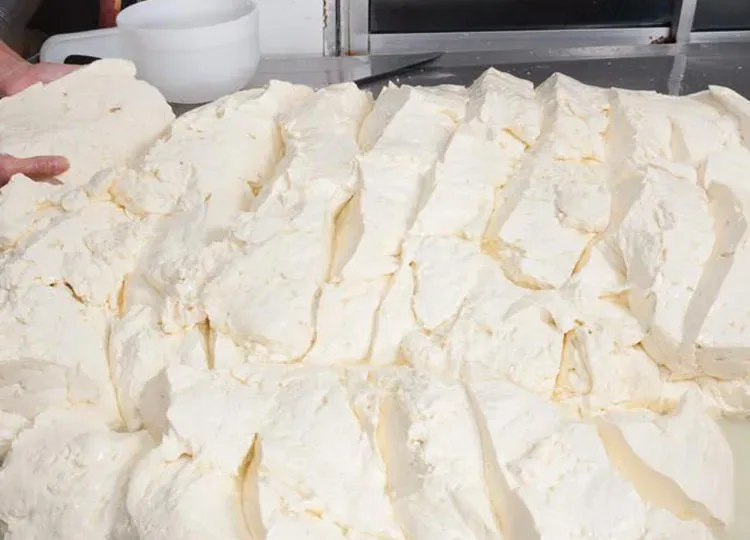
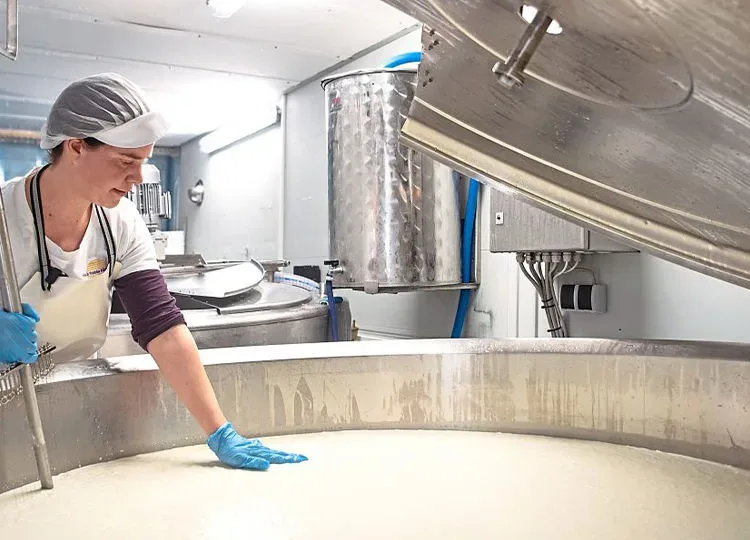
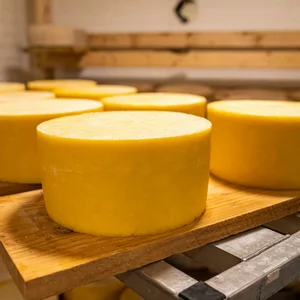
Sample output from the Industrial Cheese Vat. Ask us for real production photos matched to your exact product and capacity.
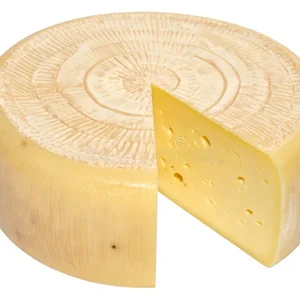
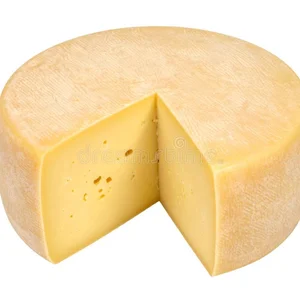
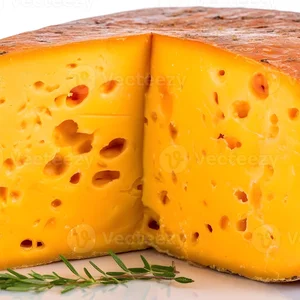
Cheese-making vat with jacketed heating, cutting knives and whey drain — one vessel for curd processing.
| Model | Capacity | Configuration | Power |
|---|---|---|---|
| CSH-101 | 200 L/batch | Open vat with vertical cutters | 1.5 kW |
| CSH-701 | 500 L/batch | Jacketed vat with dual agitators | 3 kW |
| CSH-201 | 1,000 L/batch | Fully jacketed cheese maker with PMS knives | 5.5 kW |
Typical values — each machine is configured to your bottle, product and line speed.
Cheese plants making rennet-curd cheeses in batches. For the full range, see the dairy hub.
Any rennet-set cheese: cheddar, Gouda, Camembert, mozzarella, feta, and paneer all run in the same vessel, because the variables are time, temperature, and cut size. The dual-speed curd knife cuts from 5 to 20 mm, set per cheese type. Send your cheese list and we confirm the cut and stir programs for each.
The jacket circulates hot or cold water and holds plus or minus 0.5°C across the 30-40°C working range. Precision matters because culture and rennet activity both move with temperature, and an overshooting vat hands you inconsistent curd. One jacket doing both heating and cooling also shortens the make.
A bottom drain valve empties the vat, with an optional whey screen that catches curd fines so the whey stream runs clean for further processing or sale. Screening fines early makes the whey worth more downstream. Drain sizing is matched to your batch volume so emptying does not smash the curd bed.
A full CIP spray ball system cleans the vat in place, which is faster and more hygienic than a person climbing inside. The scheduled checks are monthly seals and an annual jacket descaling, and descaling matters more than it sounds: scale in the jacket quietly steals the 0.5°C accuracy the make depends on.
Batches run 500 L for artisan makers, 2,000 L for a mid-scale plant, and 5,000 L industrial with automatic curd cutting. Size by makes per day: each batch needs fill, culture, set, cut, stir, and drain, so two 2,000 L makes a day means a vat occupied twice over. Count the makes, then pick the volume.
Yes. We provide installation and commissioning support, and 12 months of after-sales service, including spare parts help and technical response.

 7 * 24 Support
 Remote Support
 Global Coverage