Industrial Roller Mill
Double-roller flour mill: crushes wheat/corn between chilled cast-iron rollers.
This site uses cookies for analytics and advertising. Accept them all, decline them all, or choose which ones you allow. Learn more in our privacy policy.

Double-roller flour mill: crushes wheat/corn between chilled cast-iron rollers.
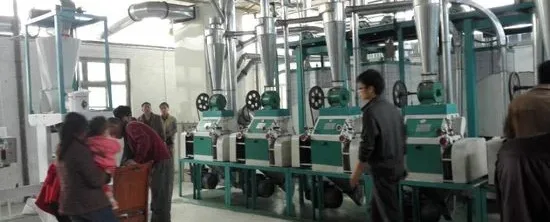

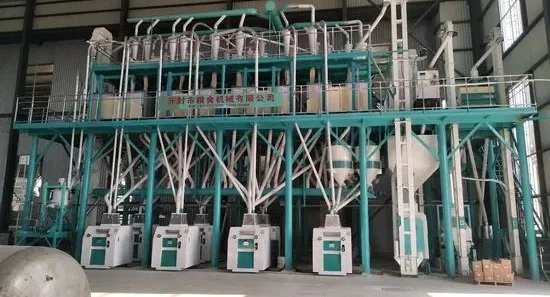
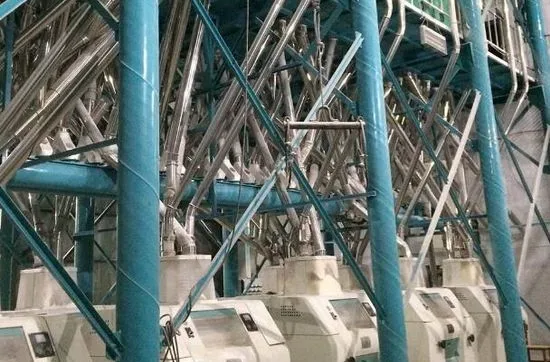
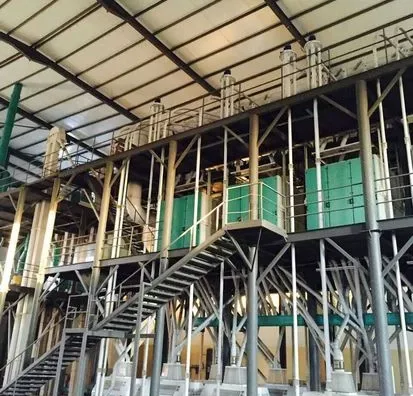
Sample output from the Industrial Roller Mill. Ask us for real production photos matched to your exact product and capacity.





Complete roller milling units for wheat and maize — 4-break, 3-reduction flow with F1820 roller mills and full upstream cleaning, grinding 22 t/24 h on a 16.5×5×4.2 m floor.
| Model | Capacity | Milling scheme | Extraction | Power |
|---|---|---|---|---|
| RLM-001 | 22 t/24 h | 4B–3R–1B, F1820 rollers | 78–83% | 66.3 kW |
| RLM-201 | up to 10 t/h per mill | 250 mm rolls, 600–1,000 mm lengths | Grade 1 & 2 flour | 7.5–18.5 kW per mill |
Wheat and maize mills grinding and reducing stock into graded flour. For the full range, see the flour & rice milling hub.
Match stands to tonnes per day of grain, not to headline ratings. The range runs from 30 to 500 tonnes per day: a small mill works from a compact stand, a 150 tonne per day plant uses an 8-roller double stand, and 500 tonne plants run a 16-roller milling section. Tell us your grain intake and target flour output and we confirm the stand count and passage layout.
Plan on 72 to 78 percent for wheat flour under normal conditions. The exact figure moves with wheat quality and the number of grinding passages: more break and reduction passes lift extraction but add machinery and power cost. We model your grain quality and passage count before you commit, so the business case rests on realistic numbers rather than brochure peaks.
The rolls themselves are chilled cast iron at 55 to 65 HRC, but no roll surface should be asked to eat stones or bolts. Correct practice is a grain cleaner with a destoner deck and magnetic separator ahead of the first break. That keeps foreign matter out of the flutes and protects the smooth, hard surface the rolls depend on for consistent grinding.
Fine flour typically lands between 150 and 300 microns. The main lever is the roller gap, adjustable between passes, and the 1:2.5 speed differential between rolls creates the shear that pulls bran flakes away from endosperm. For corn or maize, fluted roll surfaces and a wider gap are used instead of the smooth fine-grinding setup.
Budget a monthly roll surface check and an annual re-fluting cycle. Corrugations wear gradually, and the warning signs are rising fines, uneven grind, and hotter discharge. Re-fluting on schedule restores the cutting profile. Rolls inspected monthly and re-fluted on plan hold their grind year after year, which is what keeps extraction stable instead of drifting down.
Yes. We provide installation and commissioning support, and 12 months of after-sales service, including spare parts help and technical response.

 7 * 24 Support
 Remote Support
 Global Coverage