Industrial Wheat Flour Milling Line
Complete wheat flour mill: cleaning → conditioning → milling → sieving → purifying → packaging.
This site uses cookies for analytics and advertising. Accept them all, decline them all, or choose which ones you allow. Learn more in our privacy policy.

Complete wheat flour mill: cleaning → conditioning → milling → sieving → purifying → packaging.
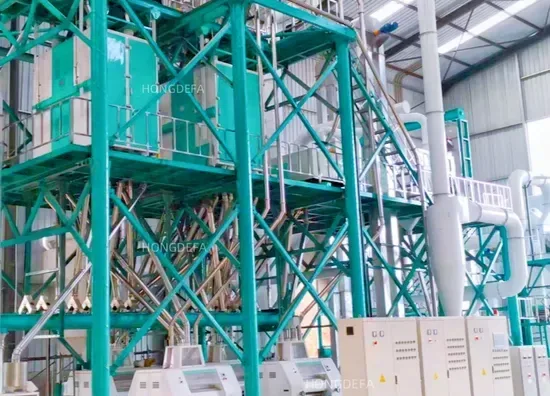
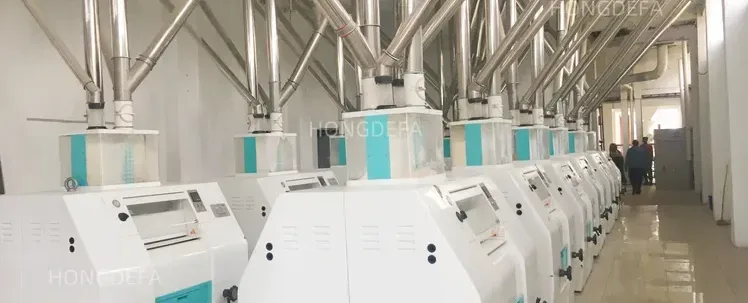
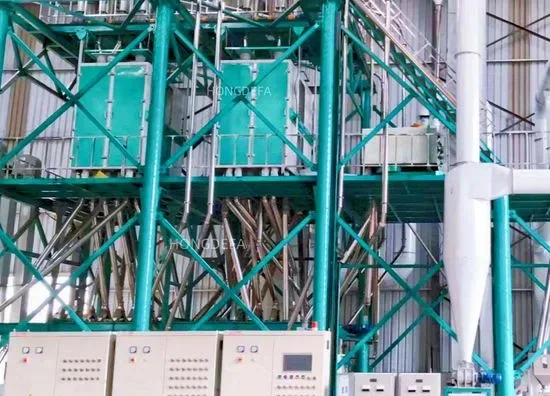
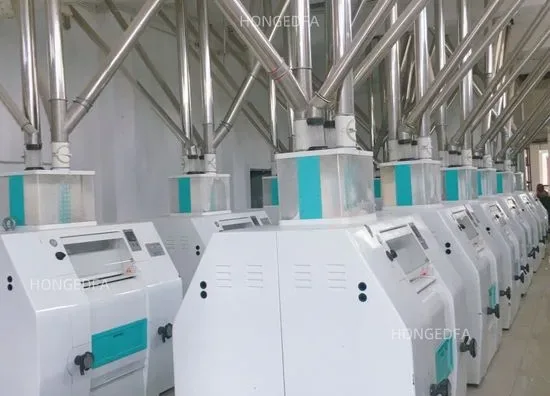
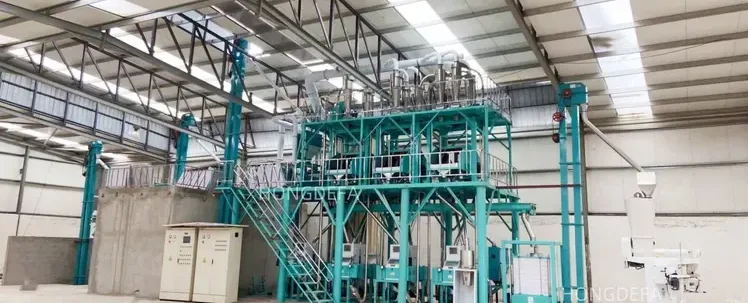
Sample output from the Industrial Wheat Flour Milling Line. Ask us for real production photos matched to your exact product and capacity.



Turnkey wheat flour plants from 10 to 100 TPD — roller mills, plansifters and purifiers pre-matched to capacity, delivering ~80% flour yield at 90–110 mesh with 2–3 operators per shift.
| Model | Capacity | Install area (L×W×H) | Power |
|---|---|---|---|
| WHT-101 | 10 TPD | 9×5×5 m | 30 kW |
| WHT-701 | 50 TPD | 24×6×6.5 m | 140.31 kW |
| WHT-201 | 100 TPD | 30×8.5×13 m | 405.11 kW |
Wheat millers building township or industrial flour plants. For the full range, see the flour & rice milling hub.
Start from the tonnes of flour you can sell per day, then divide by extraction, because grain in is not flour out. All-purpose flour extracts 72 to 78 percent, so 100 tonnes of wheat yields roughly 72 to 78 tonnes of flour. The range covers 10 to 500 tonnes per day, from a five-machine community mill to a fully automated industrial plant.
Yes. The line streams flour, semolina, and bran through plansifters and purifiers, and those streams are blended into all-purpose, bread, pastry, and whole wheat grades. Patent flour at 65 to 70 percent extraction is simply the whitest early streams taken separately. One line, several sellable products: that flexibility is what makes the investment case work.
Plan on 40 to 60 kilowatt hours per tonne of wheat processed across grinding and sifting. The figure moves with wheat moisture, hardness, and passage count. At that range power is a real but predictable line item, and we size the model against your local electricity tariff so the per-tonne operating margin is clear before you commit.
Both are supported. Multi-story lets gravity move stock down through cleaning, milling, and sifting, which saves pneumatic power but needs a taller building. Single-story runs pneumatic transport between machines and fits low-bay industrial units. Installation and commissioning take 60 to 120 days either way. Describe your building and we lay the line to it.
It scales with the model. The entry 10 tonne per day line is five core machines with straightforward controls, workable for a small crew. The industrial 500 tonne configuration adds full automation and SCADA, with remote monitoring available as an option. We match the automation level to the staff you can run, so you do not pay for control capacity you cannot use.
Yes. We provide installation and commissioning support, and 12 months of after-sales service, including spare parts help and technical response.

 7 * 24 Support
 Remote Support
 Global Coverage