Industrial Flow Wrap Machine
Flow wrapper for single-serve food products.
This site uses cookies for analytics and advertising. Accept them all, decline them all, or choose which ones you allow. Learn more in our privacy policy.

Flow wrapper for single-serve food products.
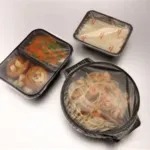
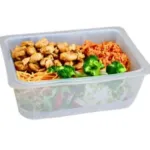
Sample output from the Industrial Flow Wrap Machine. Ask us for real production photos matched to your exact product and capacity.

Flow wrapper for single-serve food products. 30-300 packs/min. Film forming + end seal + cut. For candy, snack bars, individual cakes.
| Model | Capacity | Configuration |
|---|---|---|
| FLW-101 | 30 packs/min | Manual feed. |
| FLW-001 | 150 packs/min | Auto-feed infeed conveyor. |
| FLW-201 | 300 packs/min | Multi-lane industrial. |
Typical values — each model is configured to your product, cut size, and line speed.
Biscuit, candy, and bakery producers flow-wrapping individual pieces at speed. For the full range, see the processing hub.
Single lane with an auto-feed infeed runs around 150 packs per minute and covers most mid-scale operations. When the product is small and uniform, candy for example, the FLW-201 runs 2 to 4 lanes and reaches up to 300 packs per minute from one machine. The decision follows product size, target rate, and how much floor width you can give the infeed.
The infeed is matched to product behavior. Belt infeeds handle sturdy items, vibratory tracks settle irregular pieces, star wheels space round or consistent products, and robotic pick places fragile or jumbled items with orientation control. Most underperformance blamed on the wrapper is really an infeed mismatch. Tell us the product, and the infeed gets engineered to it, not assumed.
An optical eye reads the registration mark printed on the film and trims the cut position against it, so printed patterns land centered on every pack instead of drifting apart. Film stretch and printer mark contrast are the two things to keep healthy, and the eye and servo cut respond within the cycle. Print registration is standard on this range.
Changeover between product sizes runs 10 to 15 minutes: forming box, guide settings, and cut length recall from the stored recipe, with film threaded and the eye confirmed against the first few packs. Frequent-change plants keep format kits pre-set per product. That changeover speed is what lets a single machine serve a rotating schedule of short runs.
Cold-seal film suits heat-sensitive products like chocolate and enrobed bars, sealing by pressure without heated jaws, so product faces stay glossy and unmelted, and the line can run faster without heat soak. Heat-seal laminates stay the choice for sturdy items with longer shelf life needs. The wrapper runs both, with jaw and parameter changes between film types.
Yes. We provide installation and commissioning support, and 12 months of after-sales service, including spare parts help and technical response.

 7 * 24 Support
 Remote Support
 Global Coverage