Industrial Root Vegetable Cutting Machine
The RVC-001 specialized cutter handles hard root vegetables — potato, carrot, beet, taro, cassava — with precision slicing, dicing, and strip-cutting at 500-1,500 kg/h.
This site uses cookies for analytics and to improve your experience. By clicking Accept, you consent to our use of cookies. Learn more in our privacy policy.

The RVC-001 specialized cutter handles hard root vegetables — potato, carrot, beet, taro, cassava — with precision slicing, dicing, and strip-cutting at 500-1,500 kg/h.
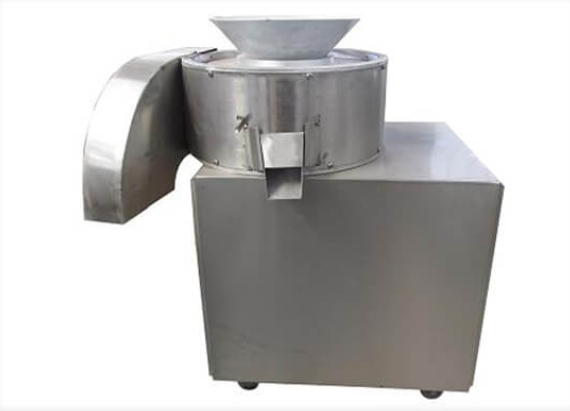
Sample output from the Industrial Root Vegetable Cutting Machine. Ask us for real production photos matched to your exact product and capacity.
The RVC-001 specialized cutter handles hard root vegetables — potato, carrot, beet, taro, cassava — with precision slicing, dicing, and strip-cutting at 500-1,500 kg/h.
| Model | Capacity | Configuration |
|---|---|---|
| RVC-101 Compact | 300-600 kg/h | Small processors. 1.5 kW. |
| RVC-001 Standard | 500-1,000 kg/h | Mid-scale. 2.2 kW. Slices, dices, strips. |
| RVC-201 Industrial | 1,000-1,500 kg/h | Industrial. 4.0 kW. PLC-controlled. |
Typical values — each model is configured to your product, cut size, and line speed.
Frozen and dehydrated vegetable plants cutting potato, carrot, taro, and similar roots into slices, strips, or shreds. For the full fresh-produce range, see the fruit and vegetable processing hub.
The compact handles 300 to 600 kg/h at 1.5 kW, the standard 500 to 1,000 kg/h at 2.2 kW, and the PLC-controlled industrial model 1,000 to 1,500 kg/h at 4.0 kW. Cuts cover slices from 2 to 15 mm, dices from 5 to 20 mm, and strips from 3 to 10 mm, set by blade set selection.
Yes, it is designed for them: potato, carrot, beet, taro, and cassava are the core list, and cassava in particular defeats general-purpose cutters. Taro runs with the soft-grip option that prevents bruising on the softer flesh. Feed hard roots at rated speed, and soften nothing: the blades are specified for raw hardness.
SUS420J2 hardened stainless sets run 800 to 1,200 hours, which is roughly 6 to 9 months of single-shift work, and hard roots sit at the faster-wearing end of that band. Keep at least one spare set per cut shape. Daily wash-down and weekly blade inspection are the routine that protects both blade life and cut quality.
Daily wash-down of all product-contact parts, weekly blade inspection for chips and edge wear, and scheduled lubrication per the manual. Frozen and dehydrated vegetable plants typically fold it into the existing cleaning round. The frame is stainless food-grade construction, so hose-down is safe on the wash side, with the drive side kept dry.
It sits after washing and peeling, cutting clean root feedstock into the shape your freezer or dryer expects. At 500 to 1,500 kg/h it matches typical mid-scale line speeds, and infeed heights match standard elevators and peeler discharge. Tell us your upstream equipment when ordering and we align the layout before shipping.
Yes. We provide installation and commissioning support, and 12 months of after-sales service, including spare parts help and technical response.

 7 * 24 Support
 Remote Support
 Global Coverage