Industrial Vegetable Mud Cutting Machine
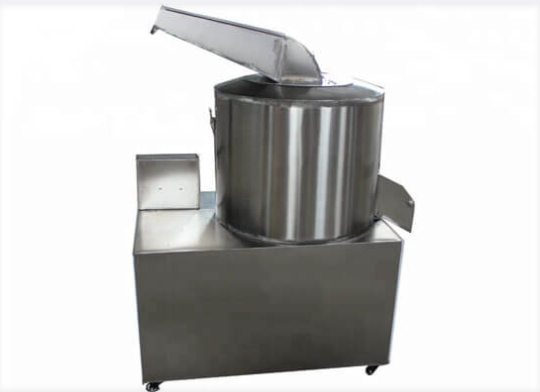
The VGM-001 finely pulverizes vegetables into smooth paste/mud for baby food, sauces, and fillings.
This site uses cookies for analytics and to improve your experience. By clicking Accept, you consent to our use of cookies. Learn more in our privacy policy.

The VGM-001 finely pulverizes vegetables into smooth paste/mud for baby food, sauces, and fillings.
Sample output from the Industrial Vegetable Mud Cutting Machine. Ask us for real production photos matched to your exact product and capacity.
The VGM-001 finely pulverizes vegetables into smooth paste/mud for baby food, sauces, and fillings. 200-800 kg/h. Colloid-mill mechanism produces 50-100 micron texture.
| Model | Capacity | Configuration |
|---|---|---|
| VGM-101 | 200-400 kg/h | Small baby-food plants. 1.5 kW. |
| VGM-001 | 400-600 kg/h | Mid-scale sauce production. 3.0 kW. |
| VGM-201 | 600-800 kg/h | Industrial. 5.5 kW. Fine paste production. |
Typical values — each model is configured to your product, cut size, and line speed.
Pickled and fermented vegetable plants cutting mud-coated roots — lotus, mustard tuber, radish — after washing. For the full fresh-produce range, see the fruit and vegetable processing hub.
The small model produces 200 to 400 kg/h at 1.5 kW for baby-food plants. The mid machine runs 400 to 600 kg/h at 3.0 kW for sauce production, and the industrial 600 to 800 kg/h at 5.5 kW. Size against your filling line, since paste should flow to filling without intermediate holding.
A smooth paste at 50 to 100 microns, with the texture adjustable through the milling gap. That fineness suits baby food, sauces, and fillings directly, with no sieving stage after. Carrot, pumpkin, potato, spinach, and tomato are the usual vegetables, and most soft produce runs without special tooling.
Hard vegetables like carrot need about 5 minutes of steam blanching first, both to soften the flesh and to stabilize color. Soft vegetables like tomato and spinach mill directly. The blanching step, where needed, slots ahead of the mill in the same line. Skipping it on hard roots costs you texture and throughput.
Yes. Mango, banana, and apple paste run for baby food and filling programs, on the same mill with adjusted gap settings. Fruit generally needs no pre-cooking beyond normal ripening. If you run both fruit and vegetable campaigns, plan the cleaning between them since color and flavor carry over strongly in paste products.
Cleaning is a 5-minute CIP cycle with the detachable milling head, which is the hygiene-critical part. On shelf life, fresh paste holds 3 to 5 days refrigerated, so hot-pack or freeze for longer distribution. Daily CIP after each product run is the baseline, and the detachable head makes deep weekly cleaning quick.
Yes. We provide installation and commissioning support, and 12 months of after-sales service, including spare parts help and technical response.

 7 * 24 Support
 Remote Support
 Global Coverage