Poultry Feather Removal Machine
The PFR-001 poultry feather removal machine plucks chickens, ducks, geese, pigeons, and quail at 500-3,000 birds per hour without bruising the skin.
This site uses cookies for analytics and to improve your experience. By clicking Accept, you consent to our use of cookies. Learn more in our privacy policy.

The PFR-001 poultry feather removal machine plucks chickens, ducks, geese, pigeons, and quail at 500-3,000 birds per hour without bruising the skin.
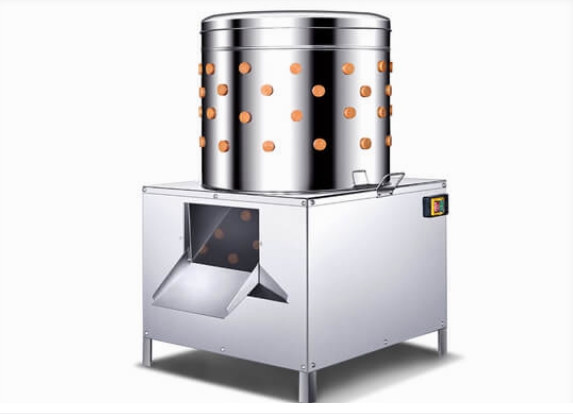
Sample output from the Poultry Feather Removal Machine. Ask us for real production photos matched to your exact product and capacity.

The PFR-001 poultry feather removal machine plucks chickens, ducks, geese, pigeons, and quail at 500-3,000 birds per hour without bruising the skin. Stainless steel construction with 84-128 food-grade rubber fingers rotating at 200 RPM ensures 99% feather removal in a single pass.
| Model | Capacity | Configuration |
|---|---|---|
| PFR-101 Small | 500 birds/h | Chicken and quail. 64 fingers, single-phase 220V. |
| PFR-001 Standard | 1,500 birds/h | Chicken and duck. 96 fingers, 220V/380V. |
| PFR-201 Industrial | 3,000 birds/h | Chicken, duck, goose. 128 fingers, three-phase 380V. |
Typical values — each model is configured to your product, cut size, and line speed.
Poultry processing plants removing feathers after scalding — chicken, duck, and guinea fowl. For the full range, see the processing hub.
Bird count per hour and species set the model. The small unit plucks 500 birds per hour with 64 fingers on single-phase 220V and suits chicken and quail. The standard unit runs 1,500 birds per hour with 96 fingers and handles chicken and duck. The industrial model reaches 3,000 birds per hour with 128 fingers, three-phase 380V, and takes goose as well.
Almost always. Birds must scald at 60 to 65°C for 60 to 90 seconds before plucking; skip it and removal drops to 60-70% while skin tears rise. Check scald temperature with a probe rather than the tank dial, and check timing against bird size. The machine itself delivers about 99% removal when the scald is right.
Fingers run 12 to 18 months single-shift or 6 to 9 months on two shifts, and OEM replacements ship on 5-day global delivery. Inspect finger wear weekly and replace worn ones quarterly rather than all at once, since fingers wear unevenly across the drum. Worn fingers are the second cause, after scalding, of incomplete plucks.
Daily hose-down of the drum and frame. Weekly finger inspection for wear and damage. Monthly lubrication of the bearings. Quarterly replacement of worn fingers. That is the whole schedule, and it fits inside normal shift cleanup. The stainless construction survives the daily wash, but the machine is IP54, so it stays indoors or under cover.
Feathers flush out the bottom through a 4-inch chute, and you connect that to a feather screen or screw conveyor for collection. Water flushing keeps the chute clear during production. Plan the feather handling route when you position the machine, because a plucker with nowhere to send feathers will flood its own floor within a shift.
Yes. We provide installation and commissioning support, and 12 months of after-sales service, including spare parts help and technical response.

 7 * 24 Support
 Remote Support
 Global Coverage