Industrial Peanut Sorting Machine
The PSM-001 optical color sorter removes discolored, moldy, and defective peanuts at 500-2,000 kg/h.
This site uses cookies for analytics and to improve your experience. By clicking Accept, you consent to our use of cookies. Learn more in our privacy policy.

The PSM-001 optical color sorter removes discolored, moldy, and defective peanuts at 500-2,000 kg/h.
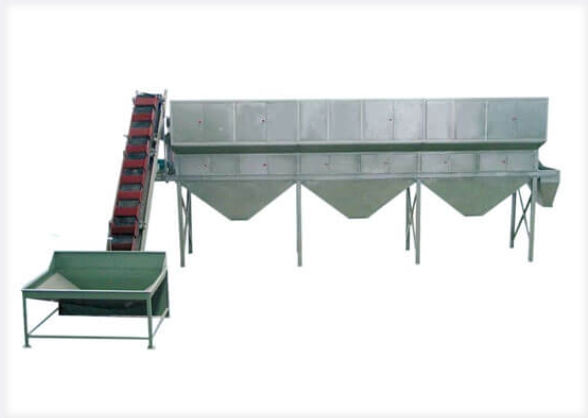
Sample output from the Industrial Peanut Sorting Machine. Ask us for real production photos matched to your exact product and capacity.

The PSM-001 optical color sorter removes discolored, moldy, and defective peanuts at 500-2,000 kg/h. CCD camera + air-jet ejector. 99.5% defect removal.
| Model | Capacity | Configuration |
|---|---|---|
| PSM-101 | 500 kg/h | Small processors. Single camera. |
| PSM-001 | 1,000 kg/h | Mid-scale. Dual CCD camera. 99.5% accuracy. |
| PSM-201 | 2,000 kg/h | Industrial. Quad camera + shape recognition. |
Typical values — each model is configured to your product, cut size, and line speed.
Peanut processors grading kernels by size for roasting, butter, and export lines. For the full range, see the processing hub.
Indirectly, yes. Aflatoxin-affected kernels show yellow-green discoloration, and the CCD cameras catch that discoloration and eject the kernel. This is why sorters sit in food safety plans for peanuts: they remove the visible risk carriers, though they do not replace lab testing of the lot. Run the sorter as one control alongside your testing regime and you address both angles.
Kernels flow in a single layer past the cameras; when the system flags a defective kernel, a high-speed solenoid valve fires an air jet and blasts it off the belt within about a millisecond. The precision is what protects good yield: only the flagged kernel leaves the accept stream. Ejector valves are the component to watch for wear in dusty plants.
Roughly 500 kg/h per camera lane, so the single-camera entry model handles 500, the dual-camera model reaches 1,000, and the PSM-201 with four lanes and shape recognition sorts 2,000 kg/h. Buy lanes for your realistic peak, not your average, because a sorter running flat loses rejection accuracy. If you grade by shape as well as color, the quad-camera version adds that capability.
Not the same settings, but the same machine: you switch the camera profile between nut types, which is a selection rather than a hardware change. Each profile holds its own color baselines and acceptance bands. This matters if you run peanuts and almonds in one plant, since both benefit from sorting but each needs its own reference for what counts as defective.
Monthly camera calibration keeps rejection accuracy at its stated level, and lamps are an annual replacement item. Day to day, keep the optical glass clean, because dust film shifts what the cameras see and quietly degrades sorting. Calibration after any relocation is also wise. Skipping these short routines is the usual reason a sorter drifts out of spec between seasons.
Yes. We provide installation and commissioning support, and 12 months of after-sales service, including spare parts help and technical response.

 7 * 24 Support
 Remote Support
 Global Coverage