Industrial Sesame Cleaning Machine
The SCL-001 removes sand, dust, and foreign matter from raw sesame seeds at 100-500 kg/h.
This site uses cookies for analytics and to improve your experience. By clicking Accept, you consent to our use of cookies. Learn more in our privacy policy.

The SCL-001 removes sand, dust, and foreign matter from raw sesame seeds at 100-500 kg/h.

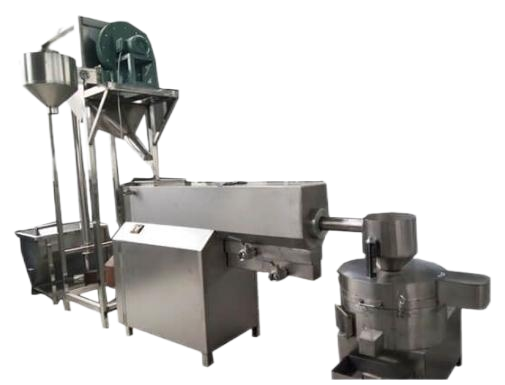
Sample output from the Industrial Sesame Cleaning Machine. Ask us for real production photos matched to your exact product and capacity.

The SCL-001 removes sand, dust, and foreign matter from raw sesame seeds at 100-500 kg/h. Vibration screen + water wash + de-stoning. 99.5% purity output.
| Model | Capacity | Configuration |
|---|---|---|
| SCL-101 | 100 kg/h | Small tahini operations. 0.37 kW. |
| SCL-001 | 300 kg/h | Mid-scale. 0.75 kW. Vibration + water wash. |
| SCL-201 | 500 kg/h | Industrial. 1.1 kW. Auto-de-stoner. |
Typical values — each model is configured to your product, cut size, and line speed.
Tahini mills and sesame exporters cleaning raw sesame of sand, stones, and hull ahead of roasting or pressing. For the full range, see the processing hub.
Water wash removes fine dust that clings to sesame and delivers the full 99.5% purity output, using 50 to 100 L/h on a recirculating loop with a filter system. Choose the air-only dry version when your downstream process cannot tolerate added moisture, accepting slightly less dust removal. Most tahini mills take the wash, since they dry or roast immediately after anyway.
The density separator removes 99.8% of sand and stones, which matters more with sesame than most seeds because sesame is harvested close to the ground and carries grit. Stones also destroy grinder stones and plates downstream in a tahini mill. If your incoming lots are unusually dirty, cleaning them twice costs little compared with one escaped stone in the mill.
Losses stay under 0.5% of good seed carried out with the foreign matter when the machine is set up correctly. Screen selection and vibration frequency are the two adjustments; finer seeds like quinoa and chia need a lower frequency setting. Because sesame is a high-value seed by weight, that loss figure is worth checking monthly against your actual input and output weights.
Clean the screens daily, since damp sesame dust cakes into the mesh and drops cleaning efficiency; a monthly bearing check completes the schedule. The recirculating water filter also needs attention on wash versions, because a blocked filter carries dust back onto clean seed. Power draw is small, 0.37 to 1.1 kW across the range, so this is a low-cost machine to keep running.
Directly before roasting or pressing, after any bulk pre-screening you do on intake. Cleaning last means sand and hull never enter the roaster or press, which protects both the product and the equipment. The 100 to 500 kg/h range matches typical tahini mill throughputs, and the cleaner feeds a roaster at a matched rate. We help you balance the two so neither waits on the other.
Yes. We provide installation and commissioning support, and 12 months of after-sales service, including spare parts help and technical response.

 7 * 24 Support
 Remote Support
 Global Coverage