Industrial Multifunctional Sesame Roasting Machine
The MSR-001 roasts sesame seeds, sunflower seeds, and small grains at 120-200°C.
This site uses cookies for analytics and to improve your experience. By clicking Accept, you consent to our use of cookies. Learn more in our privacy policy.

The MSR-001 roasts sesame seeds, sunflower seeds, and small grains at 120-200°C.
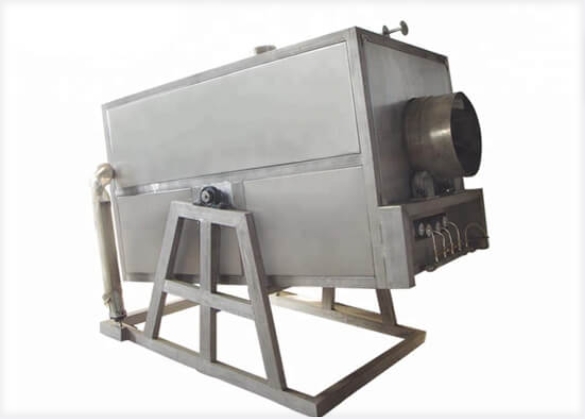
Sample output from the Industrial Sesame Roasting Machine. Ask us for real production photos matched to your exact product and capacity.

The MSR-001 roasts sesame seeds, sunflower seeds, and small grains at 120-200°C. 100-500 kg/h. Even roasting via rotating drum with internal lifting flights.
| Model | Capacity | Configuration |
|---|---|---|
| MSR-101 | 100 kg/h | Small tahini and oil plants. 0.75 kW. |
| MSR-001 | 300 kg/h | Mid-scale. 1.5 kW. Gas or electric. |
| MSR-201 | 500 kg/h | Industrial. 2.2 kW. Continuous feed. |
Typical values — each model is configured to your product, cut size, and line speed.
Tahini mills, sesame oil plants, and bakeries roasting sesame to color and aroma targets. For the full range, see the processing hub.
The drum adjusts from 120 to 200°C. Sesame runs best at 150 to 170°C for tahini-grade color and aroma; pumpkin seeds want a gentler 140 to 160°C. Start in the middle of the band for your seed, then fine-tune against the color you target. Because the same machine handles sunflower and small grains, log each seed’s proven setpoint so operators repeat it exactly.
Both are offered on the same frame. Gas is usually the cheaper fuel where supply is reliable, which matters on long roasting shifts; electric keeps the area cleaner and simpler to permit since there is no combustion. Many food plants choose electric when the roaster sits inside a finished-goods room. Tell us your utility costs and we run the comparison for your duty cycle.
The rotating drum carries internal lifting flights that lift and drop the seeds continuously, so every seed gets equal exposure to the hot drum surface instead of riding in a static layer. That is what keeps color uniform at discharge. If you ever see lighter patches, the usual cause is overfilling past the rated drum load, which stops the flights turning the seed properly.
It is strongly recommended. Seeds leaving the drum hold enough heat to keep roasting in the collection bin, a carryover effect that darkens the batch past its target. An external cooling conveyor pulls that heat out immediately and locks in the exact color you roasted to. It is a small add compared with reworking a bin of over-roasted sesame.
The routine is monthly bearing lubrication and an annual drum inspection for wear and alignment. The drum motors are modest, from 0.75 to 2.2 kW across the range, so running cost is mostly fuel. Keep the discharge clean, because seed debris buildup at the outlet is the main thing that disturbs uniform flow through the drum over time.
Yes. We provide installation and commissioning support, and 12 months of after-sales service, including spare parts help and technical response.

 7 * 24 Support
 Remote Support
 Global Coverage