Industrial Medium Nut Roasting Equipment
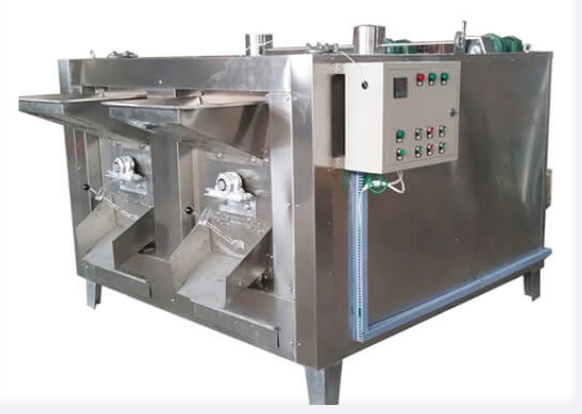
The MNE-001 medium-capacity roaster handles 500-1,500 kg/h of mixed nuts.
This site uses cookies for analytics and to improve your experience. By clicking Accept, you consent to our use of cookies. Learn more in our privacy policy.

The MNE-001 medium-capacity roaster handles 500-1,500 kg/h of mixed nuts.

Sample output from the Industrial Medium Nut Roasting Equipment. Ask us for real production photos matched to your exact product and capacity.
The MNE-001 medium-capacity roaster handles 500-1,500 kg/h of mixed nuts. Gas or electric. Ideal for mid-scale plants processing multiple nut varieties.
| Model | Capacity | Configuration |
|---|---|---|
| MNE-101 | 500 kg/h | Single drum. Gas. 1.5 kW drum motor. |
| MNE-001 | 1,000 kg/h | Dual drum. Gas/electric. 3.0 kW. |
| MNE-201 | 1,500 kg/h | Triple drum continuous. PLC. 4.0 kW. |
Typical values — each model is configured to your product, cut size, and line speed.
Mid-scale nut processors roasting peanut, almond, and sesame batches to spec. For the full range, see the processing hub.
Each drum carries its own lift and exposure cycle, so a large batch is divided across drums rather than piled into one long mass, which is how a mid-scale machine holds uniform color at 1,000 to 1,500 kg/h. Uneven roasting in single large drums usually traces to depth of bed; dividing the bed across drums fixes that by design.
The 500 kg/h model is a single drum on gas; the 1,000 kg/h adds a second drum and the choice of gas or electric; the 1,500 kg/h runs three drums continuously on PLC control. The PLC step matters if you plan longer runs with less supervision, since stored recipes and automatic control remove operator variance between shifts.
The controller stores 10 programmable recipes, each holding its own temperature and time combination, so each product recalls its proven profile instead of being re-dialed from memory. The temperature range spans 120 to 220°C, wide enough for gentle seed work through dark nut roasts. Name recipes clearly and lock the ones that passed QA so operators cannot overwrite them.
Gas is generally the lower running cost and stays the default where supply is reliable; electric simplifies installation and permitting and suits plants roasting near finished product. Note that the 500 kg/h model is gas-fired, while the larger two offer both. Compare against your actual tariff and gas price per hour of roasting, not nameplate ratings.
Monthly bearing lubrication across the drum drives is the core schedule, plus keeping the drums clean of oil residue from nut roasting, which carbonizes and taints later batches. Plan an external cooling conveyor after discharge to stop carryover cooking. With modest drum motors at 1.5 to 4.0 kW, the maintenance burden is small for the throughput involved.
Yes. We provide installation and commissioning support, and 12 months of after-sales service, including spare parts help and technical response.

 7 * 24 Support
 Remote Support
 Global Coverage