Industrial Peanut and Almond Kernel Cutting Machine
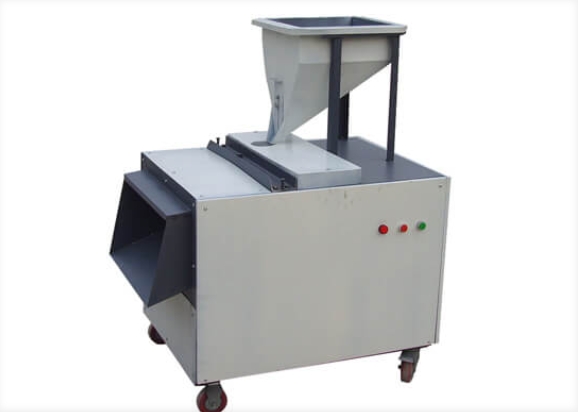
The PKC-001 cuts peanut and almond kernels into slivers, slices, and slabs.
This site uses cookies for analytics and to improve your experience. By clicking Accept, you consent to our use of cookies. Learn more in our privacy policy.

The PKC-001 cuts peanut and almond kernels into slivers, slices, and slabs.
Sample output from the Industrial Nut Kernel Cutting Machine. Ask us for real production photos matched to your exact product and capacity.
The PKC-001 cuts peanut and almond kernels into slivers, slices, and slabs. 200-600 kg/h. Precision blade for bakery, confectionery, and ice cream toppings.
| Model | Capacity | Configuration |
|---|---|---|
| PKC-101 | 200 kg/h | Small bakery suppliers. 0.55 kW. |
| PKC-001 | 400 kg/h | Mid-scale confectionery. 1.1 kW. 0.5-2mm slices. |
| PKC-201 | 600 kg/h | Industrial. 1.5 kW. Sliver + slice + slab. |
Typical values — each model is configured to your product, cut size, and line speed.
Bakery and confectionery suppliers slicing kernels for toppings, granola, and decoration. For the full range, see the processing hub.
It comes down to blade configuration and gap. Slices run 0.5 to 2 mm thick, set through the blade gap; slivers are cut 2 to 4 mm wide across the kernel’s full length. The 600 kg/h model handles sliver, slice, and slab formats in one frame. Tell us the formats your bakery and confectionery customers order and we configure the cutting set to match.
A hot water soak of about 15 minutes softens the kernel so the blade passes through cleanly instead of shattering it. This is the single biggest lever on the broken rate: properly soaked feed keeps breakage under 5%, while dry kernels can far exceed that. It also protects blade edges, because cutting hard dry kernels dulls them faster than cutting softened ones.
Blades are SUS420J2 hardened stainless, a food-grade cutlery steel chosen for edge life on nut work, and yes, they are re-sharpenable rather than disposable. Rotation between two sets works well: one in the machine, one freshly sharpened. Blade condition directly sets your broken rate and slice face quality, so inspect edges weekly under heavy bakery duty.
Yes. Walnuts run by lowering blade speed, because their softer, oilier texture cuts differently from almond. The speed and gap adjustments are both operator-level settings, not part changes. One caution: walnut oil transfers, so if you also cut almonds for allergen-sensitive customers, plan a full clean-down between the two nuts on the shared contact parts.
The range spans 200, 400, and 600 kg/h. For ice cream and bakery toppings, remember finished volume is less than input once breakage and fines are screened out, so size the cutter above your packed-output need. At 0.55 to 1.5 kW these are low-power machines, and one operator feeds and monitors comfortably, so capacity is mostly a decision on batch size.
Yes. We provide installation and commissioning support, and 12 months of after-sales service, including spare parts help and technical response.

 7 * 24 Support
 Remote Support
 Global Coverage