Industrial Nut Shell and Kernel Separator
The NSS-001 separates nut shells from kernels using air-leg density separation.
This site uses cookies for analytics and to improve your experience. By clicking Accept, you consent to our use of cookies. Learn more in our privacy policy.

The NSS-001 separates nut shells from kernels using air-leg density separation.
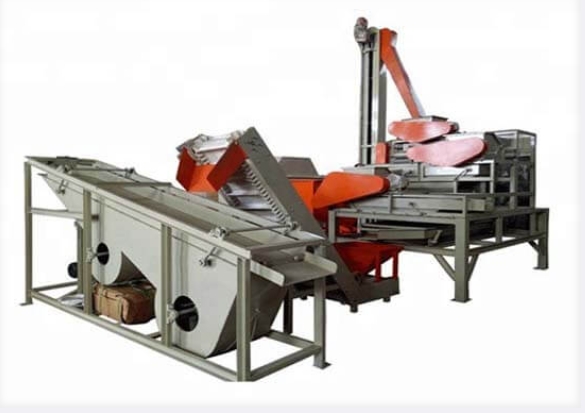
Sample output from the Industrial Nut Shell and Kernel Separator. Ask us for real production photos matched to your exact product and capacity.

The NSS-001 separates nut shells from kernels using air-leg density separation. 500-2,000 kg/h. For walnut, pecan, hazelnut, and pistachio cracking lines.
| Model | Capacity | Configuration |
|---|---|---|
| NSS-101 | 500 kg/h | Small cracking operations. 0.75 kW fan. |
| NSS-001 | 1,000 kg/h | Mid-scale. 1.5 kW. Dual air-leg. |
| NSS-201 | 2,000 kg/h | Industrial. 2.2 kW. Triple separation zone. |
Typical values — each model is configured to your product, cut size, and line speed.
Shelling plants separating kernels from shells and hulls after cracking. For the full range, see the processing hub.
On density difference. The cracked mix falls through a rising air column: shells, being lighter, are lifted and blown off into a discharge, while denser kernels fall through against the flow. Because the split depends on air velocity, the fan setting is tuned per nut type. The 1,000 kg/h model uses dual air-legs and the 2,000 kg/h a triple separation zone for cleaner results.
Expect 97%+ clean kernels with under 3% shell contamination when the air setting matches the nut and the feed is evenly cracked. In-shell bits that ride the boundary can be re-run: many plants send the middle fraction back through rather than accept contamination. For tighter specs, an optional vibrating screen attachment adds 3-grade sizing so shells and undersize kernels exit separately.
Walnut, pecan, hazelnut, pistachio, and almond, in each case after the nuts have been cracked. The adjustment between them is air velocity and, where fitted, the screen grade. Pecan and walnut, with their light woody shells, separate easily; pistachio sometimes needs a second pass for stubborn half-shells. We can advise settings by nut if you share your mix.
Plan for 0.5 to 2.0 cubic meters per minute at 0.3 MPa depending on model; a standard blower package covers this, and fan power runs 0.75 to 2.2 kW across the range. Give your blower or compressor details during ordering so the unit arrives matched. Also allow a discharge route for the shell stream, since it exits continuously.
Very little, which is why shelling plants like them: clean the air filter monthly, since a clogged filter disturbs the velocity that separation depends on, and check bearings annually. There are no blades or wear plates in the product path. The one habit that matters is re-checking fan settings whenever you change nut type, since last season’s setting rarely suits this season’s shells.
Yes. We provide installation and commissioning support, and 12 months of after-sales service, including spare parts help and technical response.

 7 * 24 Support
 Remote Support
 Global Coverage