Industrial Roasted Peanut Peeling Machine
The RPP-001 removes red skin from roasted peanuts via soft roller friction.
This site uses cookies for analytics and to improve your experience. By clicking Accept, you consent to our use of cookies. Learn more in our privacy policy.

The RPP-001 removes red skin from roasted peanuts via soft roller friction.
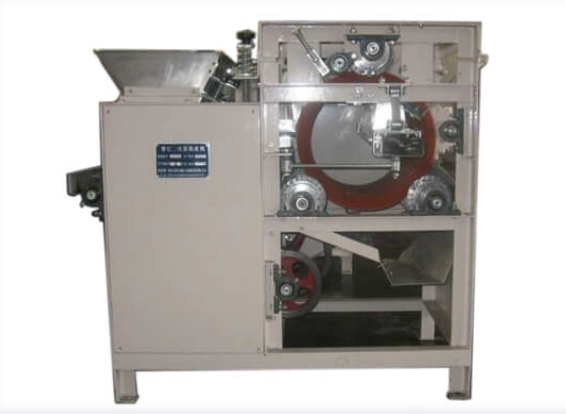
Sample output from the Industrial Roasted Peanut Peeling Machine. Ask us for real production photos matched to your exact product and capacity.
The RPP-001 removes red skin from roasted peanuts via soft roller friction. 200-1,000 kg/h. 98% peel rate, <2% split kernel. SUS304 stainless.
| Model | Capacity | Configuration |
|---|---|---|
| RPP-101 | 200 kg/h | Small peanut processors. 0.75 kW. |
| RPP-001 | 500 kg/h | Mid-scale peanut butter plants. 1.5 kW. 98% peel rate. |
| RPP-201 | 1,000 kg/h | Industrial. 2.2 kW. Continuous feed. |
Typical values — each model is configured to your product, cut size, and line speed.
Peanut butter and snack producers removing the red skin from roasted kernels ahead of grinding or packing. For the full range, see the processing hub.
Match the peeler to your grinder, since it sits directly upstream. Capacities run 200, 500, and 1,000 kg/h across the range, so a mid-scale butter plant usually takes the 500 kg/h model at 1.5 kW. If you roast in batches, remember the peeler is continuous: size it so peeled kernels move straight to grinding instead of waiting in bins.
Split kernels are almost always a preparation problem. The rollers need kernels roasted to about 160°C for 20 minutes, dried below 5% moisture, then cooled to around 35°C before feeding. Kernels that are too soft or too warm crush instead of rolling, and the split rate climbs above the 2% the machine holds when conditions are right. Fix the roast and cooling first.
Yes. The soft roller friction principle is the same for almonds; you adjust the roller gap for the larger kernel size. Expect to re-check the gap when switching between nut types, because a gap set for peanuts will over-compress almonds. If you run both regularly, tell us and we set the machine up for quick changeover between the two products.
A vacuum system pulls skins off the rollers as they release and collects them in a separate container, which keeps the kernel stream clean and the area dust-free. The collected skins are suitable for animal feed, so many plants sell them rather than binning them. The vacuum filter is the one part to check weekly, since a blocked filter drops skin removal performance.
The workload is light: inspect the rollers monthly for wear and surface condition, and plan bearing replacement about once a year under normal duty. Rollers are the wear part that decides peel rate, so keep a spare set once the surface starts glazing. All food contact areas are SUS304 stainless, which makes the daily wipe-down straightforward.
Yes. We provide installation and commissioning support, and 12 months of after-sales service, including spare parts help and technical response.

 7 * 24 Support
 Remote Support
 Global Coverage