Industrial Roasting Machine for Salted Peanuts
The RSP-001 roasts and salts peanuts in a single continuous pass.
This site uses cookies for analytics and to improve your experience. By clicking Accept, you consent to our use of cookies. Learn more in our privacy policy.

The RSP-001 roasts and salts peanuts in a single continuous pass.
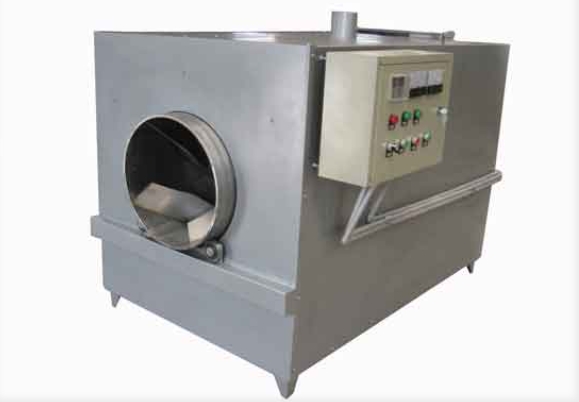
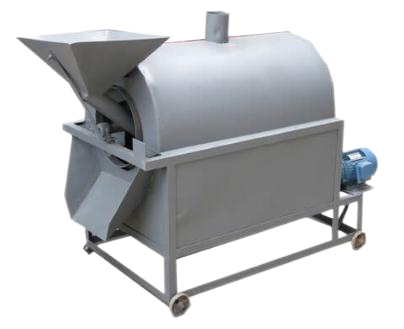
Sample output from the Industrial Salted Peanut Roaster. Ask us for real production photos matched to your exact product and capacity.

The RSP-001 roasts and salts peanuts in a single continuous pass. Drum roaster + salt spray. 200-1,000 kg/h. Produces perfectly salted, evenly roasted snack peanuts.
| Model | Capacity | Configuration |
|---|---|---|
| RSP-101 | 200 kg/h | Small snack producers. Gas heating. |
| RSP-001 | 500 kg/h | Mid-scale with salt spray system. Gas/electric. |
| RSP-201 | 1,000 kg/h | Industrial continuous. Auto salt dosing. |
Typical values — each model is configured to your product, cut size, and line speed.
Salted and seasoned peanut snack producers roasting to crispness and flavor targets. For the full range, see the processing hub.
A spray system doses salt onto the kernels inside the rotating drum, adjustable from 1 to 3% by weight through the nozzle setting. The drum’s tumbling action is what spreads it, achieving better than 95% coverage uniformity. If you use an oil assist for adhesion, coverage holds even better; pure dry salting relies entirely on the tumble, so keep the drum load within rating.
Dry roasting is the standard configuration and the cleaner process for most snack lines. Oil roasting is available as an option and gives a richer mouthfeel and better salt cling, at the cost of managing oil in the process. The decision usually follows your product positioning. Both run on the same machine, so you can start dry and add the oil option later.
The drum range is 140 to 200°C, and typical salted peanuts sit at 160 to 170°C, hot enough to drive crispness without scorching the surface under salt. Cashews on the same machine want a gentler 130 to 150°C. Hold time matters as much as temperature: verify both when you dial in a recipe, and record the settings that pass your taste panel.
Three points: salt dosing, drum temperature, and discharge temperature. Salt percentage drifts if the nozzle clogs, so check applied rate against target weight per batch. Drum temperature swing shows up as color variation within a lot. And peanuts leaving hot keep cooking in the tote, so an external cooling conveyor is recommended to stop the roast at the exact color you want.
It is built for continuous pass-through: kernels enter, roast, receive the salt spray, and discharge without stopping, at 200 to 1,000 kg/h depending on model. The 1,000 kg/h version adds automatic salt dosing for consistent seasoning without an operator metering by hand. Feed it from an upstream fryer or blancher and discharge onto a cooling conveyor toward packaging.
Yes. We provide installation and commissioning support, and 12 months of after-sales service, including spare parts help and technical response.

 7 * 24 Support
 Remote Support
 Global Coverage