Industrial Sunflower Seed Peeling Machine
The SSP-001 removes the hard outer shell from sunflower seeds, producing clean kernels for oil pressing, baking, and snack food.
This site uses cookies for analytics and to improve your experience. By clicking Accept, you consent to our use of cookies. Learn more in our privacy policy.

The SSP-001 removes the hard outer shell from sunflower seeds, producing clean kernels for oil pressing, baking, and snack food.
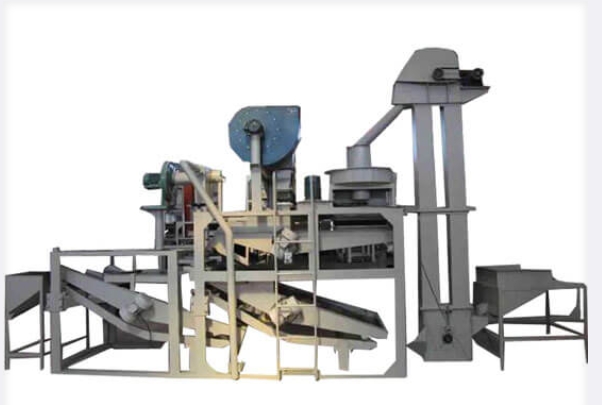
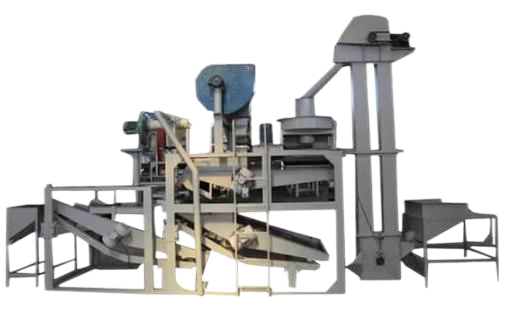
Sample output from the Industrial Sunflower Seed Peeling Machine. Ask us for real production photos matched to your exact product and capacity.
The SSP-001 removes the hard outer shell from sunflower seeds, producing clean kernels for oil pressing, baking, and snack food. 200-800 kg/h.
| Model | Capacity | Configuration |
|---|---|---|
| SSP-101 | 200 kg/h | Small oil/baking operations. 1.5 kW. |
| SSP-001 | 500 kg/h | Mid-scale. 3.0 kW. 92% dehulling rate. |
| SSP-201 | 800 kg/h | Industrial. 4.0 kW. Continuous feed. |
Typical values — each model is configured to your product, cut size, and line speed.
Bakery and snack producers hulling sunflower kernels for topping and ingredient use. For the full range, see the processing hub.
Essential. Large debris must come off first with a vibration screen, because sticks and clods entering the dehulling chamber damage discs and scatter the settings. Seed sizing matters just as much: the 92%+ dehulling rate is quoted for properly sized seed, and a mixed-size lot forces a compromise gap that either leaves shells on small seeds or cracks large kernels. Sort first, dehull second.
Under 5% broken kernels when the dehulling gap is calibrated to your seed. Breakage climbs when the gap runs tight for a cleaner hull, so the setting is a balance between shell removal and kernel protection. If your buyer’s spec is strict on broken kernels, it is usually better to accept slightly lower dehulling and re-run unshelled seed than to chase one-pass perfection.
The air separation stage lifts them out of the kernel stream and collects them separately. Sunflower shells have real value as fuel and pellet feed stock, so most plants bale or bag them for sale rather than discard. Keeping the shell stream clean also matters commercially: shells mixed into the kernel lot trigger exactly the dockages the separator exists to prevent.
Yes, with adjustment for the larger seed size, which makes one machine serve both oilseed and snack-seed programs. Expect to reset the dehulling gap and possibly run pumpkin seeds at a lower rate, since larger seeds process fewer per hour at the same feed volume. Run a test lot first and record settings per seed type for repeatable results.
The dehulling discs are the wear item: inspect monthly and plan replacement roughly quarterly under steady duty. Disc condition shows up directly as a drifting dehulling rate before anything fails outright. Keep at least one disc set in stock, since disc availability is what usually determines downtime on these machines, and power draw at 1.5 to 4.0 kW is minor next to that.
Yes. We provide installation and commissioning support, and 12 months of after-sales service, including spare parts help and technical response.

 7 * 24 Support
 Remote Support
 Global Coverage