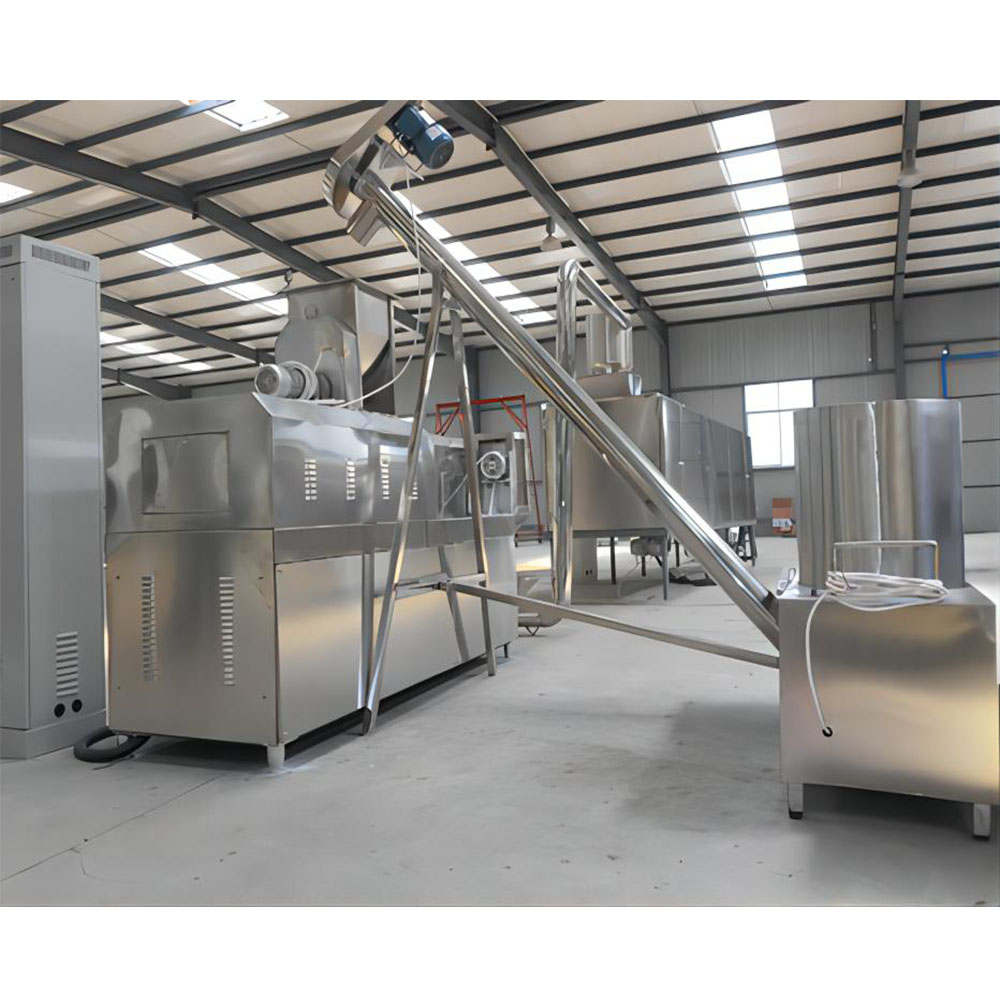
A commercial popcorn production line usually reaches break-even in 8 to 18 months, depending on equipment investment, production scale, selling channel, and capacity utilization. The machine output is only one part of the ROI calculation. Buyers also need to consider raw materials, packaging, labor, utilities, product loss, certification, distribution margins, and how quickly stable orders can be developed.
This guide explains how to estimate popcorn production line cost, monthly profit, and realistic payback period for small, medium, and industrial popcorn manufacturing projects.
How Much Does a Popcorn Production Line Cost?
The cost of a popcorn production line depends on capacity, automation level, heating method, coating requirements, and packaging system. A basic line may use semi-automatic transfer between machines, while a larger industrial line usually connects popping, cooling, flavoring, sieving, conveying, and packaging into a continuous production process.
| Line Scale | Capacity | Estimated Equipment Cost | Operators Needed | Best For |
|---|---|---|---|---|
| Small / Starter Line | 50–100 kg/hr | $15,000–$40,000 | 2–3 | Local retail, events, online sales |
| Medium Line | 100–300 kg/hr | $40,000–$80,000 | 3–5 | Regional distribution, supermarket supply |
| Industrial Line | 300–1,000+ kg/hr | $80,000–$300,000+ | 5–10 | National distribution, export, private label |
A complete popcorn production line normally includes:
- Popcorn popping machine
- Cooling conveyor
- Flavoring or coating drum
- Vibrating sieve for removing unpopped kernels
- Bucket elevator or conveyor
- Packaging machine
- Control system
- Installation and operator training
For plain salted popcorn, the equipment structure is relatively simple. For caramel popcorn, cheese popcorn, chocolate-coated popcorn, or mixed snack products, the line may require additional syrup cooking, coating, cooling, anti-sticking, and weighing systems.
Component Cost Breakdown
The following table gives a practical equipment cost reference for different production scales. Actual pricing should be confirmed based on voltage, material grade, control system, packaging format, and customization requirements.
| Component | Small Line | Medium Line | Industrial Line |
|---|---|---|---|
| Popping Machine | $5,000–$15,000 | $15,000–$30,000 | $30,000–$100,000 |
| Cooling Conveyor | $2,000–$5,000 | $5,000–$10,000 | $10,000–$30,000 |
| Flavoring / Coating Drum | $3,000–$8,000 | $8,000–$20,000 | $20,000–$60,000 |
| Sieving System | $1,000–$3,000 | $3,000–$8,000 | $8,000–$20,000 |
| Packaging System | $3,000–$8,000 | $8,000–$15,000 | $15,000–$80,000 |
| Installation and Training | $1,000–$3,000 | $3,000–$5,000 | $5,000–$15,000 |
The packaging system can become one of the largest cost differences. A simple bag sealing system is suitable for local retail or trial production. For supermarket, export, or private-label products, buyers often need automatic weighing, bag forming, nitrogen flushing, date coding, and metal detection.
Raw Material and Production Cost
Popcorn kernels are relatively low-cost raw materials compared with many other snack ingredients. However, the final production cost depends heavily on product type.
Plain popcorn has a lower ingredient cost, while caramel, cheese, chocolate, butter, and mixed-flavor products require more ingredients and tighter process control.
| Cost Item | Plain Popcorn | Flavored Popcorn | Caramel Popcorn |
|---|---|---|---|
| Popcorn kernels | $0.80–$1.50/kg | $0.80–$1.50/kg | $0.80–$1.50/kg |
| Oil or fat | $0.30–$0.80/kg | $0.50–$1.00/kg | $0.40–$0.90/kg |
| Seasoning | $0.10–$0.40/kg | $0.20–$0.80/kg | $0.20–$0.60/kg |
| Sugar / caramel coating | Not required | Optional | $0.40–$1.20/kg |
| Packaging | $0.30–$0.80/kg | $0.30–$0.80/kg | $0.40–$1.00/kg |
| Estimated direct cost | $1.50–$3.00/kg | $2.00–$3.80/kg | $2.30–$4.50/kg |
Popcorn expands significantly by volume during popping, but ROI should be calculated by finished product weight, not only by volume. In practice, buyers should also allow for unpopped kernels, broken pieces, seasoning loss, moisture adjustment, and packaging waste.
Selling Prices by Channel
The same popcorn product can generate very different margins depending on the sales channel. Direct retail and cinema channels usually offer higher selling prices, while supermarkets, distributors, and brokers require lower wholesale prices and longer payment cycles.
| Sales Channel | Plain Popcorn | Flavored Popcorn | Caramel Popcorn |
|---|---|---|---|
| Wholesale to Supermarkets | $3–$5/kg | $5–$8/kg | $6–$10/kg |
| Distributor / Broker | $2.50–$4/kg | $4–$6/kg | $5–$8/kg |
| Direct Retail / Own Brand | $6–$10/kg | $8–$15/kg | $10–$18/kg |
| Cinema / Concession | $8–$15/kg | $10–$18/kg | $12–$20/kg |
| Online / DTC | $8–$12/kg | $10–$16/kg | $12–$20/kg |
For new investors, it is safer to calculate ROI using conservative wholesale or mixed-channel pricing instead of assuming full direct-retail pricing from the first month.
ROI Calculation Method
A simple popcorn production line ROI formula is:
Monthly Profit = Monthly Revenue - Raw Material Cost - Packaging Cost - Labor - Utilities - Rent - Maintenance - Sales Cost Break-Even Period = Total Equipment Investment / Average Monthly Net Profit
However, this formula should be adjusted for ramp-up. Most new popcorn factories do not operate at full capacity immediately. Product testing, packaging design, distributor negotiation, supermarket listing, and brand promotion all take time.
A more realistic calculation should include:
- 30–40% capacity utilization during early trial production
- 50–70% utilization after stable orders begin
- 70–85% utilization for mature production
- downtime for cleaning and flavor changeover
- rejected packs and product loss
- distributor payment terms
- maintenance and spare parts
Small Popcorn Line for Local Retail
A small popcorn line is suitable for local retail, events, online sales, small distributors, or a new brand testing the market.
| Item | Estimate |
|---|---|
| Equipment investment | $30,000 |
| Rated capacity | 100 kg/hr |
| Working schedule | 6 hours/day, 25 days/month |
| Theoretical monthly output | 15,000 kg |
| Realistic first-stage utilization | 30–50% |
| Realistic monthly sales volume | 4,500–7,500 kg |
| Average selling price | $5.50/kg |
| Estimated direct cost | $2.50–$3.20/kg |
At 6,000 kg monthly sales, revenue is about $33,000. If total direct production cost is $18,000–$20,000 and labor, rent, utilities, and marketing add another $6,000–$8,000, monthly net profit may be around $5,000–$9,000.
In this case, the break-even period is usually around 6–12 months, depending on how fast the business builds repeat customers.
This is more realistic than calculating based on 100% capacity from the first month. A new brand may have strong production ability but still need time to develop sales channels.
Medium Popcorn Line for Regional Distribution
A medium popcorn production line is often selected by snack companies, supermarket suppliers, and regional food distributors.
| Item | Estimate |
|---|---|
| Equipment investment | $65,000 |
| Rated capacity | 200 kg/hr |
| Working schedule | 8 hours/day, 25 days/month |
| Theoretical monthly output | 40,000 kg |
| Realistic utilization after ramp-up | 50–70% |
| Realistic monthly sales volume | 20,000–28,000 kg |
| Average selling price | $5.00/kg |
| Estimated direct cost | $2.70–$3.50/kg |
At 24,000 kg monthly sales, revenue is about $120,000. After raw materials, packaging, labor, rent, utilities, maintenance, and sales costs, monthly net profit may range from $8,000 to $15,000.
The typical break-even period for a medium line is about 8–15 months. If the buyer already has supermarket contracts, cinema customers, or private-label orders before installation, the payback period may be shorter.
Industrial Popcorn Line for National or Export Markets
An industrial popcorn line is designed for large-scale output, private-label contracts, export orders, or national distribution.
| Item | Estimate |
|---|---|
| Equipment investment | $200,000 |
| Rated capacity | 600 kg/hr |
| Working schedule | 12–16 hours/day |
| Theoretical monthly output | 180,000–240,000 kg |
| Realistic utilization after ramp-up | 45–70% |
| Realistic monthly sales volume | 80,000–160,000 kg |
| Average selling price | $4.00–$5.50/kg |
| Estimated direct cost | $2.50–$3.80/kg |
Industrial production can generate strong profit, but the investment risk is also higher. Buyers need reliable contracts, professional packaging, stable raw material supply, strict quality control, and a clear distribution plan.
For this scale, the break-even period is usually around 12–24 months. A 12–18 month payback is possible when the buyer already has mature sales channels or confirmed private-label orders.
Hidden Costs That Affect ROI
Many buyers calculate ROI only from equipment cost, kernel price, and selling price. This can make the project look better than it is. A more reliable investment plan should include hidden costs.
| Hidden Cost | Why It Matters |
|---|---|
| Packaging film and labels | Small retail bags can have a high packaging cost per kg |
| Flavor changeover loss | Cheese, caramel, and chocolate products require cleaning time |
| Product rejection | Broken popcorn, uneven coating, or sealing problems reduce output |
| Certification and food safety | Export and supermarket supply may require documents and audits |
| Spare parts | Heating parts, motors, belts, bearings, and sealers need maintenance |
| Distributor commission | Wholesale channels reduce actual net selling price |
| Marketing and sampling | New brands often need promotion before stable sales |
| Rent and utilities | Electricity, gas, ventilation, and compressed air affect monthly cost |
| Financing cost | Loan interest or payment terms may extend payback period |
For buyers selling into the U.S. market, food manufacturers should also review FDA food facility registration requirements and packaging compliance. FDA states that facilities manufacturing, processing, packing, or holding food for U.S. consumption generally need to register unless exempt. Food-contact packaging should also meet applicable food contact substance requirements.
External references:
- FDA food facility registration: https://www.fda.gov/food/registration-food-facilities-and-other-submissions/online-registration-food-facilities
- FDA packaging and food contact substances: https://www.fda.gov/food/food-ingredients-packaging/packaging-food-contact-substances-fcs
How to Improve Popcorn Production Line ROI
Step 1: Choose Higher-Margin Products
Plain popcorn is easier to produce, but flavored popcorn usually has stronger profit potential. Caramel, cheese, chocolate-coated, butter, and mixed-flavor products can support higher selling prices if the taste, coating, and packaging are stable.
Step 2: Secure Sales Channels Before Installation
The best ROI improvement is not always a faster machine. It is confirmed demand. Buyers should try to secure distributor agreements, cinema supply, private-label orders, supermarket trials, or online pre-sales before the equipment arrives.
Step 3: Match Automation Level to Real Demand
A fully automated line can reduce labor and improve consistency, but it also increases investment. If the market is still being tested, a semi-automatic starter line may be more suitable. If orders are stable, automatic conveying, weighing, packaging, and coding can reduce long-term production cost.
Step 4: Control Packaging Cost
Packaging affects shelf life, appearance, branding, and unit cost. Small bags may sell at higher retail prices but use more packaging material per kg. Large family packs reduce packaging cost but may have lower unit selling price.
Step 5: Reduce Changeover Time
If the factory produces many flavors, changeover time can reduce daily output. Buyers should plan coating drums, cleaning access, flavor scheduling, and packaging formats before confirming the line layout.
Buyer Checklist Before Ordering a Popcorn Production Line
Before requesting a quotation, prepare the following information:
| RFQ Item | Why It Is Needed |
|---|---|
| Target capacity | Determines machine size and layout |
| Product type | Plain, salted, caramel, cheese, chocolate, or mixed flavors |
| Heating method | Hot air, oil-popping, gas heating, or electric heating |
| Packaging format | Pillow bag, stand-up pouch, cup, bucket, or bulk pack |
| Bag weight | Affects weighing and packaging machine selection |
| Target market | Helps confirm voltage, language, documents, and standards |
| Workshop size | Determines conveyor layout and installation plan |
| Automation level | Affects labor, budget, and production stability |
| Budget range | Helps match equipment configuration |
| Certification needs | Important for export, retail, and supermarket supply |
Request a popcorn line quotation
FAQ
How much does a popcorn production line cost?
A small commercial popcorn production line usually costs $15,000–$40,000. Medium lines may range from $40,000–$80,000. Industrial popcorn production lines can cost $80,000–$300,000 or more, depending on capacity, automation level, coating system, and packaging requirements.
How long does it take to break even on a popcorn production line?
Most commercial popcorn production lines reach break-even in 8–18 months. Small lines with strong local sales may recover investment in 6–12 months. Larger industrial lines usually require 12–24 months because they need stable distribution and higher capacity utilization.
What is the profit margin for popcorn production?
Gross margins can be attractive because popcorn kernels are relatively low-cost. Plain popcorn may have lower margins, while flavored and caramel popcorn can achieve higher selling prices. Net margin depends on packaging, labor, utilities, rent, distributor commissions, and marketing costs.
Is caramel popcorn more profitable than plain popcorn?
Caramel popcorn often has higher selling prices and stronger retail appeal, but it also requires more ingredients, coating control, cooling time, and cleaning. It can be more profitable when the production process and packaging are stable.
What capacity should a new popcorn business choose?
A new business should not choose capacity only by machine price. It should estimate monthly sales volume first. If sales channels are still being developed, a 50–100 kg/hr starter line may be safer. If the buyer already has distributor or supermarket orders, a 100–300 kg/hr medium line may be more suitable.
What information is needed to get an accurate popcorn production line quotation?
A supplier needs target capacity, product type, heating method, packaging format, bag weight, voltage, workshop size, automation preference, and target market. If possible, buyers should also share product photos, sample packaging, and expected daily output.
Conclusion
A popcorn production line can be a profitable snack manufacturing investment, but ROI depends on more than equipment capacity. Buyers should calculate realistic utilization, selling channels, product mix, packaging cost, labor, utilities, maintenance, and compliance requirements before making a purchase decision.
For most projects, a realistic break-even period is 8–18 months. Smaller local retail projects may recover investment faster if sales are already strong, while industrial lines need larger and more stable order volume to reach full profitability.
If you are planning a popcorn production project, send us your target capacity, product type, packaging size, workshop layout, voltage, and target market. Our engineering team can help you design a suitable popcorn production line configuration and provide a detailed quotation based on your production plan.
Learn more: cooking oil processing applications
Get a quote: [email protected]