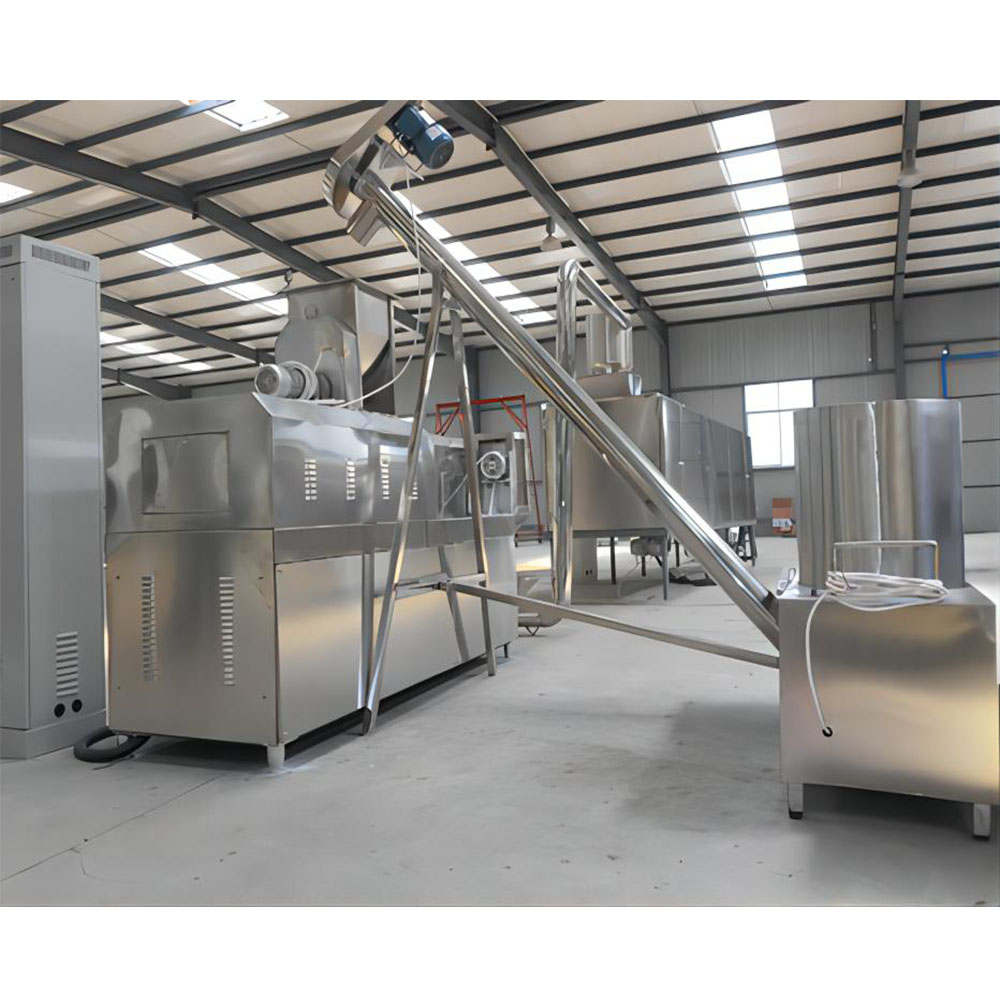
Biscuit Line Uneven Baking: Oven Zone Diagnosis
On the ABM-001 automatic biscuit line, uneven baking shows up first as color variation across the band — darker trailing edges, pale centers, or a steady drift from oven inlet to outlet. Operators often chase the recipe (sugar, leavening, moisture) before checking the oven itself. In 8 out of 10 service calls I have worked on Esper Foodtech lines, the root cause lives in the burner system, the airflow distribution, the band speed, or the dough sheet — not the formula. This guide walks a field-engineering approach to diagnosing zone-by-zone color variation on the ABM-001, with exact setpoints, measurement points, and fixes you can apply during a single shutdown window.
Symptoms Checklist: Confirm It Is the Oven, Not the Dough
Before opening any burner valve or re-tuning a PID, run this checklist. If you can tick all eight items, the problem is in the oven zone and you should continue down this article. If any item fails, fix that first — you will save hours of misdiagnosis.
- Color varies across the band left-to-right — left edge darker by more than 3 L* units when measured with a colorimeter at the strip-end sample point.
- Color varies along the band in the travel direction — biscuits at the leading edge of each cutout lane consistently darker or lighter than trailing edge.
- Color drifts over a 20-60 minute run — first-off biscuits are correct, then color creeps darker or lighter without a recipe change.
- Same dough piece baked in two different ovens gives different color — confirms dough formula is fine.
- Moisture content of finished biscuit is within 0.4% of target — if moisture is also off, look at bake time and temperature together, not just color.
- Band is clean, no debris or carbon build-up under the tracking strips — carbonized residue creates hot spots that mimic burner faults.
- No alarms on the HMI for gas pressure, flame failure, or PID deviation — silent drift is harder to catch than a flagged fault.
- Last burner service was within 6 months and last thermocouple calibration within 12 months — out-of-cal probes cause more color complaints than any other single fault on this line.
Root Cause 1: Burner Flame Pattern and Gas/Air Ratio Drift
The ABM-001 uses a direct-gas-fired oven with ribbon burners in zones Z1 through Z4 (and Z5 if the post-bake zone is fitted). Each zone has its own gas train, modulating motor, and air damper. When color starts to drift, the burner is the first place I look. The most common fault is a lean flame caused by an air damper that has slipped open by 2-4 degrees — enough to drop flame temperature by 15-25°C at the biscuit surface without triggering any alarm.
Diagnosis: With the oven at steady state (run for at least 40 minutes at target load), walk each zone with a calibrated infrared thermometer. Measure the inner crown of the oven at three points: burner side, center, and return side. The spread across the three points should be under 8°C. Anything wider indicates uneven flame or a fouled burner ribbon. Then read the flame: a correct ABM-001 ribbon flame is a tight blue cone 18-22 mm high, with no yellow tips. Yellow tips mean rich mixture (too much gas); short, harsh, noisy flames mean lean (too much air).
Fix: Isolate the zone. Shut gas, let the burner cool for 15 minutes, and remove the ribbon for inspection. Clean each port with a 1.2 mm wire brush — carbon builds up fastest at ports 1 through 8 (inlet side) because dough dust enters with the combustion air. Reinstall, re-fire, and re-tune the air/gas ratio using a calibrated flue analyzer: target 8.5-9.5% O2 and 6-7% CO2 in the flue, with CO below 50 ppm. If the damper linkage has slip — common after 18 months of thermal cycling — replace the ball joint, do not just tighten the grub screw. Tightening only masks the fault and the slip will recur within weeks.
Root Cause 2: Airflow and Extraction Imbalance Between Zones
Direct-gas-fired ovens live and die by their pressure balance. The ABM-001 has extraction fans at the top of each zone and a make-up air duct at the inlet. If extraction is too aggressive in one zone, combustion gases and steam are pulled forward into the next zone instead of being vented. The downstream zone then runs richer and hotter than its setpoint — you see a perfectly tuned Z1 producing pale biscuits while Z2 over-browns even though both read the same crown temperature on the HMI.
Diagnosis: Open the side inspection ports (one per zone, M12 hex cover) and use a calibrated manometer to read zone pressure. Target values: Z1 at -8 Pa, Z2 at -12 Pa, Z3 at -15 Pa, Z4 at -18 Pa, with a steady gradient. If two adjacent zones read within 2 Pa of each other, the inter-zone damper is leaking or the extraction damper on the upstream zone is closed too far. Run a smoke test at the Z1/Z2 joint — a 5-second burst from a puffer should rise and exit the Z1 flue within 8 seconds. If smoke drifts forward into Z2, you have airflow reversal.
Fix: Adjust the extraction damper on the offending zone in 5-degree increments and re-measure. Never adjust more than 10 degrees in one go — the system is sensitive and you will overshoot. If the damper blade is warped (common after 3+ years of operation, identifiable by a visible gap when closed), replace the blade. Clean the extraction fan impeller at the same time; a 2 mm layer of dough grease on the impeller blades reduces flow by 12-18%, which is enough to throw the balance off.
Root Cause 3: Band Speed Drift and Drive Slip
Color is a function of time-at-temperature. If the band slows down by even 3 seconds across the bake, color deepens noticeably. The ABM-001 band drive is a DC motor with encoder feedback, but the feedback only corrects as fast as the PID loop runs (250 ms). Under heavy load — full width dough sheet, sticky day, high humidity — the band can slip on the drive drum and the encoder never sees it because the drum is still turning at the correct RPM while the band itself lags.
Diagnosis: Mark the band with a paint pen at the inlet of Z1. Run a stopwatch from when the mark enters Z1 to when it exits Z5. The ABM-001 at nominal speed (setpoint 12.0 m/min) should take 4 minutes 12 seconds ±2 seconds for a 50.4 m oven length. Repeat the measurement three times. If the spread is more than 4 seconds, you have slip or encoder drift. Also check the take-up tensioner: target tension is 45-55 N on the return side, measured with a spring gauge at mid-span of the lower run.
Fix: If slip is confirmed, inspect the drive drum coating. The original polyurethane coating wears smooth after 18-24 months and the friction coefficient drops below the 0.4 needed for stainless band. Recoat or scuff the surface with 80-grit emery in a crosshatch pattern as a stopgap. Then check the encoder coupling — a loose grub screw on the encoder coupling is the single most common cause of speed drift on this machine, and it takes 10 minutes to fix. Tighten to 1.8 Nm, re-zero the encoder, and re-run the timing test.
Root Cause 4: Dough Sheet Weight and Moisture Distribution
Even with a perfect oven, an uneven dough sheet will give you uneven color. The ABM-001 three-roll sheeter gauges to 1.6-2.2 mm depending on recipe. If the sheet is 0.2 mm thicker on the left side — common when the feed hopper is loaded unevenly or the far roll is worn — the left lane will bake pale because it has more mass to heat through. Operators often blame the oven when the real fault is the sheeter.
Diagnosis: Cut three dough samples across the band — left, center, right — using a 50 mm biscuit cutter. Weigh each on a 0.01 g balance. Spread across the three should be under 0.15 g. Then dry each sample in a 105°C oven for 4 hours and reweigh. Moisture should be 22-24% and should not vary by more than 0.6% across the three samples. If either weight or moisture varies more than the tolerance, the oven is not your problem.
Fix: Re-level the sheeter using a precision machinist level on the top roll — target 0.02 mm/m in both directions. Check the gauge sensors (LVDT on later ABM-001 builds, potentiometer on earlier ones) and recalibrate against a slip gauge at 1.6, 1.9, and 2.2 mm. If the far roll is worn — measure with a micrometer at three points along its length; variation over 0.05 mm means the roll needs grinding or replacement. Also check that the feed hopper agitator is running; on sticky doughs, the hopper can rat-hole and feed more dough to one side.
Root Cause 5: Thermocouple Drift and PID Tuning
Each ABM-001 zone has two Type K thermocouples — one control TC in the crown and one high-limit TC. The control TC drives the PID loop that modulates the gas valve. Type K thermocouples drift with age, especially in the crown position where they see continuous 280-320°C. A control TC reading 15°C low will cause the PID to push the zone 15°C hotter than setpoint, and the HMI will show you the setpoint, not the actual.
Diagnosis: Compare the control TC reading to a calibrated reference thermocouple inserted through the inspection port at the same depth. Difference over 3°C means the TC needs replacement. While you are in there, also check the PID deviation value on the HMI diagnostics screen — anything over 4°C steady-state deviation means the PID loop needs re-tuning. The classic symptom of TC drift is one zone that suddenly produces darker biscuits while the HMI shows the temperature exactly on setpoint.
Fix: Replace the Type K thermocouple with a new mineral-insulated unit (Inconel sheath, 6 mm dia, 300 mm immersion length — Esper part number TC-K-6-300). After replacement, run a two-point calibration at 150°C and 300°C using a dry-block calibrator. Then auto-tune the PID with the oven at typical load: enter auto-tune mode on the HMI, hold load steady for 20 minutes, and let the controller calculate new P, I, and D values. Accept the new values only if overshoot on the next start-up is under 6°C; if overshoot is higher, fall back to the previous values and call Esper engineering — you may have a sticky gas valve that needs mechanical attention before the PID can be tuned.
Root Cause 6: Zone Calibration and Recipe Setpoint Mapping
The final piece of the puzzle is making sure the recipe setpoints actually match what each zone needs to do. The classic ABM-001 profile for a hard sweet biscuit is Z1 220°C, Z2 240°C, Z3 250°C, Z4 245°C, Z5 200°C (cool-down). But these are starting points, not gospel. If your dough moisture runs high, Z1 needs to be 230°C to drive off moisture before browning starts in Z2. If your sugar is high (over 18% on flour weight), Z4 needs to drop 5-8°C because sugar caramelizes fast.
Diagnosis: Pull biscuit samples at the end of each zone using the zone-sample paddle (do not stop the band — catch biscuits through the inspection port). Measure color with a colorimeter and moisture with a moisture analyzer. The right profile has biscuits hitting 12% moisture at end of Z3 and final moisture of 3.5-4.5% at end of Z5. Color (L* value) should drop smoothly: dough at 78, Z1 out at 72, Z2 out at 65, Z3 out at 58, Z4 out at 52, Z5 out at 50 for a typical golden-brown sweet biscuit. If two adjacent zones are very close in L*, the upstream zone is under-baking and the downstream is over-compensating.
Fix: Re-map the recipe using the measured profile. Move setpoints in 5°C increments, no more, and re-sample after 20 minutes (the thermal mass of the oven means changes take that long to settle). Document the final profile in the recipe management system with date, ambient conditions, and dough batch reference. A well-calibrated ABM-001 should hold color within ±1.5 L* units across an 8-hour run if ambient humidity stays within ±10%.
ABM-001 Oven Zone Diagnostic Reference Table
| Zone | Target Temp (°C) | Pressure (Pa) | Biscuit Moisture Out | L* Color Target | Common Fault |
|---|---|---|---|---|---|
| Z1 | 220 | -8 | 18% | 72 | Burner fouling, lean flame |
| Z2 | 240 | -12 | 14% | 65 | Airflow reversal from Z1 |
| Z3 | 250 | -15 | 12% | 58 | TC drift, PID mis-tuned |
| Z4 | 245 | -18 | 7% | 52 | Sugar caramelization overshoot |
| Z5 | 200 | -20 | 4% | 50 | Band slip, moisture carryover |
FAQ: Field Questions on ABM-001 Color Variation
Q: My biscuits are darker on the left side only. Which zone do I check first?
Start with Z3 — this is the browning zone and the one most sensitive to left-right flame imbalance. Walk the ribbon burner and inspect each port. If only the left half of the burner shows carbon build-up, you have found the fault. Also check the sheeter: left-side darkening is just as often a left-side thick dough sheet as it is a burner fault.
Q: The HMI shows all zones on setpoint but color still drifts. Why?
Nine times out of ten this is thermocouple drift. The control TC has aged and reads lower than actual, so the PID is silently pushing the zone hotter than the setpoint displayed. Verify with a calibrated reference TC inserted through the inspection port. Replace any TC showing more than 3°C deviation.
Q: How often should I clean the burner ribbons on the ABM-001?
Every 4 months for a two-shift operation, every 6 months for single shift. The Z1 and Z2 ribbons foul fastest because they see the most dough dust. Use the manufacturer port-cleaning kit and never use steel wire on Incoloy ribbons — it scratches and accelerates carbon adhesion. Brass or nylon brushes only.
Q: Band tension reads fine but I still get slip. What next?
Tension is necessary but not sufficient. Check the drive drum coating — if it has gone glassy smooth, friction drops below the threshold even at correct tension. Also check the tracking: a band running 5 mm off-center on the drum loses effective contact area and slips under load. Re-track using the crown adjustment on the take-up bearing, then re-measure.
Q: Can I run auto-tune on the PID with biscuits in the oven?
No. Auto-tune perturbs the output by ±10% to measure response. You will scrap any biscuits in the oven during the 20-minute tune cycle. Schedule auto-tune for a planned start-up with the band empty and the oven at typical thermal load. Run a full product batch through afterward to verify the new tuning holds under load.
Q: Color is good but moisture is too high. Is this an oven problem?
Usually it is a band speed or temperature combination problem, not a single fault. If your color is on target but moisture runs 1% high, drop band speed by 2-3 seconds total bake time and reduce Z4 by 3°C to keep color stable. Moisture and color are coupled — never chase one without watching the other.
Need Help Diagnosing Your ABM-001?
If you have worked through this guide and your color variation is still outside ±2 L* units, you likely have a compound fault — most commonly a worn roll combined with mild TC drift, or a slipping damper linkage alongside an aging band. These are hard to pin down over the phone but quick to fix on site. Email me directly at [email protected] with your zone readings, L* values from your last three shifts, and a photo of the band tracking. I will get back to you within 24 hours with a diagnosis and, if needed, a service visit quote. Esper Foodtech carries spares for every ABM-001 variant built since 2015, and most color variation issues can be resolved in a single 8-hour shutdown.