Last month, someone emailed me: “I bought a twist potato machine to make chips for my snack brand. It doesn’t work. What am I doing wrong?”
You can probably guess the answer. A twist potato machine cuts spirals onto a stick. A potato slicer cuts flat slices or strips. They share the word “potato” in their name, and that’s about it.
Nobody told him that before he spent $600.
If you’re reading this, you’re probably trying to figure out which machine fits your business model — not just which one “looks cooler” on a spec sheet. You’re in the right place.
Two Machines, Two Completely Different Business Models
Here’s the split in plain language:
Twist potato machine = Make one spiral potato on a stick. Sell it for $3–5 directly to a customer. Do this 200 times a day. Low volume, sky-high margin (85–92%). You’re in the street food business.
Regular potato slicer = Cut 500 kg of potatoes into uniform slices or fries per hour. Sell those to restaurants, supermarkets, or your own production line. High volume, thinner margin (40–70%). You’re in the processing or food service business.
They’re not competitors. They’re not even the same sport.
I’ll say this upfront: if you’re reading this article hoping one machine does both jobs — it doesn’t. Accept that now, and the rest of this guide becomes a lot simpler.
The Twist Potato Machine: Low Investment, Instant Cash Flow
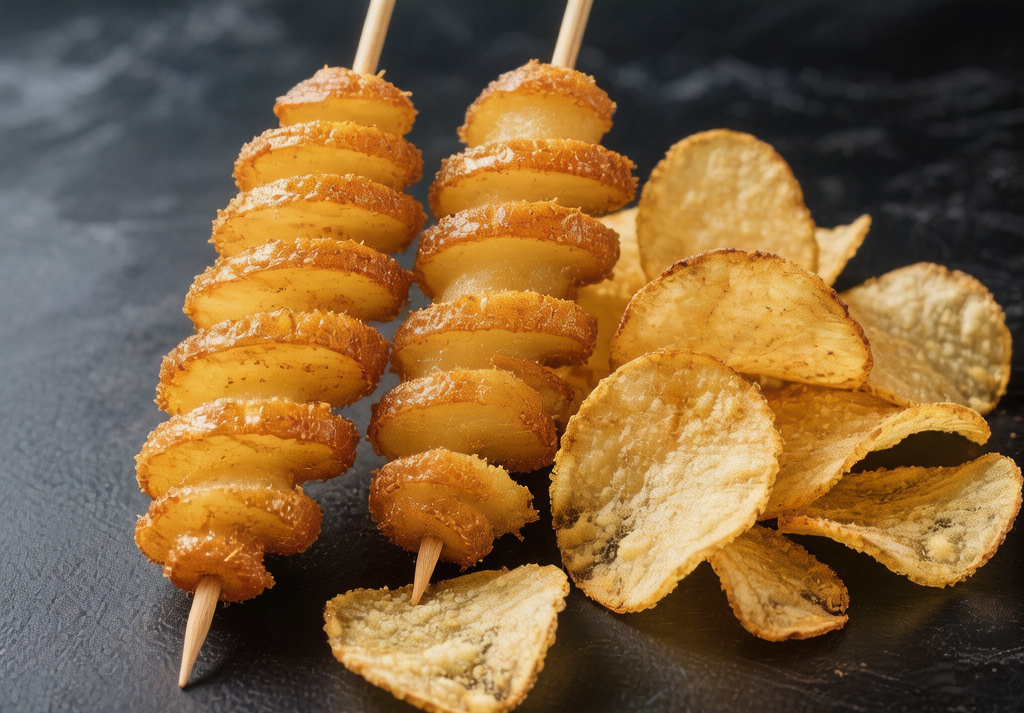
A twist (or tornado) potato machine does one thing, and it does it absurdly well: it cuts a whole potato into a continuous spiral while threading it onto a skewer. Five to ten seconds. Done.
The output is visual. A customer walking through a food court sees that spiral, thinks “what is that?”, and your sale is halfway closed before they reach the counter.
The Math That Makes It Work
A friend runs a twist potato stand at a weekend market in Malaysia. Here’s his actual breakdown:
- Per unit selling price: $3.50
- Per unit cost (potato, stick, oil, seasoning, napkin): $0.35
- Profit per potato: $3.15
- Average daily units: 180–220
- Daily profit: $567–$693
- Monthly profit (25 days): ~$15,500
His equipment cost was $600 for a motorized machine and $400 for a portable fryer. He recovered both in less than 3 days of operation.
“The machine paid for itself in a weekend,” he told me. “The real investment isn’t the machine. It’s finding a spot with foot traffic.”
Which Machine Fits Which Operation
If You’re… Get This Cost Testing the idea at a weekend market Manual hand-crank (8–12/min) $50–$200 Running a food court stall daily Semi-auto motorized (12–20/min) $300–$800 Serving a high-traffic tourist spot Auto + built-in fryer (15–25/min) $800–$2,000 Operating at a theme park Multi-head commercial (30–60/min) $1,500–$3,000
The jump from manual to motorized is the only one that meaningfully changes your business. Below $300, you’re testing. Above $800, you’re buying capacity for lines you already have.
The Regular Potato Slicer: Volume Is the Whole Game
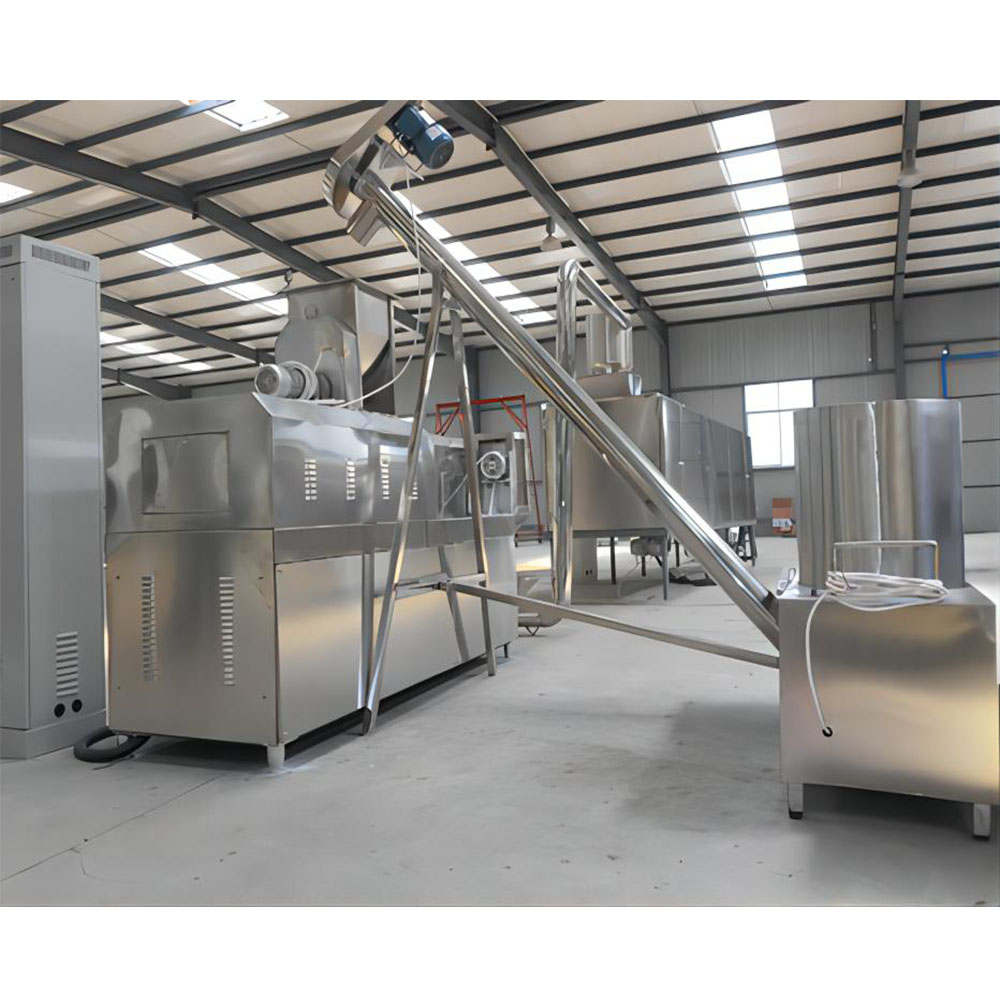
A regular potato slicer does the opposite: it turns potatoes into uniform flat slices, sticks, or wedges at high speed. No stick. No spiral. No direct consumer. Just consistent, stackable, processable potato pieces.
The business model is not “sell one unit for $5.” It’s “process 500 kg per hour for $0.15–0.30/kg and feed a production line or supply chain.”
Three Tiers, Three Different Lives
Restaurant tier ($500–$3,000): You run a restaurant and currently buy pre-cut frozen fries. A commercial rotary slicer processes 50–200 kg/hr. You buy whole potatoes at $0.30/kg instead of frozen fries at $2.50/kg. The slicer pays for itself in under a month just from ingredient savings. This is the most common entry point.
Small factory tier ($3,000–$15,000): You’re making potato chips or frozen fries at 500–3,000 kg/hr. The slicer is now one component in a full line — washing, peeling, slicing, blanching, frying, freezing. The slicer itself isn’t your main expense. The line is.
Industrial tier ($15,000–$50,000+): You’re processing 3,000–10,000 kg/hr. At this scale, you’re not reading guides like this — you’re talking to manufacturers directly. But the principle holds: the slicer is part of a system, not a standalone business.
So Which One Do You Actually Need?
Let me make this as simple as I can:
Get a twist potato machine if: You want to sell finished food directly to customers. You have a physical location (or event circuit) with foot traffic. You want margin, not volume. You can start with under $2,000 total.
Get a regular potato slicer if: You produce chips, fries, or pre-cut potatoes for wholesale. You need throughput measured in kilograms, not units. Your customer is a restaurant, supermarket, or your own factory. You think in cost-per-kg, not price-per-piece.
Get both if: You already run a food truck or restaurant that serves fries (slicer). Adding a $400–600 twist potato machine as a premium novelty item can add $200–500/day in incremental revenue during peak hours, without adding headcount. The twist machine uses the same potatoes you already have in inventory.
The Profit Comparison Nobody Lays Out Clearly
I see a lot of comparison tables. Most miss the fundamental difference:
| Twist Potato | Regular Slicer (Restaurant) | Regular Slicer (Factory) | |
|---|---|---|---|
| What you sell | Cooked snack on a stick | French fries on a plate | Raw material (chips/fries) to buyers |
| Your customer | Individual person | Diner at your restaurant | Wholesale buyer / distributor |
| Price per unit | $2–5 per stick | $4–6 per portion | $0.50–3.00 per kg |
| Raw cost per unit | $0.15–0.30 | $0.30–0.60 per portion | $0.15–0.30 per kg |
| Gross margin | 85–92% | 60–80% | 40–70% |
| Volume needed | 100–300 units/day | 50–100 kg/day | 500–10,000 kg/day |
| Equipment cost | $50–$3,000 | $500–$3,000 | $3,000–$50,000+ |
| Payback period | < 1 week | < 1 month | 6–24 months |
| What you’re really in | Retail food service | Restaurant business | Manufacturing |
A food startup founder in Bangkok told me his biggest early mistake was looking at the twist potato machine’s 90% margin and thinking “that’s my business.” Two months in, he realized the twist potato product was 90% of his revenue and 10% of his stress. Finding consistent foot traffic, dealing with weather, and managing event permits was the other 90% of the stress. The machine was the easy part.
What About the Potatoes Themselves?
Both machines care about this. Not all potatoes cut well.
For twist potatoes, you want oval, medium-sized potatoes (150–250g) with high solids. Russet Burbank and Kennebec work best — firm enough to hold the spiral, starchy enough to fry crispy. Avoid tiny or oddly shaped potatoes. The spiral looks bad, and half your appeal is visual.
For regular slicers, variety matters less — the machine adjusts to the potato. But consistency matters more. A centrifugal slicer processing 2,000 kg/hr doesn’t work well if every potato is a different size. Sort before slicing.
Common Mistakes (From People Who Already Made Them)
“I’ll start with a manual crank and upgrade later.”
You might. But if you’re doing more than 30 potatoes a day, your arm will hate you. A $400 motorized machine pays for itself in 2–3 days of operation. Just skip the crank unless you’re genuinely testing a concept for a single weekend.
“This slicer can do fries, chips, wedges — it’s universal!”
Sort of. Most rotary slicers come with interchangeable blades. But switching between 1mm chip slices and 10mm fry cuts requires recalibration. If you need both daily, get two blades or two machines. Don’t plan on swapping mid-shift.
“I’ll process potatoes for local restaurants on the side.”
This sounds smart — buy a slicer, sell pre-cut potatoes to nearby restaurants. In practice, the logistics eat your margin: delivery, cold chain, inconsistent orders, competition from established suppliers. If you want to be in the potato processing business, commit to it. Don’t side-hustle it.
One Thing I Honestly Don’t Know
I’ve never seen a convincing case for buying a twist potato machine as your first equipment if you don’t already have a vending location locked in.
The machine is the easiest part of the business. Finding a good spot — that’s the whole game. If someone tries to sell you a twist potato machine package with promises of “$500/day from any street corner,” walk away. The machine is worth the $400–600. The location is worth 10x that, and nobody can guarantee it.
The Bottom Line
The twist potato machine and the regular potato slicer share one ingredient and zero business models.
One makes a finished product for direct sale. The other makes raw material for further processing.
If you know which kind of business you’re building — street food vs. production — you already know which machine you need. If you don’t know which business you’re building, figure that out first. The machine comes second.
Starting a Street Food Business? Read This Equipment Guide First →
Or if you’re weighing specific models and want a second opinion:
Tell us what you’re planning — we’ll point you straight →
Learn more: cooking oil processing applications
Get a quote: [email protected]