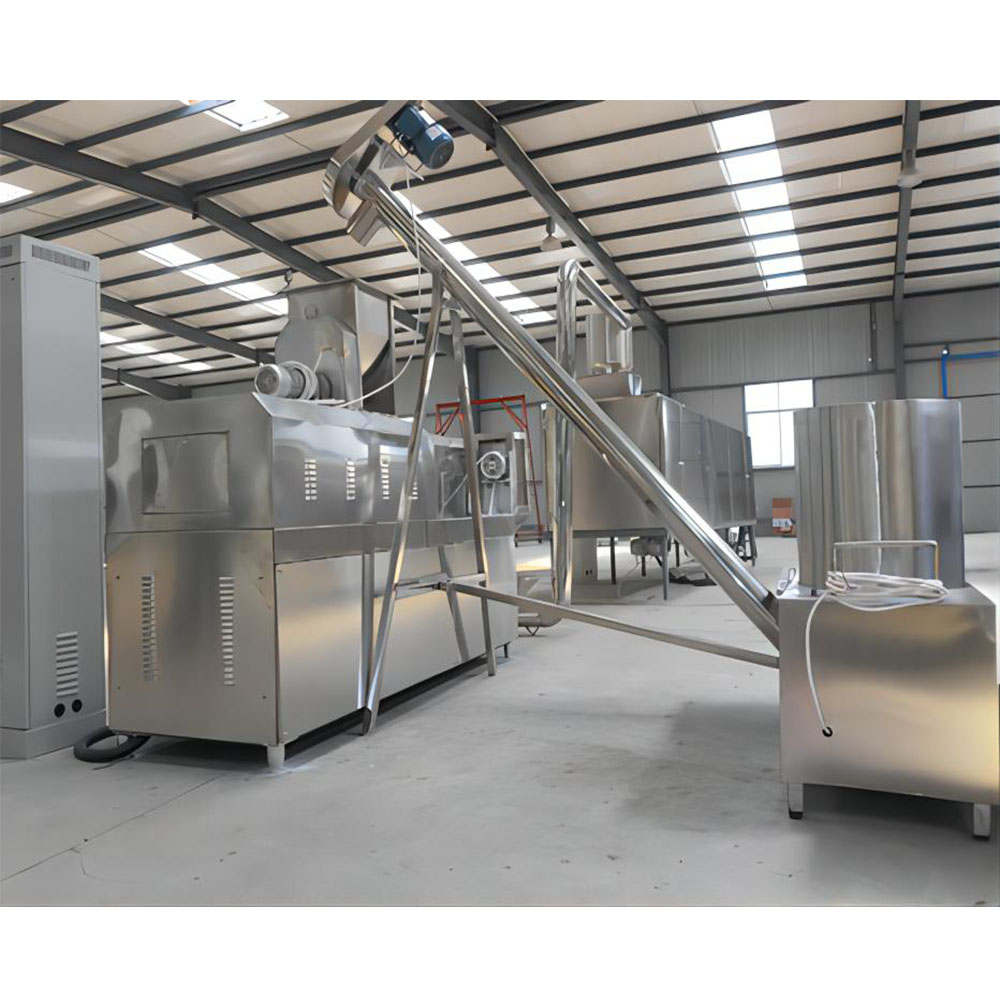
Instant Noodle Production Line: Full Plant Setup Guide for 2026
Setting up an instant noodle production line is one of the highest-margin food manufacturing decisions an entrepreneur in Nigeria, Egypt, Indonesia, India, or the Philippines can make in 2026. Global demand for instant noodles reached roughly USD 65 billion in 2025 and continues to grow at about 5.8% per year, with Africa now the fastest-growing region. This guide walks through the complete 12-stage process, three capacity tiers with 2026 FOB China pricing, fried vs non-fried and cup vs pillow-pack decisions, country-specific compliance, and ROI math you can use the day you start talking to suppliers.
Key takeaways:
- A complete instant noodle production line has 12 stages: flour mixing → dough resting → compounding → sheeting → slitting → waving → steaming → cutting/folding → frying or drying → cooling → packaging → carton packing
- Three standard capacity tiers exist: 3 tons/8h (entry), 12 tons/8h (standard), and 30 tons/8h (industrial) — corresponding roughly to USD 120K, USD 380K, and USD 950K+ FOB China
- Fried noodle lines dominate emerging markets because fried cakes have 6-9 month shelf life and tolerate rough distribution; non-fried (hot-air dried) lines target health-conscious premium shelves
- Cup noodle lines add a cup former, lid sealer, and overwrap station — typically USD 80K-160K more than a pillow-pack line at equivalent capacity
- Raw material quality (wheat flour protein 11-13%, palm oil PV ≤10 meq/kg) determines finished product quality more than the machine brand
- Nigeria, Egypt, and Indonesia each have distinct registration pathways (NAFDAC, EOS, BPOM) that add 3-6 months to commissioning — plan accordingly
- A properly engineered 12-ton/8h line in a market with USD 0.35-0.50 retail price per pack typically pays back in 18-30 months
Why the Instant Noodle Business Is Booming in Emerging Markets
The global instant noodle market was valued at approximately USD 65 billion in 2025 and is projected to keep growing at about 5.8% annually through 2030, according to data published by the World Instant Noodles Association (WINA). Three structural forces drive this growth, and they all converge in emerging markets.
First, urbanization. Nigeria, Egypt, Indonesia, India, and the Philippines are adding tens of millions of city dwellers each year who need affordable, shelf-stable, ready-in-three-minutes food. A 70-gram pack of instant noodles retailing at USD 0.20-0.50 feeds one adult for less than the cost of any restaurant meal.
Second, affordability vs protein. When chicken or beef prices spike, instant noodles — fortified with seasoning oil and sometimes egg — become a staple protein substitute. This is why noodle demand in Egypt and Nigeria rose sharply during 2022-2024 inflation cycles.
Third, brand benchmarks. Indofood’s Indomie, Nestlé’s Maggi, and Nongshim have demonstrated that a single national brand can sell 3-5 billion packs per year in a large market. Their success proves demand exists; their gap (limited flavor localization, premium pricing at the top, distribution reach beyond tier-1 cities) leaves room for local producers.
For a B2B buyer reading this guide, the relevant signal is simple: in every one of the five target markets, domestic production capacity does not yet match domestic demand. Imports still account for 30-60% of retail volume in several of these countries. Building a local noodle making equipment plant captures both import-substitution margin and tariff protection.
How a Complete Instant Noodle Production Line Works (12 Stages)
A full instant noodle production line transforms wheat flour, water, salt, and a small amount of alkaline salt (kansui) into shelf-stable cake noodles in roughly 30-40 minutes of in-line residence time. The 12 stages below are the same whether the line is 3 tons or 30 tons per 8 hours; only the equipment footprint and motor size change.
#### Stage 1 — Flour Mixing
An industrial dough mixer (typically a horizontal or twin-shaft design, 50-250 kg/batch) combines wheat flour, water, salt solution, and kansui at 25-30°C for 10-15 minutes. Target dough moisture is 28-32%. The mixer must be stainless steel (SS304 minimum, SS316 for coastal humid plants) and include a jacket for chilled-water temperature control — dough temperature above 35°C damages gluten development.
#### Stage 2 — Dough Resting
The mixed dough rests in a covered trough for 20-40 minutes. This is not optional — resting lets gluten hydrate fully and directly determines whether the dough will sheet without tearing in Stage 4. Most line OEMs under-spec the resting conveyor, which is a common cause of downstream breakage.
#### Stage 3 — Compounding
The rested dough is divided into two sheets and passed through a compounding roller (sometimes called a dough extruder in looser terminology) that presses the two sheets together at 2-3 mm thickness. Compounding improves gluten alignment and creates a denser final cake.
#### Stage 4 — Sheeting
A series of 4-6 progressive rollers reduces the dough sheet from 2-3 mm down to 0.9-1.2 mm — the standard instant noodle thickness. Roller surface finish, gap precision (±0.02 mm), and motor torque control all affect weight uniformity of the finished cake.
#### Stage 5 — Slitting
Rotary slitting knives cut the thin sheet into individual noodle strands. Standard widths are 1.0 mm (thin ramen), 1.5 mm (standard), and 2.0 mm (udon-style). Knife sharpness and alignment determine how cleanly the noodle separates — dull knives produce “fuzzy” strands that fry unevenly.
#### Stage 6 — Waving
A wave-forming roller creates the characteristic zigzag of instant noodles. The wave is not cosmetic — it allows hot steam and frying oil to contact every strand evenly, and it lets the cake compress into a compact block for packaging.
#### Stage 7 — Steaming
A continuous steamer (95-100°C, 90-120 seconds) gelatinizes the starch. This is the single most important step for texture — under-steamed noodles remain brittle, over-steamed noodles become gummy. The steamer must use food-grade steam (potable water feed, no boiler treatment chemicals that contact product).
#### Stage 8 — Cutting & Folding
The gelatinized noodle sheet is cut to fixed length (typically 110-130 mm for pillow blocks, 60-70 mm diameter for cup discs) and folded into the block or disc shape that will enter the fryer or dryer.
#### Stage 9 — Frying or Hot-Air Drying
This is the stage that defines whether you have a fried noodle line or a non-fried line.
- Frying path — the cut block enters a continuous fryer at 140-150°C for 60-90 seconds in palm oil. Frying instantly drops moisture from ~35% to ≤3% and creates the porous structure that rehydrates in 3 minutes in hot water. Fried cakes have 6-9 months ambient shelf life.
- Hot-air drying path — the block enters a multi-stage hot-air dryer at 70-90°C for 30-45 minutes. Dried cakes have lower fat content (5-8% vs 18-22% for fried) and appeal to health-conscious consumers, but command only a 10-20% price premium at retail because the texture is firmer and rehydration is slower.
Most emerging-market lines are fried, because fried noodles tolerate rougher distribution, longer storage without climate control, and match consumer expectations shaped by Indomie and Maggi.
#### Stage 10 — Cooling
The fried or dried cake passes through a cooling conveyor (ambient air or forced-air cooling tunnel, 3-5 minutes) to bring cake temperature from ~90°C down to ~35°C before packaging. Packaging hot cakes causes condensation inside the wrapper, which shortens shelf life dramatically.
#### Stage 11 — Packaging (Pillow-Pack or Cup)
The cooled cake enters the packaging line. Pillow-pack lines wrap the cake in a flat film pouch with seasoning sachet inserted automatically. Cup lines place the disc into a pre-formed cup (or form the cup from roll stock), add seasoning and optional dry garnish, seal with a foil lid, and apply an overwrap.
#### Stage 12 — Carton Packing & Palletizing
Finished packs are collated (typically 30 or 40 packs per shipping carton), carton-sealed, and palletized. Industrial-scale lines add robotic palletizers; entry lines may palletize manually.
The entire 12-stage line for a standard 12-ton/8h configuration typically occupies 1,200-1,800 m² of floor space, runs 3-5 operators per shift, and consumes ~25-35 kWh of electricity plus ~600-900 kg of steam per ton of finished noodles.
Three Capacity Tiers: Entry, Standard, Industrial
Buyers usually underestimate the jump in floor space, power, and capital between tiers. The table below maps the three standard noodle plant capacity levels.
| Parameter | Entry (3 tons/8h) | Standard (12 tons/8h) | Industrial (30 tons/8h) |
|---|---|---|---|
| Output per 8h shift | 3 tons (~45,000 packs at 65 g) | 12 tons (~180,000 packs) | 30 tons (~450,000 packs) |
| Output per year (300 days, 2 shifts) | ~1,800 tons | ~7,200 tons | ~18,000 tons |
| Line length | ~30 m | ~55-65 m | ~85-100 m |
| Floor area required | 400-600 m² | 1,200-1,800 m² | 2,800-3,500 m² |
| Steam demand | ~250 kg/h | ~900 kg/h | ~2,200 kg/h |
| Installed electrical | ~45 kW | ~120 kW | ~280 kW |
| Operators per shift | 3-4 | 5-7 | 9-12 |
| Typical buyer profile | New entrant, single city distribution | Regional producer, 2-3 cities | National brand, multiple production bases |
Entry lines fit entrepreneurs entering the market for the first time or serving a single metropolitan area. Standard lines (12 tons/8h) are the most common configuration sold to mid-tier producers in Nigeria, Egypt, and Indonesia. Industrial lines are typically specified by groups that already operate a smaller plant and are adding capacity, or by large food conglomerates entering the category.
Fried vs Non-Fried (Hot-Air Dried) Noodle Lines
The choice between a fried noodle line and a non-fried (hot-air dried) line shapes capital cost, target retail channel, and operating cost for the life of the plant.
| Factor | Fried noodle line | Non-fried (hot-air dried) line |
|---|---|---|
| Added equipment | Continuous fryer + oil filtration + oil storage | Multi-stage hot-air dryer |
| Capital cost (12-ton/8h tier) | USD 380K-450K FOB China | USD 420K-520K FOB China (dryer is longer) |
| Floor space | +15-20% vs non-fried | Baseline |
| Finished cake fat content | 18-22% | 5-8% |
| Shelf life (ambient, sealed) | 6-9 months | 4-6 months |
| Rehydration time (hot water) | 3 minutes | 4-5 minutes |
| Oil consumption per ton | ~70-90 kg palm oil | negligible |
| Typical retail positioning | Mass market, Indomie / Maggi style | Premium, “healthy” / “non-fried” claim |
| Best fit market | Nigeria, Egypt, Indonesia, Philippines mass market | India premium tier, urban Indonesia, export to Gulf |
For most BOFU buyers in the five target markets, a ramen noodle machine line (fried) is the lower-risk first investment because it matches the dominant consumer expectation set by Indomie and Maggi. Non-fried lines make sense when the producer has a clear retail channel for premium SKUs and can support the higher shelf price needed to cover added capital.
Cup Noodle vs Pillow-Pack: Different Packaging Lines
The decision between pillow-pack and cup format is essentially a packaging-line decision — the upstream dough through frying stages are identical.
| Factor | Pillow-pack line | Cup noodle line |
|---|---|---|
| Format | Flat film pouch, 60-90 g cake | PS/PP cup, foil lid, overwrap |
| Added equipment vs shared upstream | Automatic wrapper + sachet inserter | Cup former or cup feeder, lid sealer, overwrap machine |
| Capital add at 12-ton/8h | Baseline (included in line cost) | +USD 80,000-160,000 |
| Output speed | 100-250 packs/minute | 80-150 cups/minute |
| Pack cost (materials) | Lowest | 2-3x pillow-pack |
| Consumer use | Bowl or pot needed | Direct add-water in cup |
| Typical retail channel | Mass market, sachet-driven | Convenience stores, offices, premium retail |
| cup noodle machine best fit | Nigeria, Egypt, India mass | Philippines, Indonesia urban, Gulf export |
A practical sequencing strategy: many producers start with pillow-pack and add a cup line in year 2-3 once cash flow stabilizes. Cup lines have higher unit economics but require stronger distribution (cup noodles do not survive rough handling as well as pillow blocks).
Full Cost Breakdown by Capacity Tier (2026 FOB China)
The table below summarizes typical instant noodle factory cost for a turnkey project in 2026. Numbers are FOB China for the equipment scope and rough local figures for building and commissioning — actual quotes vary with steel price, exchange rate, and scope.
| Cost item | Entry 3 ton/8h | Standard 12 ton/8h | Industrial 30 ton/8h |
|---|---|---|---|
| Complete production line (12 stages), FOB China | USD 120,000-160,000 | USD 380,000-450,000 | USD 950,000-1,250,000 |
| Packaging line (pillow-pack) | USD 35,000-55,000 | USD 70,000-110,000 | USD 160,000-240,000 |
| Cup line add (optional) | +USD 50,000-80,000 | +USD 80,000-160,000 | +USD 180,000-300,000 |
| Steam boiler (oil/gas/electric) | USD 18,000-30,000 | USD 40,000-70,000 | USD 90,000-150,000 |
| Air compressor + chilled water | USD 8,000-15,000 | USD 18,000-30,000 | USD 40,000-70,000 |
| Installation & commissioning (engineer travel + on-site) | USD 15,000-25,000 | USD 30,000-55,000 | USD 70,000-120,000 |
| Building (local, finished food-grade) | USD 80,000-180,000 | USD 250,000-500,000 | USD 600,000-1,200,000 |
| Total project cost (fried, pillow-pack) | USD 280,000-470,000 | USD 800,000-1,300,000 | USD 1,950,000-3,200,000 |
| Working capital (30 days: flour, oil, packaging, labor) | USD 60,000-120,000 | USD 200,000-400,000 | USD 500,000-1,000,000 |
Buyers should treat these as planning ranges, not quotes. A real RFQ should specify capacity, fried/non-fried, packaging format, voltage, automation level, and target commissioning date to receive a binding price.
Raw Material: Wheat Flour, Palm Oil, Seasoning Supply
The single most underestimated success factor in a noodle making business plan is raw material quality. A line cannot produce good noodles from inconsistent flour.
Wheat flour. Instant noodle flour should be milled to protein content of 11-13% (medium-high), ash content ≤0.55%, and moisture ≤14%. In Nigeria and Egypt, locally milled flour often meets these specs at lower cost than imported; in the Philippines and parts of Indonesia, importing specialty noodle flour from Turkey or India may be required for premium SKUs.
Palm oil. Fried noodle lines consume roughly 70-90 kg of palm oil per ton of finished noodles. The oil must be RBD (refined, bleached, deodorized) palm olein with peroxide value (PV) ≤10 meq/kg and free fatty acid (FFA) ≤0.1%. Indonesia and Malaysia are the world’s lowest-cost sources; Nigerian producers should consider local palm olein supply (significantly cheaper than imported for West African plants).
Seasoning. Seasoning sachets are typically produced by a separate sachet-filling line or outsourced to a seasoning house. Many emerging-market producers outsource seasoning for the first 12-24 months, then bring sachet filling in-house once volume justifies it.
Water. Often overlooked — dough water must be potable, low hardness (<100 mg/L CaCO3), and chilled to 10-15°C at the mixer. A small chiller is part of any properly scoped line.
Country-Specific Setup Guide: Nigeria, Egypt, Indonesia, India, Philippines
#### Nigeria
Nigeria is Africa’s largest instant noodle market, with annual consumption above 1.8 billion packs and growth above 8% per year. The market is led by Indomie (Dufil Prima) but room exists for regional brands and private label.
- Regulator: NAFDAC registration for the finished product and the production facility is mandatory. Plan 4-6 months for first-time registration.
- Distribution: Open-market wholesale through Balogun, Onitsha, and Kano hubs. Distributors expect 12-18% margin.
- Power: Plan for diesel generator backup — grid power is unreliable. Generator capacity should equal installed line load.
- Local content: Locally milled flour and locally refined palm olein keep operating cost competitive against imports.
#### Egypt
Egypt’s instant noodle market is smaller per capita but growing fast as inflation pushes consumers toward value staples. Maggi and Indofood brands are present; local production is limited.
- Regulator: Egyptian Organization for Standardization (EOS) and the National Food Safety Authority (NFSA). Imports of equipment require EOS inspection.
- Distribution: Modern trade (Carrefour, Kazyon) plus traditional wholesale.
- Currency: Letter-of-credit access for equipment imports has been constrained — work with a Chinese OEM experienced in Egypt documentation.
#### Indonesia
Indonesia is the world’s second-largest instant noodle market (after China), with per-capita consumption above 50 packs per year. Indomie dominates but premium and niche segments are growing.
- Regulator: BPOM registration for the product; the facility must meet SNI (Indonesian National Standard) for instant noodles.
- Local advantage: Indonesia is the world’s largest palm oil producer — palm olein is the lowest-cost input available anywhere.
- Competition: Brutal at the mass end; entry strategy favors regional or premium positioning rather than head-to-head with Indomie on price.
#### India
India’s instant noodle market recovered strongly after the 2015 Maggi recall and is now one of the world’s fastest-growing. Maggi (Nestlé), Yippee (ITC), and Patanjali all compete.
- Regulator: FSSAI license and registration are mandatory. FSSAI’s noodle standard is harmonized with Codex.
- Format preference: Masala-flavored pillow packs dominate. Cup noodles are a small but growing urban premium segment.
- GST: 18% GST applies to instant noodles — factor into working capital and pricing.
#### Philippines
The Philippines is a long-established noodle market dominated by Lucky Me (Monde Nissin) and Payless. Cup and pouch formats both have meaningful share.
- Regulator: FDA Philippines for both product and facility.
- Disaster-resilient demand: Typhoon seasons repeatedly spike demand for shelf-stable food — local production capacity is strategically valuable.
- Cup format: Highest cup share of any target market; consider cup line earlier in the build-out than in Nigeria or Egypt.
ROI Examples: How Fast Does a Noodle Plant Pay Back?
The table below shows a worked payback example for a 12-ton/8h fried pillow-pack line in Nigeria. Numbers are illustrative — actual results depend on flour price, oil price, retail price, distribution efficiency, and capacity utilization.
| Line item | Value (USD) |
|---|---|
| Total project cost (equipment + building + commissioning) | 1,000,000 |
| Annual output (300 days × 2 shifts × 12 tons) | 7,200 tons (~10.8 million packs at 65 g net + 5 g seasoning) |
| Wholesale price per pack (Nigeria, 2025-2026 average) | 0.20 |
| Annual revenue | 2,160,000 |
| Flour cost (1.05 kg flour per kg noodle, ~USD 0.55/kg) | 1,044,000 (for 7,560 tons flour) |
| Palm oil cost (~80 kg/ton × 7,200 tons × USD 1.05/kg) | 604,800 |
| Packaging film + sachet | 162,000 (USD 0.015/pack × 10.8M) |
| Labor, energy, water, maintenance, distribution | 280,000 |
| Total operating cost (annual) | ~2,090,000 |
| Annual EBITDA | ~70,000-150,000 depending on utilization and pricing |
In practice, well-run 12-ton/8h lines in Nigeria, Egypt, and Indonesia report payback periods of 18-30 months once utilization reaches 75% or higher. The single biggest driver of payback is not equipment cost — it is capacity utilization in the first year. Producers who lock in distribution before the line ships consistently outperform those who commission first and sell second.
Common Mistakes That Delay Commissioning
In our experience with food processing equipment projects across Africa and Asia, around 60-70% of commissioning delays are caused by site and utility problems, not by the machinery itself.
- Under-sized power supply. A 12-ton/8h line draws ~120 kW installed; starting currents on the mixer and fryer can briefly exceed 200 kW. Undersized transformers cause nuisance trips that take weeks to diagnose.
- Missing steam capacity. The steamer is the most steam-intensive unit on the line. An under-sized boiler causes under-gelatinization and brittle noodles.
- Wrong flour silo auger. Flour flow properties vary by mill and by season. A rigid auger that worked in the OEM’s demo plant may bridge or stall with local flour.
- Skipping the resting conveyor. Buyers occasionally delete the resting stage to save space — this almost always increases downstream breakage and reduces output.
- No chilled water plan. Dough mixers need chilled water (10-15°C) to keep dough below 30°C. Without a chiller, summer production in Nigeria, Egypt, or India becomes impossible.
- Underestimating packaging line complexity. Pillow-pack wrappers need precise film tension and sachet timing. Plan a 5-10 day commissioning window specifically for packaging, separate from the upstream line.
- No palm oil filtration plan. Fried lines need continuous oil filtration to control FFA and PV. Skipping filtration cuts oil life by 60-80% and ruins shelf life.
- Late regulator engagement. NAFDAC, BPOM, and FSSAI registrations take 3-6 months. Starting registration only after equipment arrives is the most expensive scheduling mistake a buyer can make.
Frequently Asked Questions
1. How much does a complete instant noodle production line cost in 2026?
A complete fried pillow-pack line costs roughly USD 280,000-470,000 for a 3-ton/8h entry tier, USD 800,000-1,300,000 for a 12-ton/8h standard tier, and USD 1,950,000-3,200,000 for a 30-ton/8h industrial tier, including building and working capital. FOB China equipment-only pricing is roughly USD 120K-160K / USD 380K-450K / USD 950K-1,250K respectively.
2. What is the minimum noodle plant capacity to be profitable?
Most projects reach profitability at the 3-ton/8h entry tier, but only if utilization stays above 70% and distribution is locked in before commissioning. Below 3 tons/8h, fixed costs (boiler, chiller, operators, building) consume too much of the margin.
3. How do I write a noodle making business plan that banks will accept?
Include: market size and growth for your country (use WINA data), target capacity and utilization ramp (year 1: 60%, year 2: 75%, year 3: 85%), three-year P&L using local wholesale price, raw material supply plan with named flour/oil suppliers, regulatory timeline (NAFDAC/BPOM/FSSAI), and a phased capital plan that separates equipment from building and working capital.
4. Can one line produce both fried and cup noodles?
The upstream stages (mixing through frying or drying) are shared. A cup noodle line adds a cup former, lid sealer, and overwrap — typically USD 80,000-160,000 at the 12-ton tier. The most flexible configuration is a fried pillow-pack line with a cup-packaging module added in year 2-3.
5. Which markets are best for a new instant noodle plant in 2026?
Nigeria (largest African market, import-substitution tailwind), Indonesia (volume leader with cheap palm oil), and Egypt (high-growth, low local production). India is attractive but competitive at the mass end. The Philippines is smaller but has the highest cup-format share and disaster-resilient demand.
6. How long does it take from order to first pack?
Typical timeline: 60-90 days line manufacturing in China, 30-45 days shipping and customs, 30-60 days building preparation, 30-45 days installation and commissioning. Total: 5-8 months from order to first commercial pack, assuming building is ready when equipment arrives.
Next Steps — Get a Custom Noodle Line Quote
Every instant noodle project is different. To receive a binding quotation for an instant noodle production line that fits your market, send us:
- Target noodle plant capacity (3 / 12 / 30 tons per 8 hours, or custom)
- Format: fried or non-fried, pillow-pack or cup noodle machine
- Voltage and frequency (e.g., 380V/50Hz, 415V/50Hz, 220V/60Hz)
- Target market and any known regulatory requirements (NAFDAC, BPOM, FSSAI, EOS, FDA Philippines)
- Available building area and ceiling height
- Preferred commissioning date
- Raw material situation (locally milled flour available? Local palm olein?)
Request a noodle line quotation and our engineers will respond within 2 business days with a tiered proposal, layout sketch, and equipment list tailored to your country.
Learn more: cooking oil processing applications
Get a quote: [email protected]