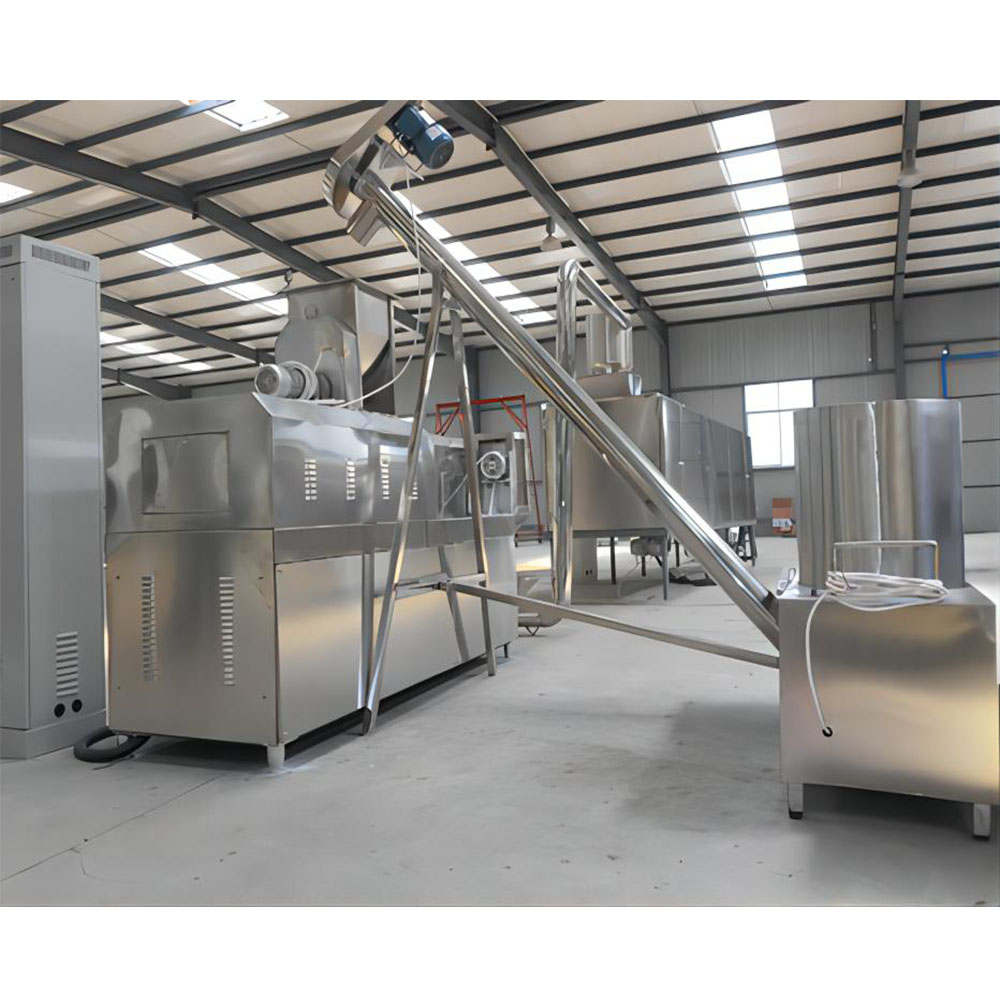
Industrial Coffee Roaster Buyer Guide for Latin America
Selecting an industrial coffee roaster is one of the most consequential equipment decisions a roastery in Mexico, Colombia, or Brazil will make, because the roaster defines cup character, throughput, energy cost, and labor requirements for years. This guide compares drum and hot-air (fluid-bed) roasting technologies as they apply to Latin American production environments, with attention to roast profiles, cooling systems, grinding, and packaging integration that determine whether a new line runs profitably from the first shift.
- Drum roasters generally suit medium-to-dark espresso blends favored in Brazil and southern Mexico; hot-air roasters tend to produce the brighter, lighter profiles valued by specialty buyers in Colombia and Central Mexico.
- Capacity should be matched to weekly green-coffee throughput, not just daily ambition, because oversized roasters increase per-kilo energy and labor costs.
- Cooling capacity must equal or exceed roasting capacity, or the roast keeps “cooking” after discharge and spoils the profile.
- Integration with grinding and nitrogen-flush packaging extends shelf life, which is critical when exporting from Latin America to North America or Europe.
- Total cost of ownership, including gas, electricity, afterburner fuel, and spare parts, often matters more than the sticker price.
Latin America produces a large share of the world’s arabica coffee, and an increasing portion of that coffee is now roasted in-country before export rather than shipped green. Roasteries in Mexico (Veracruz, Chiapas, Oaxaca), Colombia (Antioquia, Caldas, Huila), and Brazil (Minas Gerais, Sao Paulo, Espirito Santo) face a common question when scaling beyond a 30 kg shop roaster: should the next machine be a traditional drum roaster, a hot-air (fluid-bed) roaster, or a hybrid? The answer depends on the target cup profile, the production volume, the available utilities, and the labor pool. This guide walks through each factor so procurement teams can issue clearer specifications and avoid costly mismatches.
How Do the Two Core Roasting Technologies Work?
Before comparing specifications, it helps to understand the physics behind each roaster type, because the heating mechanism determines which roast profiles are realistic and which are not.
Drum roasting fundamentals. A drum roaster rotates a metal cylinder (cast iron, steel, or a combination) over a heat source. Heat reaches the beans through three mechanisms: conduction from the drum wall, radiation from the heated metal, and convection from hot gases passing through the drum. The conductive component gives drum roasts their characteristic “developed” body and is one reason espresso blends have historically been roasted on drums. Drum wall temperature and bean mass interact, which means small batches behave differently from full loads — a fact buyers must understand before sizing a machine.
Hot-air (fluid-bed) roasting fundamentals. A hot-air roaster forces heated air upward through a bed of green coffee. The air both heats the beans and keeps them in suspension or vigorous agitation. Because heat transfer is almost entirely convective, the bean surface heats quickly and evenly, and roast times are typically shorter. The result is widely described as a cleaner, brighter cup with less roasted-on character. Hot-air roasters usually have faster response to setpoint changes, which helps when developing tight profiles for single-origin specialty coffee.
Hybrid configurations. Several manufacturers build machines that combine a drum with strong convective airflow, sometimes with a recirculating heat system. These hybrids aim to deliver drum-style development with the energy efficiency and clean operation of a fluid bed. For Latin American buyers who serve both espresso and filter markets, a hybrid can reduce the number of machines required, although the trade-off is usually higher capital cost and more complex maintenance.
Single-burner recirculating designs. Some modern roasters recirculate roasting air through a catalytic or thermal oxidizer and reuse part of the heat. This reduces both energy consumption and stack emissions, which can be relevant when a roastery is located in a metropolitan area with air-quality rules (for example, near Sao Paulo or Bogota). Emission performance varies by model and should be confirmed for the specific installation (verify for your market).
Drum vs. Hot-Air: Side-by-Side Comparison
The table below summarizes the practical differences as they apply to Latin American roasteries running 8 to 16 hours per day. Numbers are typical ranges, not guarantees, because actual performance depends on green-coffee density, ambient altitude, burner tuning, and operator skill.
| Factor | Drum Roaster | Hot-Air (Fluid-Bed) Roaster |
|---|---|---|
| Typical industrial batch size | 30 kg to 240 kg+ per batch | 10 kg to 120 kg per batch |
| Roast time (first crack to target) | 10 to 18 minutes | 4 to 9 minutes |
| Heat transfer dominant mode | Conduction + convection | Convection only |
| Best-fit profile | Medium-dark, espresso, traditional blends | Light-medium, single-origin, specialty filter |
| Energy use per kg (typical) | Moderate to high; conduction losses through drum | Lower per kg at full load; high idle airflow |
| Roast response to setpoint change | Slower (thermal mass of drum) | Fast (seconds) |
| Cleaning frequency | Weekly chaff removal; periodic drum inspection | After each batch or daily; chaff cyclone required |
| Spare parts complexity | Mechanical drums, bearings, drive belts | Blowers, heaters, air seals, sensors |
| Indicative industrial price band | USD 45,000 to USD 350,000+ depending on capacity (verify for your market) | USD 38,000 to USD 220,000+ depending on capacity (verify for your market) |
| Common fit in Latin America | Brazilian espresso; Mexican dark blends | Colombian specialty; high-altitude micro lots |
How to read the table. A single row rarely determines the buying decision. A 120 kg drum roaster and a 120 kg hot-air roaster will produce visibly different coffee from the same green bean, and that difference, not the capacity number, is what the customer ultimately tastes. Buyers are encouraged to request sample roasts on the specific green coffee they intend to process before signing a purchase order.
Sizing the Roaster for Latin American Operations
Correct sizing is the most common point of failure in roaster procurement. An oversized roaster runs short batches, wastes gas, and leaves the cooling tray idle; an undersized roaster forces a second shift, increases labor cost, and limits growth. A practical sizing exercise starts with weekly green-coffee demand and works backward.
Step 1: Define weekly throughput. Add up the green coffee the roastery expects to sell as roasted product over a typical week. Include current contracts, planned retail expansion, and a reasonable growth buffer (often 15 to 25 percent over the first year). A roastery planning to ship 1,200 kg of roasted coffee per week, after a roughly 15 percent roast weight loss, needs about 1,400 kg of green coffee weekly.
Step 2: Convert to roast cycles. Divide weekly green demand by the planned roast cycle weight. With 1,400 kg of green coffee per week and a 60 kg drum roaster running 12 kg per minute on a 14-minute cycle, each batch consumes about 60 kg and produces roughly 51 kg of roasted coffee. That requires roughly 27 batches per week, or fewer than six batches per day across a five-day week. This fits comfortably on a single shift, leaving headroom for growth.
Step 3: Validate against the cooling tray. The cooling tray must empty each batch within the time the next batch is roasting. If the cooling tray holds 60 kg but cannot bring the beans to within 10 degrees of ambient in under four minutes, the roaster operator will be forced to delay the next charge, and effective throughput falls. A common guideline is that cooling capacity should be at least equal to roast capacity, and ideally 10 to 15 percent larger to absorb delays.
Step 4: Allow for altitude. Roasteries in Mexico City, Bogota, Quito, and the highlands of Bolivia operate at altitudes above 2,000 meters. Lower air pressure reduces oxygen availability and changes convective heat transfer. Burner sizing and fan selection may need adjustment; buyers should confirm with the manufacturer that the machine is specified for the installation altitude, and request roast curves from comparable high-altitude installations if possible.
Step 5: Plan the green-coffee handling path. Sizing the roaster is only useful if green coffee reaches the hopper on time. Sufficient silo or bag storage, a loading conveyor or vacuum lifter, and destoning and metal-detection equipment upstream of the roaster should be specified at the same time. Buyers in Latin America, where green coffee is often delivered in 46 kg or 69 kg sacks, should plan the ergonomics of loading to avoid operator fatigue and injury.
Roast Profiles and Cup Character
The roaster type shapes the cup profile more than many buyers expect. A roast profile is the time-temperature curve from charge to discharge, and the shape of that curve determines acidity, sweetness, body, bitterness, and aromatic intensity. Drum and hot-air machines tend to favor different curve shapes.
Drum roast profiles. Drum roasters typically enter the beans at a high drum temperature (the “charge temperature”), then show a steady decline in rate-of-rise as the bean mass absorbs heat. The drum’s thermal mass smooths out fluctuations, which is helpful for reproducibility across operators and shifts. Drums favor a slower development phase after first crack, which produces the caramelized, chocolate, and nutty notes valued in espresso blends. Brazilian and southern Mexican roasteries that supply traditional espresso often rely on drum roasters for this reason.
Hot-air roast profiles. Hot-air roasters can ramp temperature aggressively at the start of the roast because heat is delivered by airflow rather than by a heavy drum. This favors shorter, brighter roasts that preserve acidity and floral aromatics. Colombian and Central American specialty roasteries that emphasize single-origin filter coffee often choose hot-air machines to highlight origin character. The shorter roast also tends to produce less oil migration to the bean surface, which can extend the visual shelf life of lighter roasts.
Profile repeatability. For a roastery selling to supermarkets or exporters, repeatability across batches is often more important than absolute peak quality. Both drum and hot-air machines can be repeatable if equipped with programmable controllers and burner modulation. The controlling variable is usually operator training and the quality of the controller, not the underlying heating method. Reference machines in the Esper Foodtech catalog such as the CCM-001 commercial coffee processing line illustrate how integrated control systems support profile recall across operators (verify specifications for your configuration).
Profile logging and traceability. Modern buyers, especially specialty importers, increasingly request roast logs as part of quality documentation. A roaster that exports to the United States or European Union may need to retain temperature curves for each lot for several months. Buyers should confirm that the roaster controller can export logs in a usable format and that the profile software is supported in Spanish or Portuguese where the team requires it.
Cooling: The Half of the Roast That Is Often Overlooked
Roasting continues until the beans are cool. A roast that hits its target end-point but then spends three minutes in a poorly designed cooling tray will continue to develop, often pushing the roast a full Agtron level darker than intended. For Latin American roasteries shipping into export markets where roast color is contractually specified, an underperforming cooler can cause rejection of an entire lot.
Air cooling vs. water quenching. The two practical cooling methods are forced-air cooling on a perforated tray and water-quench (mist) cooling. Air cooling preserves aromatic volatiles and is preferred for light and medium roasts where fragrance and acidity matter. Water quenching cools faster but drives moisture back into the bean, which can soften flavor and shorten shelf life; it is generally reserved for dark roasts where the priority is to halt a fast-developing roast before second crack. Espresso blends for the Brazilian domestic market sometimes use light quenching, while specialty filter coffee is almost always air-cooled.
Cooling capacity rules of thumb. The cooling tray should hold at least one full batch. The fan should be sized to reduce bean temperature to within roughly 10 degrees of ambient in three to five minutes for light roasts and two to four minutes for dark roasts. Operators should be able to stir or rake the bed manually if needed. A cooling tray with insufficient airflow is a common bottleneck on otherwise well-sized lines.
Chaff management during cooling. As beans cool, residual chaff can separate and accumulate. The cooling tray should include a chaff screen or collection drawer that can be emptied between batches without halting production. In high-volume operations, an automated chaff cyclone integrated with the cooler and the roaster exhaust reduces fire risk and housekeeping labor. Chaff fires are one of the most common roastery insurance claims, and Latin American buyers should verify that the cooling and exhaust design includes spark-detection or spark-arrest features.
Grinding Integration
For roasteries that ship ground coffee (a significant share of the Brazilian and Mexican supermarket business), the grinder is as critical as the roaster. Grinding immediately after roasting releases aromatics and accelerates staling, so the grinder must be matched in capacity, particle distribution, and heat generation to the downstream packaging step.
Capacity matching. The grinder’s throughput in kg per hour should be at least equal to the average roast output and ideally 20 to 30 percent larger, to absorb surges when multiple batches land in the holding silo. A grinder that cannot keep up forces roasted whole beans to sit in a silo, where oxidation begins immediately.
Particle distribution. Espresso requires a fine, narrow particle distribution; filter coffee requires a coarser, more uniform distribution; Latin American supermarket ground coffee often targets a medium “universal” grind suitable for drip and stovetop preparation. Roller grinders generally produce the tightest distribution and the lowest heat rise, while disc grinders are more common in mid-volume operations. Burr choice, speed, and feed rate all influence the result, and buyers should request particle-size analysis on the target grind before purchase.
Heat generation. Grinding generates heat that can drive off aromatics and, in extreme cases, slightly toast the grounds. A grinder that runs hot will produce ground coffee with reduced shelf life. Water-cooled burrs, low-RPM operation, and short residence time in the grinding chamber all help. For high-altitude installations, lower air density reduces cooling effectiveness and should be considered in the specification.
Dust and fire safety. Coffee dust is combustible, and grinder rooms should be designed with dust collection, explosion venting where required, and electrical classification appropriate to the hazard. Buyers expanding an existing facility should confirm that the grinder installation does not void the building’s fire insurance, and that local code (which varies across Latin American jurisdictions) is met (verify for your market).
Packaging Integration and Shelf Life
The value created by careful roasting and grinding can be lost in seconds at the packaging step if oxygen is not controlled. For export-oriented roasteries in Latin America, packaging integration is often the difference between a product that arrives in Europe tasting fresh and one that arrives flat.
Nitrogen flushing. Replacing the oxygen inside a flexible package with food-grade nitrogen can reduce residual oxygen to below 2 percent, extending shelf life of roasted and ground coffee substantially. Multi-laminate foil pouches with one-way degassing valves are standard for specialty retail, while nitrogen-flushed pillow packs and cans are common in supermarket channels. The roaster, grinder, and packaging machine must be sequenced so that residence time between grinding and sealing is minimized; some lines integrate the grinder directly to the packaging hopper to achieve this.
One-way degassing valves. Freshly roasted coffee releases carbon dioxide for days after roasting. Without a degassing valve, this gas inflates and can rupture flexible packages. With a valve, the package stays sealed while CO2 escapes and oxygen entry is limited. Valve quality varies; for export shipments that may sit in containers for weeks, valve performance should be specified and tested.
Inline vs. offline packaging. Inline packaging — where the grinder feeds directly into the packaging machine through an enclosed conveyor — minimizes oxygen exposure but requires tight capacity matching and increases the cost of downtime on either unit. Offline packaging, where roasted product is held in a silo before packaging, is more flexible but exposes the product to more oxygen. Roasteries running multiple package sizes or formats from one line often prefer an offline design with a nitrogen-blanketed silo.
Shelf life targets. Whole-bean coffee in nitrogen-flushed valve pouches can retain acceptable sensory quality for 9 to 18 months depending on roast level and storage temperature; ground coffee is more fragile, typically 6 to 12 months. These ranges vary with raw materials and should be validated for the specific product (verify for your market). Export buyers in the United States, Europe, and Asia frequently specify a minimum remaining shelf life at the port of arrival, which sets a hard constraint on production-to-shipment lead time.
Energy, Utilities, and Operating Cost
Latin American roasteries pay widely different prices for gas and electricity depending on country and region. Brazilian operations often benefit from relatively affordable natural gas and hydroelectricity; Mexican operations may rely on LPG; Colombian and Central American facilities may face higher electricity costs. The roaster choice should be evaluated against local utility economics, not just headline machine efficiency numbers.
Gas vs. electric heat. Most industrial roasters in Latin America are gas-fired because of the high energy density and lower cost per kilowatt. Electric roasters are typically limited to smaller capacities and areas where gas infrastructure is unavailable. Where electricity is generated from hydropower (common in Brazil and parts of Central America), the carbon profile of electric heating can be a marketing advantage for export buyers who track scope-3 emissions.
Afterburner fuel. An afterburner or thermal oxidizer destroys smoke and odor before exhaust leaves the stack. Afterburners add meaningfully to fuel consumption; some designs run only when the roaster is in active production, while others run continuously. Buyers in urban areas (Sao Paulo, Bogota, Mexico City) may be required to install afterburners by local environmental authorities, and this should be confirmed during site selection. Catalytic oxidizers can reduce fuel use compared to thermal afterburners but require periodic catalyst replacement.
Heat recovery. Some modern roasters recover heat from the exhaust stack and reuse it to preheat incoming air. Heat recovery can reduce total gas consumption by a meaningful percentage, but adds capital cost and maintenance complexity. For a roastery running two shifts, the payback period on heat recovery is typically shorter than for a single-shift operation; buyers should request a calculation specific to their expected operating hours.
Water consumption. Drum and hot-air roasters themselves use little water, but water-quench cooling, bean washing upstream, and general cleaning can add up. In water-constrained regions of Mexico and northeast Brazil, water consumption should be specified in the equipment list and reviewed alongside local permitting requirements.
Choosing Between Drum and Hot-Air for Your Market
A practical decision framework can shorten the procurement cycle. Buyers should weigh four factors: target cup profile, production volume, downstream integration, and after-sales support.
Choose a drum roaster when: the primary product is an espresso or dark blend for the domestic Brazilian, Mexican, or southern US Latin-market; the target customer values traditional body and low acidity; weekly throughput exceeds approximately 1,500 kg and batches of 60 kg or larger are normal; and the operating team has experience with drum profiling and maintenance. Drums also tend to be more forgiving of variable green-coffee density, which can be useful when sourcing from smallholder cooperatives.
Choose a hot-air roaster when: the primary product is single-origin specialty filter coffee for export to North America, Europe, or East Asia; the customer values brightness, acidity, and origin character; weekly throughput is below approximately 1,200 kg; the team wants faster profile iteration; and the facility is in an urban area where the cleaner stack and lower emissions of a hot-air or hybrid machine ease permitting. Hot-air machines are also attractive for roasteries that run many small lots and frequent profile changes, such as sample roasters serving cooperatives in Colombia.
Choose a hybrid when: the product range spans both espresso and filter, capital is available for a more complex machine, and the team can manage the additional maintenance. Hybrids reduce machine count and can simplify facility layout, but the buyer should verify that local service technicians can support the specific model.
Consider two machines instead of one large machine when: the product mix is genuinely split between traditional and specialty, and downtime on one product line would be unacceptable. Two smaller machines (one drum, one hot-air) can be more flexible than a single large hybrid, at the cost of additional floor space and capital.
Supplier Evaluation and Installation Planning
Once the roaster type and size are defined, supplier evaluation should focus on four areas: technical support, spare parts logistics, training, and commissioning. For Latin American buyers, the distance from European or North American factories means that these factors often outweigh small differences in machine price.
Local or regional service. Confirm whether the supplier has a service technician in country or region, what the typical response time is for a breakdown, and whether critical spares are stocked locally. A roaster that is down for two weeks waiting for a part can cost more in lost sales than the price difference between two competing brands. Buyers in Brazil and Mexico, where most major brands have representation, generally have stronger support options than buyers in smaller markets.
Spare parts list. Request a recommended first-year spares list with prices before purchase. Common wear items include burner nozzles, drive belts, bearings, temperature sensors, and (for hot-air machines) blower seals. Knowing these costs up front prevents surprises in the operating budget.
Training. A new industrial roaster requires both operator and maintenance training. Confirm how many days of training are included, in which language, and whether refresher training is available as staff turnover occurs. Operator training is particularly important for profile repeatability, because two operators on the same machine can produce noticeably different coffee.
Commissioning. Commissioning includes mechanical installation, gas and electrical hookup, controller configuration, profile development on the buyer’s green coffee, and operator training. Clarify which steps are included in the purchase price and which are billable. A well-run commissioning process typically spans one to three weeks for an industrial line, longer if packaging and grinding integration are included.
Site preparation. The roastery site must be prepared before the machine arrives: reinforced floor for the roaster weight, gas supply with adequate pressure and regulator, electrical service with correct voltage and phase, exhaust stack with structural support, makeup air to replace exhausted air, and fire suppression. A common cause of delayed commissioning in Latin America is incomplete site preparation when the machine arrives, so a site-readiness checklist signed off by both buyer and supplier is recommended.
Total Cost of Ownership Over Five Years
The purchase price of an industrial roaster is typically 40 to 60 percent of the five-year total cost of ownership; the remainder is energy, labor, maintenance, packaging, and waste. A simple framework can help buyers compare options on a like-for-like basis.
Energy cost per kg of roasted coffee. Estimate gas and electricity use per batch from the manufacturer’s data, multiply by local utility tariffs, and divide by roasted output. Even a small difference per kilogram compounds over millions of kilograms in five years. This calculation should be done for the buyer’s actual expected operating hours, not the manufacturer’s nameplate rating.
Labor cost per kg. A more automated roaster may require one operator instead of two, or one shift instead of two. In markets where skilled labor is scarce, automation that reduces reliance on a single experienced roast master can be worth the premium.
Maintenance and consumables. Budget for annual maintenance as a percentage of capital cost (commonly 3 to 6 percent for industrial roasting equipment), plus consumables such as packaging film, nitrogen, valves, and cleaning supplies. Track these from month one to detect rising costs before they become budget problems.
Cost of quality failures. A roast that is off-profile or a lot that is rejected by an export buyer for color or sensory reasons can erase weeks of margin. The cost of quality failures is hard to predict but should be considered when choosing between a machine with strong profile control and repeatability versus one with looser control at a lower price.
Common Procurement Pitfalls in Latin America
Several recurring issues appear in Latin American roaster procurement. Awareness of these can help buyers avoid them.
Pitfall 1: Buying for the dream, not the demand. A roastery purchases a 240 kg drum roaster to support a five-year growth plan, then runs 30 kg batches for two years. Per-kilo energy and labor costs stay high, the cooling tray is oversized, and the operator never builds the muscle memory needed for full-load profiles. A more conservative initial size, with a documented upgrade path, often serves the business better.
Pitfall 2: Ignoring altitude. A roaster specified at sea level performs differently at 2,600 meters in Bogota. Burner output, fan curves, and cooling capacity all change. Buyers should explicitly confirm altitude performance with the supplier and request references from comparable installations.
Pitfall 3: Underestimating packaging. A roastery invests in a high-end roaster and grinder, then ships product in unflushed bags. Shelf life suffers, export buyers complain, and the investment in upstream quality is wasted. Packaging should be specified in the same project as the roaster, not added later as an afterthought.
Pitfall 4: Weak after-sales support. A lower purchase price from a supplier with no regional service presence can become expensive when the machine is down. Buyers should weight service capability heavily and, where possible, visit a reference installation in a comparable market before purchase.
Pitfall 5: No sample roast on target green. Two roasters of the same nominal type can produce different coffee from the same green. Always request a sample roast on the buyer’s intended green coffee, ideally side by side with a second candidate machine, before committing.
Frequently Asked Questions
Q: Is a drum roaster or a hot-air roaster better for a Colombian specialty roastery exporting to the United States?
A: For single-origin specialty filter coffee aimed at North American buyers who value brightness and acidity, a hot-air or hybrid roaster is often the more natural fit. However, if the roastery also serves an espresso market, a drum or hybrid may be preferable. We recommend requesting sample roasts on your specific green coffee from at least two candidate machines before deciding.
Q: How much green coffee should I plan to lose as roast weight loss, and how does that affect sizing?
A: Roast weight loss typically ranges from 12 to 18 percent depending on roast level, green moisture, and target end temperature. If the goal is 1,000 kg of roasted coffee per week, plan for roughly 1,150 to 1,200 kg of green coffee. Sizing the roaster on green input rather than roasted output avoids under-capacity.
Q: Do I need an afterburner for a roastery near Mexico City, Bogota, or Sao Paulo?
A: Urban installations in major Latin American cities often require some form of emission control, but the specific requirement varies by municipality. Confirm the local environmental rule before specifying the machine. An afterburner adds capital cost and fuel consumption, so it should be designed in from the start rather than retrofitted later.
Q: What is the realistic lead time from order to first roast on an industrial line?
A: Typical lead times range from four to nine months from order to commissioning for a new industrial roaster with grinding and packaging integration, depending on the manufacturer and shipping schedule. Site preparation, customs clearance in the destination country, and commissioning should be planned to fit within this window. Confirm current lead times with the supplier, as they fluctuate.
Q: Can one operator run an integrated roast-grind-pack line, or do I need more staff?
A: A well-automated line can often run with one operator per shift for the roasting step plus one for grinding and packaging, but this depends on batch frequency, package format changes, and cleaning requirements. During commissioning and the first months of operation, plan for additional staff until the team is proficient.
Q: How important is the roaster controller software versus the mechanical design?
A: For repeatability across operators and shifts, the controller is at least as important as the mechanical design. A good controller offers programmable profiles, modulating burner control, data logging, and export of roast curves. Confirm that the controller software is supported, available in a language your team reads comfortably, and that the supplier offers updates over the expected life of the machine.
Next Steps
Selecting the right industrial coffee roaster for a Mexican, Colombian, or Brazilian operation is a multi-month decision that touches cup profile, throughput, energy economics, regulatory compliance, and after-sales support. A clear specification — written around weekly throughput, target roast profile, downstream grinding and packaging, altitude, and local utility costs — is the single most useful document a buyer can produce before contacting suppliers. The Esper Foodtech team supports Latin American roasteries through this process, from sizing studies to commissioning of integrated roast-grind-pack lines built around commercial coffee equipment such as the CCM-001 platform. To discuss your specific green coffee, target markets, and floor plan, contact [email protected] and request a sizing consultation tailored to your operation.
Learn more: cooking oil processing applications
Get a quote: [email protected]