Industrial Proofing Chamber
Controlled temperature and humidity for consistent fermentation — 30–40°C, 70–85% RH, ±1°C. Cabinet to walk-in, with overnight cold retard.
This site uses cookies for analytics and advertising. Accept them all, decline them all, or choose which ones you allow. Learn more in our privacy policy.

Controlled temperature and humidity for consistent fermentation — 30–40°C, 70–85% RH, ±1°C. Cabinet to walk-in, with overnight cold retard.
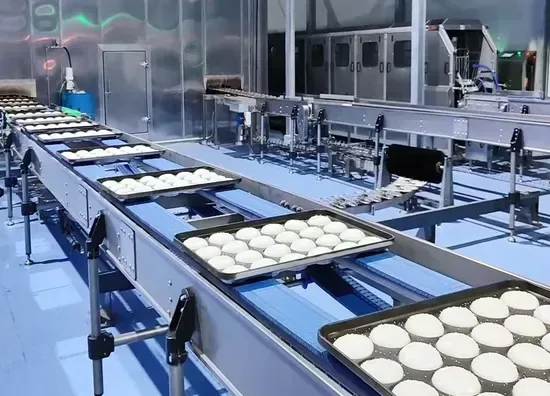
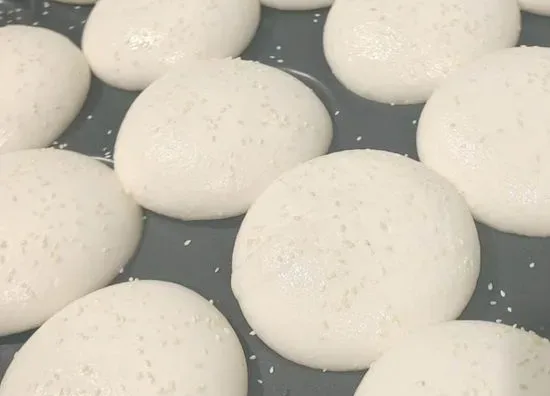
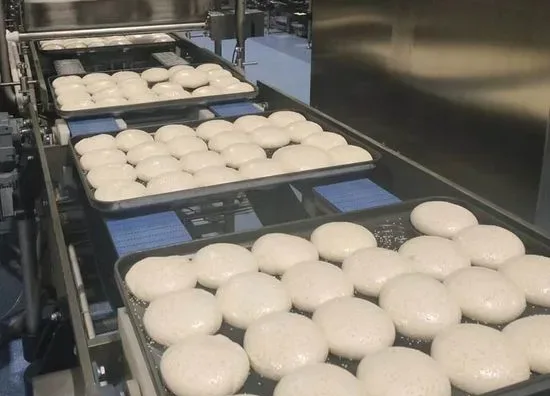
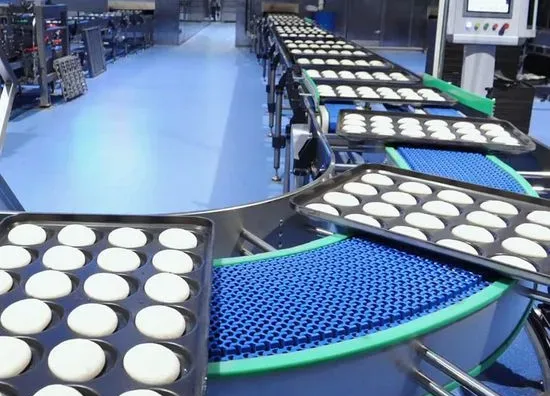
Sample output from the Industrial Proofing Chamber. Ask us for real production photos matched to your exact product and capacity.



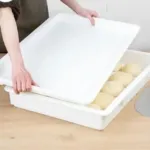
PRO continuous proofing systems move racks through climate-controlled proofing at your oven pace — temperature and humidity held exactly.
Proofing is where bread wins or loses consistency. The chamber holds temperature to ±1°C while a steam generator and exhaust fan balance humidity automatically — the same rise at 6 a.m. as at midnight, regardless of who is on shift or what the weather is doing.
| Model | Capacity | Control | Build | Power |
|---|---|---|---|---|
| PRO-101 | 1,000 trays/h | Temp + humidity, PLC | SUS304 | 380 V |
| PRO-701 | 1,500 trays/h | Temp + humidity, PLC | SUS304 | 380 V |
| PRO-201 | 3,000 trays/h | Temp + humidity, PLC | SUS304 | 380 V |
Final proof runs 30–90 minutes at proofing temperature. The PRO-001 and PRO-201 also switch to 2–4°C for 12–16 hour overnight cold retard — dough mixed today, baked tomorrow morning at full quality, the workflow behind bake-off and in-store programs.
The chamber takes divided pieces from the DEC divider rounder and hands risen dough to the RTO rotary, CVO convection, or TNO tunnel oven. The full dough-to-slice line is on the bakery equipment hub.
As a starting point, lean bread doughs proof well around 35 to 38°C, enriched doughs like brioche prefer it slightly cooler, and 80 to 85% relative humidity keeps the surface from skinning. Exact setpoints shift with your recipe and room conditions. The plus-minus 1°C control accuracy holds whatever window you choose.
Both are climate problems. Too little humidity and the surface skins, then cracks as it expands. Too hot and the yeast races, giving big bubbles, weak structure, and collapse in the oven. Condensation dripping on the pieces means humidity has run past what the dough can absorb. Dial temperature first, humidity second.
Cold retard drops the chamber to roughly 2 to 4°C to pause fermentation overnight, so you can load in the evening and bake straight from the retarder in the morning with no 3 a.m. shift. If your bakery sells the same fresh range every morning, it is the option that pays for itself fastest.
Yes, both are just time, temperature, and humidity programs. Bulk goes in bowls or tubs after the mixer; final proof goes in trays or on racks after the divider rounder. The practical difference is racking. Tell us your tray and rack format and we configure the interior to match.
The standard position is between make-up and the oven. Divided pieces come in from the divider rounder, leave the chamber at full proof, and go straight onto the tunnel oven belt or into the rack oven. Conveyor heights and rack formats are matched to your upstream and downstream machines before shipping.
Yes. We provide installation and commissioning support, and 12 months of after-sales service, including spare parts help and technical response.

 7 * 24 Support
 Remote Support
 Global Coverage