Industrial Spiral Mixer
Spiral mixer for heavy bread and pizza dough — 20–500 kg batches, removable bowl, two-speed arm with programmable cycles. Maximum gluten development.
This site uses cookies for analytics and advertising. Accept them all, decline them all, or choose which ones you allow. Learn more in our privacy policy.

Spiral mixer for heavy bread and pizza dough — 20–500 kg batches, removable bowl, two-speed arm with programmable cycles. Maximum gluten development.
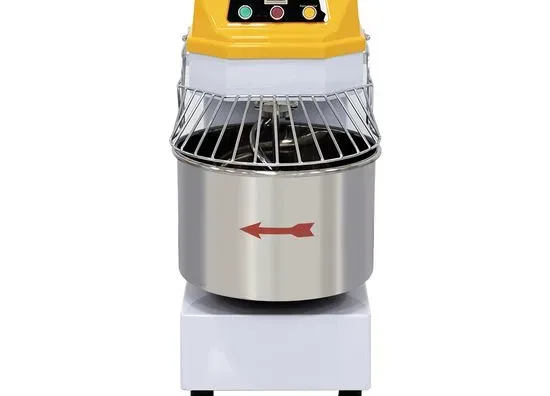
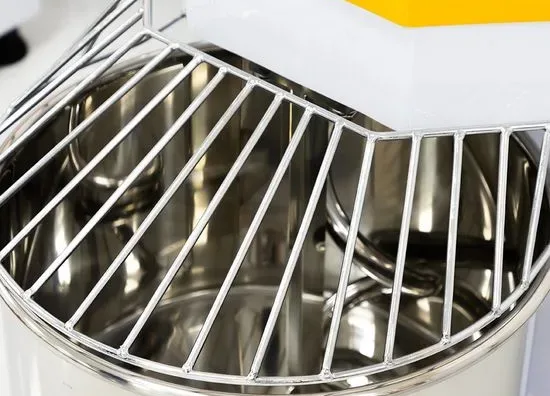
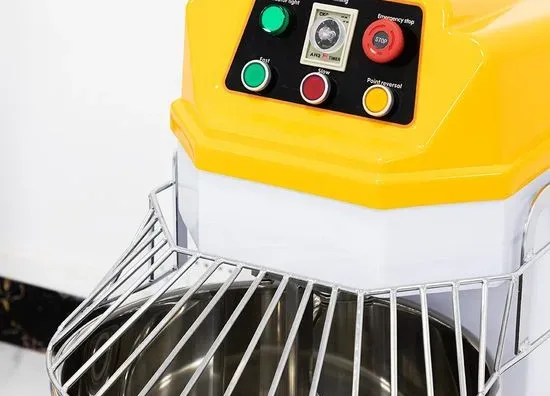
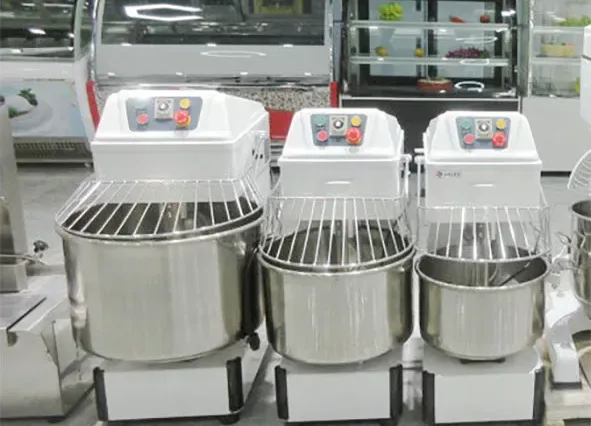
Sample output from the Industrial Spiral Mixer. Ask us for real production photos matched to your exact product and capacity.



SPM spiral mixers knead bread and bun dough with a rotating bowl and spiral hook — gluten develops fast without heating the dough. 16–100 kg flour per batch.
The spiral arm kneads against a counter-rotating bowl, folding the dough over itself instead of stirring it — gluten develops fully without overheating the mass. Heavy bread and pizza doughs that overwhelm planetary mixers run here all day. Finished dough temperature of 24–26°C, the consistency window for bread, is what the cycle times are built around.
| Model | Flour per batch | Spiral power | Speeds | Control | Dimension (mm) |
|---|---|---|---|---|---|
| SPM-101 (HBS-60 source) | 16 kg | 4 kW | 2 spiral / 2 bowl | Timer | 940×540×1,080 |
| SPM-001 | 50 kg | 7.5 kW | 2 spiral / 2 bowl | Timer + VFD | 1,100×700×1,350 |
| SPM-201 | 100 kg | 11 kW | 2 spiral / 2 bowl | Timer + VFD | 1,400×850×1,550 |
The SPM-201 offers a jacketed bowl with chilled-water circulation that holds dough under 25°C through the cycle — the difference between consistent and drifting bread in hot plants and long shifts.
Two speed zones with automatic switching: low blends flour and water, high develops gluten, and the programmable timer auto-stops at the end of the cycle. Recipes store per product, so every baker on every shift runs the same dough.
The bowl rolls out to the DEC divider rounder or PRO proofing chamber, then on to the rotary, convection, or tunnel oven. The full range is on the bakery equipment hub.
Size the bowl by finished dough weight per batch, not flour weight, because flour is only about half of a rated batch once water is added. Keep batches above roughly 10% of rated capacity so the spiral arm properly engages and develops the gluten, and plan about 20% headroom for growth. Tell us your loaves per day and recipe, and we will size the bowl and cycle plan for you.
Yes. Two-speed operation does most of the work: low speed incorporates ingredients, high speed develops gluten. Note that stiff, low-hydration doughs reduce the effective capacity of any bowl, so a shop running mostly bagels or pizza should size one step up. For temperature-sensitive doughs, a jacketed bowl with chilled water keeps friction heat out of long mixes.
Friction heat is the enemy of consistency, because every minute at high speed warms the dough. Start with chilled water, use low speed for the first two to three minutes, and for structured bread programs add the jacketed-bowl option. It holds dough temperature in a tight window shift after shift.
A fixed bowl is simpler and cheaper for single-station bakeries. A removable bowl on castors lets you mix, then roll the bowl straight to your divider or hoist it out with a tipping trolley. It is worth it the moment dough handling becomes a bottleneck between mixer and make-up.
Typical bread dough runs roughly 10 to 15 minutes of mixing plus charging and discharge, so one bowl supports several batches an hour. The exact cycle depends on hydration and target gluten development. We confirm the realistic hourly throughput against your recipe before you order.
Yes. We provide installation and commissioning support, and 12 months of after-sales service, including spare parts help and technical response.

 7 * 24 Support
 Remote Support
 Global Coverage