Industrial Screw Oil Press
Screw oil press: mechanically extracts oil from peanuts, soybeans, sunflower, rapeseed, sesame.
This site uses cookies for analytics and to improve your experience. By clicking Accept, you consent to our use of cookies. Learn more in our privacy policy.

Screw oil press: mechanically extracts oil from peanuts, soybeans, sunflower, rapeseed, sesame.
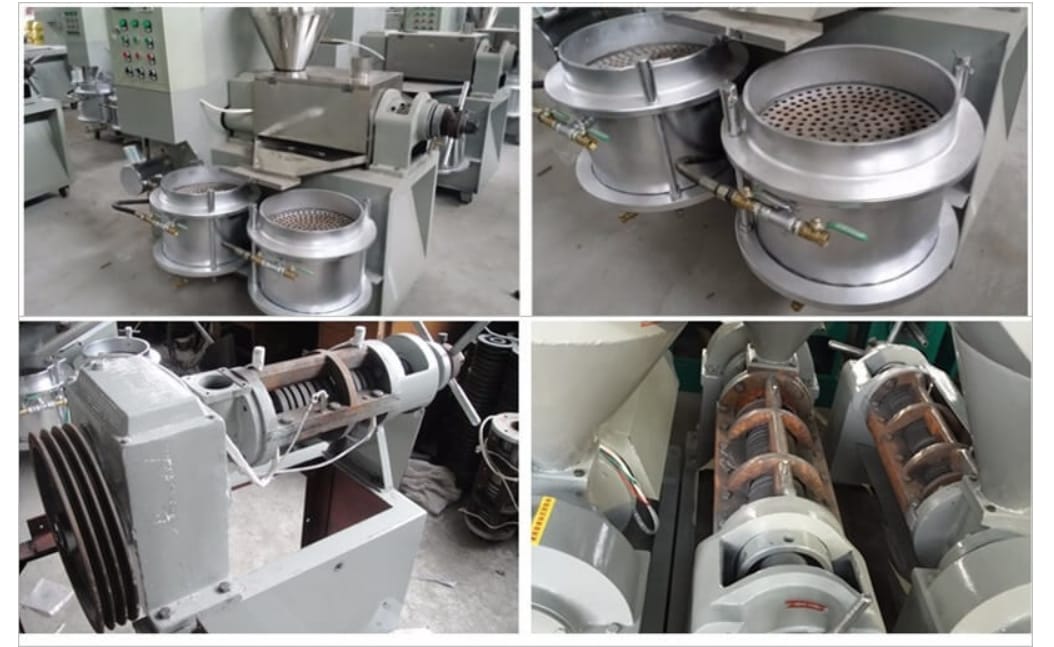


Sample output from the Industrial Oil Press. Ask us for real production photos matched to your exact product and capacity.

Screw oil press: mechanically extracts oil from peanuts, soybeans, sunflower, rapeseed, sesame. 1-50 t/day. No chemicals, pure cold-pressed or hot-pressed oil.
| Model | Capacity | Configuration |
|---|---|---|
| PRS-101 | 1 t/day | Small oil producer. |
| PRS-001 | 10 t/day | Mid-scale. 15 kW motor. |
| PRS-201 | 50 t/day | Industrial. 30 kW double-screw. |
Typical values — each model is configured to your product, cut size, and line speed.
Seed and kernel oil producers pressing peanut, sesame, sunflower, and soy at mechanical press scale. For the full range, see the processing hub.
Cold pressing keeps seed below 60°C, giving premium flavor and label value at a lower yield. Hot pressing cooks seed at 120-150°C and extracts more oil, with a cooked flavor that suits refining. If you sell bottled cold-pressed oil at a premium, take the yield hit; if you feed a refinery, press hot.
Typical single-press yields: peanut 42-48%, sesame 42-50%, sunflower 35-42%, rapeseed 35-40%, soybean 14-18%. Soybean simply carries less oil than the rest. Yield also follows seed quality and press condition, so treat these as planning numbers; we verify against a sample of your actual seed.
Single pressing leaves 6-12% residual oil in the cake; a second pass brings that down to 4-6%. Going lower takes solvent extraction, which recovers to under 1%. Either way the cake sells as animal feed or fertilizer, so residual oil is a yield decision, not a waste question.
The sequence is cleaning, flaking, then cooking for the hot-press route, ahead of the press itself. Flaking ruptures the seed’s cell structure so the screw can reach the oil, and skipping it is the most common cause of a disappointing first-season yield. We specify the pre-treatment line to match your seed mix.
The screw segments and the pressing cage take the abrasion: check segments monthly and plan annual ring die replacement at heavy duty. Models span 1 t/day for small producers, a 15 kW mid-scale press, and a 30 kW double-screw at 50 t/day. Wear announces itself as falling yield first, so log yield weekly.
Yes. We provide installation and commissioning support, and 12 months of after-sales service, including spare parts help and technical response.

 7 * 24 Support
 Remote Support
 Global Coverage