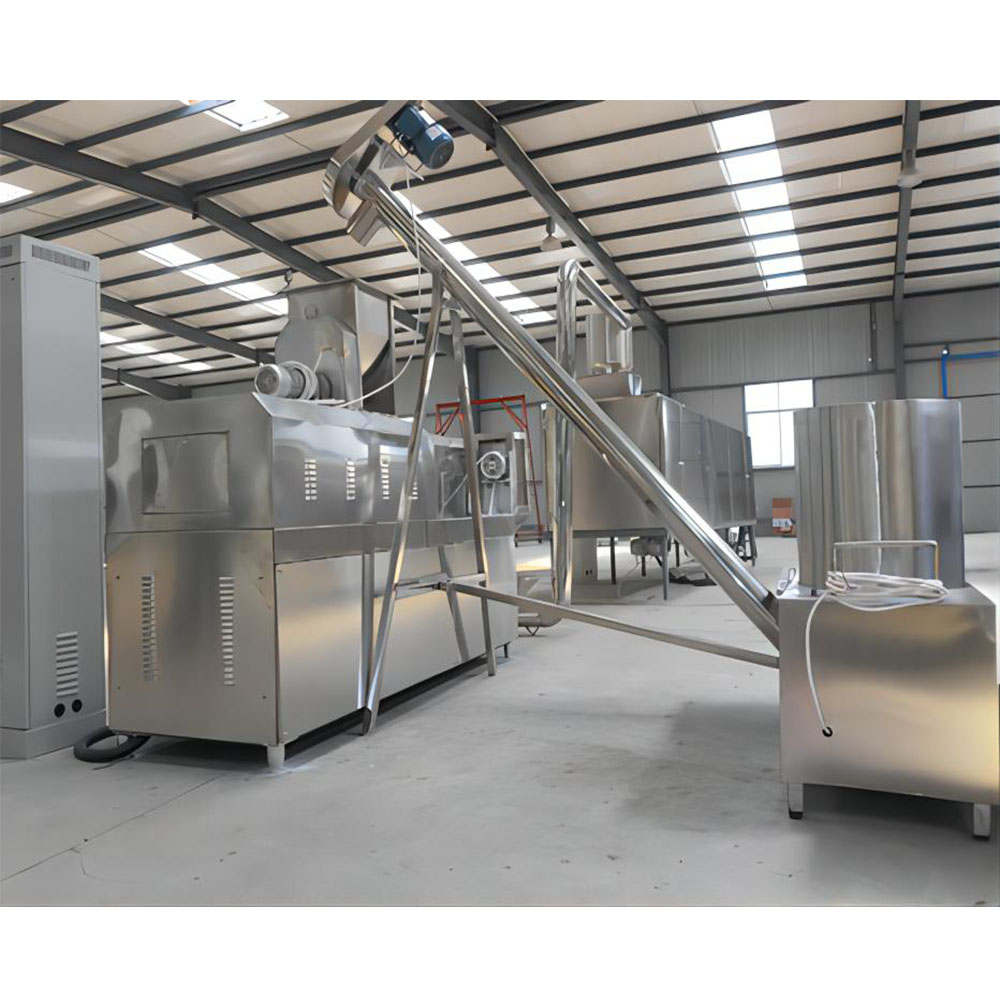
Fish Processing Line Investment: Scalers to Meatball Lines
Building a profitable fish processing operation requires the right sequence of equipment matched to species, throughput, and target market. For processors in Southeast Asia and West Africa serving surimi, fishmeal, and ready-to-cook markets, selecting scalable machines from scalers through to meatball lines determines whether a 500 kg/h plant survives its first peak season. This guide maps the complete equipment journey, capacity planning, compliance requirements, and total investment framework for buyers evaluating a fish processing line equipment purchase.
- Capacity planning starts with peak-season harvest volume, not average daily landings
- Sequential processing flow — scaling, cutting, deboning, cleaning — must be matched in throughput to avoid bottlenecks
- Country compliance (Halal, CE, FDA-equivalent, GCC) should be confirmed before order placement, not at customs
- Stainless steel grade (304 vs 316) selection depends on brine exposure and cleaning chemical strength
- Total investment includes utility upgrades (water, power, drainage) that can add 15-25% to machine cost
- After-sales support network density in your region dictates downtime risk more than warranty terms
Why Does Fish Processors in Southeast Asia and West Africa Are Investing Now?
The global fish processing equipment market is being reshaped by two converging forces that make Southeast Asia and West Africa the highest-ROI regions for new line investment. In Southeast Asia, Vietnam, Thailand, Indonesia, and the Philippines have moved beyond raw exports and are capturing surimi, fish ball, and frozen portion value. Surimi alone commands a 30-45% price premium over round frozen fish, and domestic demand for ready-to-cook products in Jakarta, Manila, and Bangkok is growing 7-9% annually. Processors that previously shipped whole tilapia and pangasius to China are now installing deboning and mince lines to retain that margin locally.
In West Africa, the dynamic is different but equally compelling. Ghana, Nigeria, Senegal, and Côte d’Ivoire process enormous volumes of small pelagics — sardinella, bonga, mackerel — that historically went into hot-smoked or dried product with high post-harvest loss (estimated 25-40% in some value chains). Mechanized scaling, cutting, and deboning lets processors redirect lower-grade raw material into fishmeal for aquaculture feed, a market growing at 6-8% annually across the region, while premium fish moves into frozen portions for urban retail. The economics are stark: a 1-ton-per-hour line converting bycatch and trimmings into fishmeal can recover its equipment cost in 14-22 months depending on feedstock cost.
Both regions also face tightening export and retail standards. EU-bound product requires documented cold chain and processing hygiene. Domestic modern trade in Lagos, Accra, and Jakarta demands consistent portion weight and packaging. Manual processing cannot reliably hit these specs at scale. This is why fish processing line equipment investment, once a stretch goal, has become a competitive necessity for any processor handling more than 2 tons per day.
The Core Equipment Sequence: From Whole Fish to Finished Product
A complete fish processing line is not a single machine — it is a sequence of unit operations, each tuned to a species and end product. Understanding this sequence prevents the most common buyer mistake: purchasing a high-capacity deboner that starves because the scaler and cutter upstream are undersized. The four core machines below form the backbone of most small-to-mid-scale operations.
FSC-001 Fish Scaler
The scaler is the entry point. The FSC-001 uses rotating abrasive drums or vibrating plates to remove scales from round fish such as tilapia, pangasius, mackerel, and sardinella without damaging the skin or flesh. Throughput ranges from 200 to 2,000 kg/h depending on fish size and operator loading. For mixed-species operations common in West Africa, look for adjustable drum spacing and a hopper wide enough to accept 800g fish without manual pre-cutting. Stainless steel 304 is standard for freshwater species; brackish and marine operations should upgrade to 316 for scale hopper and spray bar components.
FCM-001 Fish Cutter
After scaling, the cutter performs heading, gutting, and portioning. The FCM-001 handles band-saw and rotary-knife configurations for splitting fish into steaks, fillets, or mince-ready chunks. A 500-1,500 kg/h unit typically serves a mid-scale line feeding a deboner downstream. Key selection criteria are blade access for cleaning, fish-size adjustment range (critical for processors buying mixed auction lots), and safety interlocks. In Southeast Asian surimi plants, the cutter is often configured for butterfly splitting to maximize meat recovery before the deboner.
FDB-001 Fish Deboner
The deboner separates meat from bone and skin using a perforated drum and pressure belt. The FDB-001 is the heart of any surimi, fish ball, or fish sausage operation. Yield recovery is the make-or-break metric — premium machines recover 65-72% meat from whole round fish and 80-88% from headed-and-gutted input. Drum perforation size (typically 3mm to 7mm) dictates the texture of the output: finer perforations yield smoother surimi paste; larger perforations suit fishmeal feedstock. Capacity ranges from 200 kg/h benchtop units to 2,000 kg/h industrial models. For buyers in West Africa entering fishmeal production, pairing a 1-ton deboner with a 1.5-ton scaler and 1.2-ton cutter creates a balanced line with 10-15% buffer capacity.
FCL-001 Fish Cleaner / Washer
The FCL-001 performs final rinse, chill, and debris removal using bubble-wash or spray-flume technology. Often overlooked by first-time buyers, the cleaner is critical for shelf life, export compliance, and microbial control. A line without a properly sized washer can produce visually clean product that fails TPC and coliform tests at the destination port. Washers are sized by tank volume and dwell time: surimi lines require 90-120 seconds of chilled wash, while fishmeal-bound product needs only 30-45 seconds. Stainless 316 is strongly recommended for the wash tank due to constant water and chlorine exposure.
Capacity Planning: Matching Machines to Throughput and Species
The single largest source of regret among fish processing line equipment buyers is mismatched capacity. A line is only as fast as its slowest machine, and that bottleneck often appears only during peak season when every processor is trying to move fish before quality degrades. The right approach is to size each machine against peak-season landings with a 15-20% buffer, not against average daily volume.
The table below maps typical equipment configurations against daily throughput targets. These are reference points — actual sizing depends on species mix, shift length, and product format.
| Daily Throughput (8h shift) | FSC-001 Scaler (kg/h) | FCM-001 Cutter (kg/h) | FDB-001 Deboner (kg/h) | FCL-001 Cleaner (kg/h) | Typical End Product |
|---|---|---|---|---|---|
| 500-1,000 kg | 200-300 | 200-300 | 200 | 300 | Local retail, fresh fish portions |
| 1,000-3,000 kg | 500-800 | 500-700 | 500 | 800 | Frozen portions, regional export |
| 3,000-6,000 kg | 800-1,200 | 800-1,000 | 1,000 | 1,200 | Surimi, fish balls, fish sausage |
| 6,000-12,000 kg | 1,500-2,000 | 1,200-1,500 | 1,500-2,000 | 2,000 | Industrial surimi, fishmeal feedstock |
| 12,000+ kg | 2,000 (parallel units) | 1,500 (parallel units) | 2,000 (parallel units) | 2,000 (parallel units) | Export surimi, large-scale fishmeal |
Species mix matters as much as volume. Soft-flesh species such as pangasius and sardinella require gentler drum speeds on the deboner to avoid paste degradation, which can reduce effective throughput by 15-25%. Hard-flesh species such as mackerel and tilapia run closer to rated capacity. Processors buying mixed-species auction landings — common in Tema, Abidjan, and Jakarta fish ports — should size equipment against the soft-species percentage of the mix, not the rated hard-species number.
Compliance: What Your Target Market Demands Before Shipment Clears Customs
Country compliance is the most expensive thing to get wrong in fish processing line equipment investment. A machine that produces excellent product but cannot be cleaned to a documented standard, or that lacks the right certification paperwork, can lock a processor out of premium markets for months. Southeast Asian and West African processors typically target one or more of five compliance regimes, each with specific equipment implications.
EU Export (Health Certificate Route): Processors shipping to the EU must operate from an approved establishment with HACCP-documented processing. Equipment must be fully drainable, free of dead zones where product can accumulate, and constructed from food-grade materials with documented traceability. The FCL-001 cleaner in particular must demonstrate consistent chilled-water rinse at 4°C or below. Buyers should request material certificates (3.1 EN 10204) for all product-contact stainless steel.
Halal Certification (Jakarta, Kuala Lumpur, Brunei, Gulf): Critical for Southeast Asian and GCC markets. Equipment itself does not require Halal certification, but the facility layout must allow physical separation of Halal and non-Halal product streams if both are processed. Line configuration should support dedicated cleaning protocols and documented line-clearance between Halal and non-Halal runs.
CE Marking: Required for equipment sold into the EU and many African markets that follow European technical standards. CE-marked machines carry documented electrical safety, machine guarding, and emergency-stop compliance. Buyers in West Africa should verify CE documentation is included with shipment — undocumented equipment has been held at Tema and Apapa ports pending third-party inspection.
FDA-Equivalent (Nigeria NAFDAC, Ghana FDA, Kenya KEBS): Most West and East African countries require local food safety registration for processing equipment used in facilities serving domestic retail. Lead times run 8-16 weeks and require equipment specifications, material certificates, and a facility inspection. Buyers should confirm suppliers can provide the documentation package before order confirmation.
Marine Stewardship Council (MSC) and Aquaculture Stewardship Council (ASC): Not equipment certifications per se, but chain-of-custody documentation requires that processing equipment allow lot traceability. Lines should be configured with batch-logging capability at the scaler input and the cleaner output.
Total Investment Framework: Beyond the Machine Sticker Price
First-time buyers routinely underestimate the total cost of commissioning a fish processing line by 25-40%. The machine sticker price is typically 60-75% of the actual installed cost. The remainder falls into six categories that buyers must budget explicitly during planning.
Utility upgrades: Fish processing is water and power intensive. A 1-ton-per-hour line typically requires 4-6 cubic meters of potable water per hour, three-phase power at 25-40 kVA, and floor drainage rated for solids loading. Many existing facilities in West Africa need a new chiller plant (often the single largest utility line item) and water storage upgrade. Utility upgrades can add 15-25% to machine cost.
Cold storage integration: The line needs cold rooms for input buffer (0-4°C) and freezer storage for output (-18°C or below). Blast freezers are typically required for surimi and portioned product. These are usually sourced separately from the processing line and represent a parallel investment of similar magnitude.
Installation and commissioning: Supplier installation teams, electrical and plumbing contractors, and a 2-4 week commissioning period with trial production runs. Budget 8-12% of machine cost.
Operator training: Even well-designed lines underperform without trained operators. A 2-3 week on-site training program covering cleaning, changeover, basic maintenance, and food safety protocols is essential. Many suppliers include this in the package; if not, budget separately.
Spare parts inventory: Critical wear parts — blades, belts, seals, drum screens — should be purchased with the line to avoid the first 12 months of downtime waiting for air-freighted parts. Budget 3-5% of machine cost for opening spares inventory.
Working capital: The first 60-90 days of operation typically run below rated capacity as the team learns the line. Buyers should carry working capital sufficient to cover 90 days of operations without relying on line output revenue.
The table below summarizes the cost structure for a representative 1-ton-per-hour line. Actual figures vary by region, supplier, and facility condition, but the proportions hold across most projects.
| Cost Category | Typical Share of Total Project | Notes |
|---|---|---|
| Processing equipment (scaler through cleaner) | 60-70% | Core FSC, FCM, FDB, FCL machines |
| Utility upgrades (chiller, water, power, drainage) | 15-25% | Largest variable; depends on facility condition |
| Installation and commissioning | 8-12% | Supplier team + local contractors |
| Operator training | 2-4% | 2-3 weeks on-site |
| Spare parts opening inventory | 3-5% | Blades, belts, seals, drum screens |
| Permits and compliance documentation | 1-3% | Local FDA, environmental, fire |
Extending the Line: From Deboner to Fish Balls, Surimi, and Meatball Production
Many buyers start with scaling, cutting, and deboning and then extend the line into value-added products. This is where the strongest margins live. Surimi, fish balls, and fish meatballs command 2-4x the unit price of frozen deboned mince, and the equipment extension is a natural continuation of the core line.
A typical extension sequence runs from the FDB-001 deboner output into a meat grinder and silent cutter (or bowl chopper) that produces the refined paste, then into a fish ball forming machine for portioning, and finally a continuous cooker or fryer. For surimi, the intermediate stages include leaching/washing tanks (to remove fat and water-soluble proteins), screw press dewatering, and a refiner that removes residual bone and connective tissue. The leaching stage is the largest consumer of chilled water in a surimi plant — buyers in water-constrained regions should plan water recovery systems at the design stage.
For fish meatball lines serving Southeast Asian markets (Hong Kong-style fish balls, Teochew-style in Thailand and Singapore, Indonesian bakso ikan), the critical equipment additions beyond the deboner are a bowl chopper with vacuum capability (for the desired springy texture), an automatic fish ball forming machine with adjustable portion weight (8-25g typical), and a continuous water-cooking line at 80-90°C. Throughput for a typical forming line runs 100-300 kg/h of finished balls, which pairs naturally with a 500 kg/h deboner line at typical yields.
Buyers should treat the extension as a planned phase rather than an afterthought. Even if initial capital only covers scaling through cleaning, the floor plan, utility capacity, and equipment layout should be designed to accept the extension without major rework. The most common regret among expanding processors is having to relocate or rebuild the deboner area to make room for the silent cutter and forming line that arrived two years later.
Selecting the Right Supplier: Beyond Catalogs and Quotation Sheets
Equipment specifications and price are necessary but not sufficient criteria for supplier selection. In fish processing line equipment investment, the supplier relationship extends years beyond delivery, and the wrong partner can mean weeks of unplanned downtime during peak season. Five evaluation criteria separate reliable suppliers from those who look good on paper.
Regional service network: Does the supplier have a service technician within a one-day travel radius, or does every breakdown trigger a 5-7 day wait for an engineer to fly in? For processors in West Africa and secondary cities in Southeast Asia, this is the single most important criterion. Ask for the location of the nearest technician and the typical response time for a critical failure during peak season.
Documented installations in your species and product: A supplier with a strong reference in tilapia portions may have no experience with sardinella surimi. Ask for two or three reference installations processing similar species and targeting similar end products. Speak to those customers directly — the conversation reveals more than any reference letter.
Spare parts availability and lead times: Wear parts should be available from a regional stock within 7-14 days, not 6-8 weeks via ocean freight. Confirm which parts are stocked regionally and which require factory order. Critical wear parts that are not stocked regionally should be purchased with the line.
Documentation package quality: Request the documentation package for a recent comparable installation. It should include installation drawings, electrical schematics, operation manuals in your team’s working language, maintenance schedules, and CE or equivalent compliance certificates. Suppliers that cannot produce this on request typically cannot produce it after delivery either.
Warranty scope and exclusions: Read the warranty carefully. A 12-month warranty that excludes wear parts, water damage, and operator error provides limited practical protection. The strongest warranties cover the major components (motors, drives, control panels) for 24 months regardless of cause, with wear parts handled separately on a defined schedule.
Financing the Investment: Options for Southeast Asian and West African Buyers
Most fish processing line equipment projects in the target regions combine multiple financing sources. Pure bank financing at commercial rates is often uneconomical; the most successful buyers stitch together development finance, supplier credit, and equity.
Development finance institutions offer concessional lending for food processing and agribusiness in both regions. The African Development Bank, through partner banks in Ghana, Nigeria, and Senegal, offers term loans at rates 4-6 percentage points below commercial for agro-processing projects meeting employment and export criteria. In Southeast Asia, the Asian Development Bank and national development banks in Vietnam, Indonesia, and the Philippines run similar programs. Application lead times run 4-8 months, so financing discussions should begin before final equipment selection, not after.
Supplier credit is available from established manufacturers for buyers with strong financials. Typical terms are 30-50% advance with shipment, 30% at commissioning, and 20% over 6-12 months. This is most accessible for repeat buyers and for buyers with bank guarantees from recognized institutions.
Lease-to-own structures work for processors who cannot access development finance or supplier credit. Equipment leasing companies in Lagos, Accra, Jakarta, and Bangkok increasingly offer fish processing equipment on 3-5 year leases with purchase options. The total cost of capital is higher than bank financing, but the structure preserves working capital during commissioning.
Frequently Asked Questions
Q: What is the minimum viable throughput for a first fish processing line investment?
A: Most successful first-time buyers start at 500-1,000 kg per 8-hour shift, sized to peak-season landings with a 15-20% buffer. Below 500 kg per shift, the fixed cost of utilities, cold storage, and labor typically exceeds the value added by processing, making the line uneconomical. Buyers uncertain about sustained volume should consider co-processing with neighboring operations or starting with a smaller deboner and scaling up later as volume stabilizes.
Q: How does species mix affect equipment selection in West Africa where landings are often mixed?
A: Mixed-species operations should size equipment against the soft-flesh percentage of the mix, since soft species like sardinella and bonga run 15-25% below rated capacity on deboners due to gentler drum speeds required to preserve meat quality. Adjustable drum spacing on the scaler and multiple drum perforation sets on the deboner allow one line to handle multiple species without major changeover time. Confirm with suppliers that their machines handle the full species range you expect to process.
Q: What documentation should I require from the supplier for compliance purposes?
A: Minimum documentation includes material certificates (EN 10204 3.1) for all product-contact stainless steel, CE compliance certificates, electrical schematics, installation drawings, operation and maintenance manuals in your working language, and a spare parts list with part numbers. For EU export intent, request a declaration of conformity and HACCP-compatible design documentation. For GCC and Halal markets, request equipment construction statements compatible with Halal line-clearance protocols. Obtain these before final payment, not after.
Q: How long does installation and commissioning typically take for a complete line?
A: A complete line from scaler through cleaner typically requires 4-8 weeks for installation and commissioning, depending on site readiness, utility availability, and line complexity. Site preparation — utility upgrades, floor preparation, drainage installation — should be substantially complete before equipment arrives to avoid stacking delays. Plan for a 2-4 week trial production period during which output ramps from 50% to 90% of rated capacity as operators become proficient.
Q: What is the typical payback period for a fish processing line in Southeast Asia or West Africa?
A: Payback ranges from 14 to 30 months depending on species, end product, and capacity utilization. Surimi and fish ball lines in Southeast Asia typically pay back in 18-24 months due to strong premium pricing. Fishmeal recovery lines in West Africa can pay back in 14-22 months when fed by low-cost bycatch and trimmings. Frozen portion lines for domestic retail typically run 24-30 months. The dominant variable is capacity utilization — lines running below 60% of rated capacity in the first year extend payback significantly.
Q: Should I buy all equipment from one supplier or mix best-of-breed machines from different suppliers?
A: For first-time buyers and operations under 2 tons per hour, a single integrated supplier is usually the better choice — it simplifies commissioning, training, warranty, and after-sales support. For larger operations or specialized end products (premium surimi, specific meatball textures), best-of-breed selection on individual machines can improve output quality, but requires the buyer or an integrator to manage line compatibility. The integration risk grows with the number of suppliers, particularly around control systems and product transfer between machines.
If you are planning a fish processing line investment in Southeast Asia or West Africa and want to discuss the right scaler, cutter, deboner, and cleaner configuration for your species, throughput target, and compliance requirements, contact our team at [email protected] with your projected daily volume, primary species mix, and target end product. We will return a matched equipment proposal with capacity, compliance, and total investment guidance specific to your operation.
Learn more: sausage processing applications
Get a quote: [email protected]
Looking for the right machine for your meat processing line? Browse all Esper meat processing machines — 26 models across slaughtering, cutting, grinding, and smoking applications.