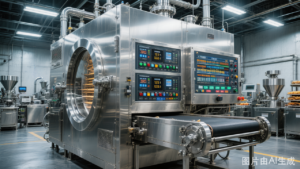
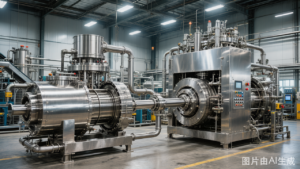
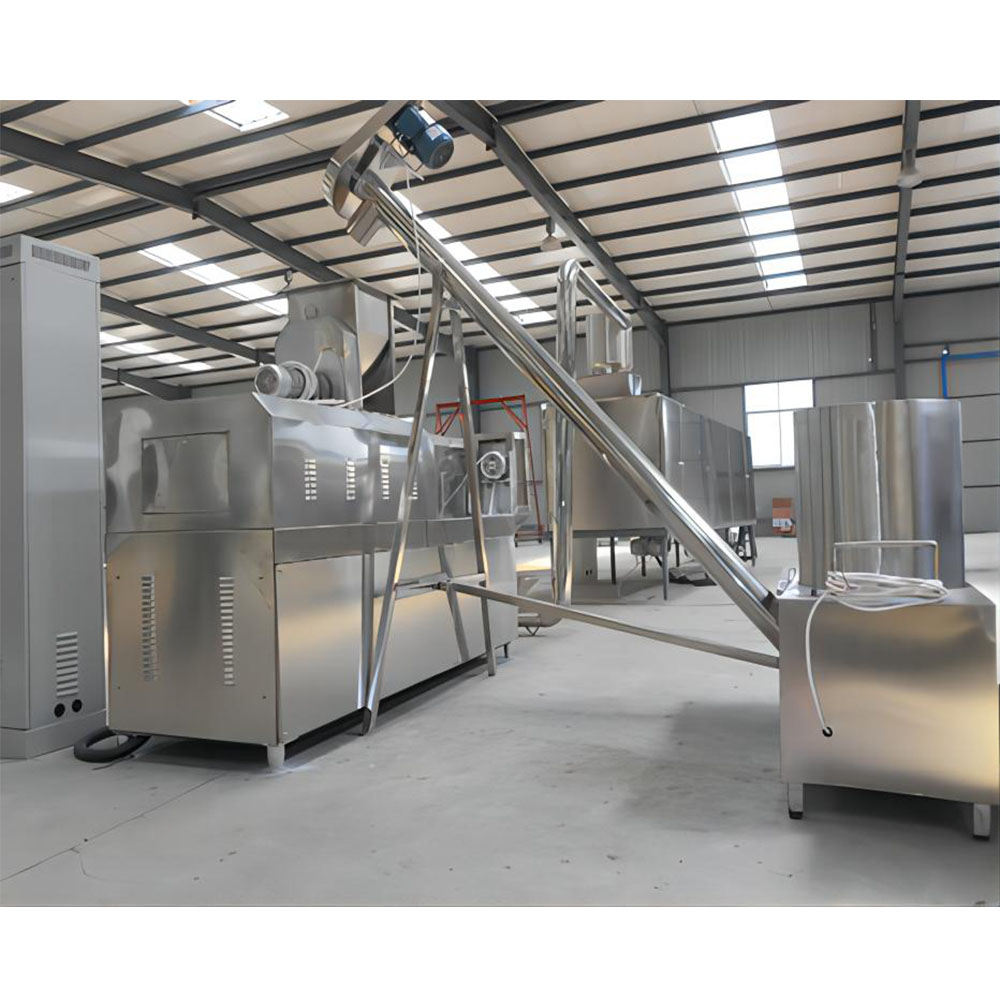
Choosing the right potato chips production line is one of the most consequential decisions a snack food manufacturer will make. The equipment you select directly determines your production capacity, product quality, labor costs, and ultimately your profitability. Whether you are launching a new snack brand or expanding an existing operation, this guide walks you through every critical factor—from capacity planning and automation level to fryer type and ROI calculation.
TL;DR — Key Takeaways
- Capacity first: Match your line to 1.5× your target daily output to allow for growth without over-investing.
- Automation pays off: Fully automatic lines cost 2–3× more upfront but reduce labor by 60–80% and deliver consistent quality at scale.
- Fryer type matters: Belt fryers suit continuous high-volume production; batch fryers offer flexibility for smaller runs or multiple products.
- Total cost of ownership: Factor in energy consumption, oil usage, maintenance, and spare parts—not just the purchase price.
- ROI timeline: A well-chosen semi-automatic line pays back in 8–14 months; a fully automatic line in 14–24 months.
What Does a Potato Chips Production Line Include?
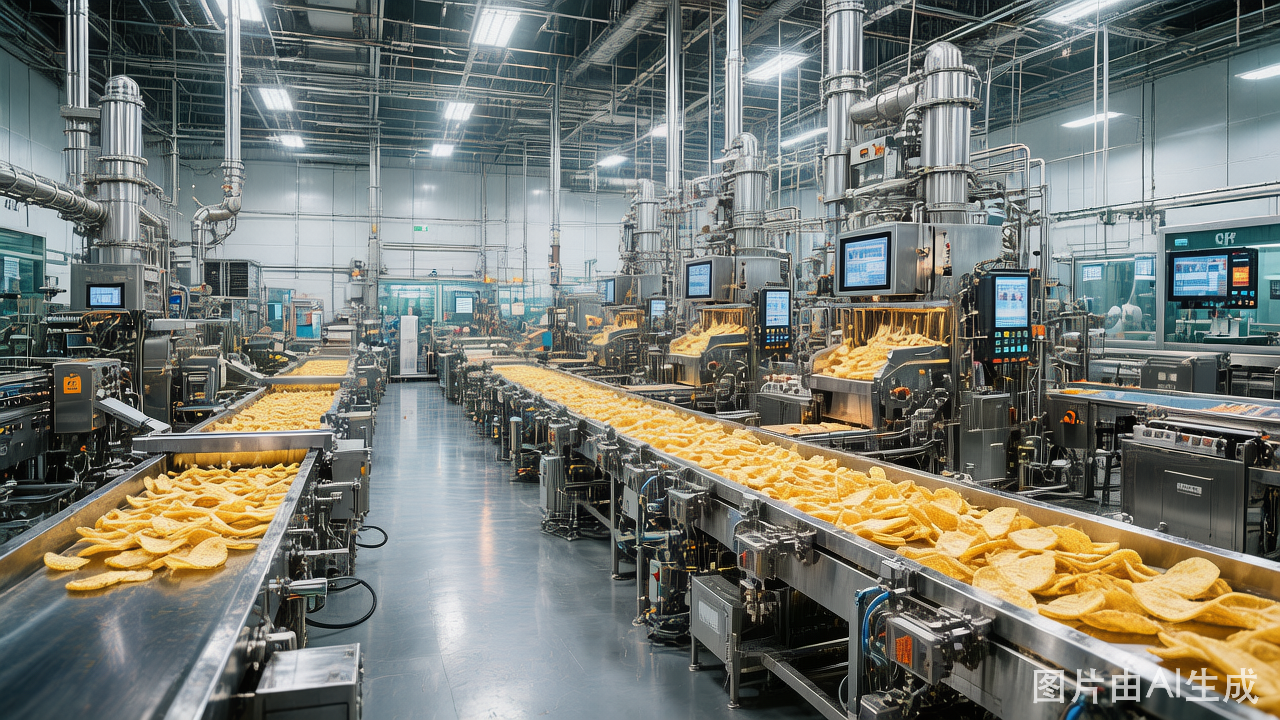
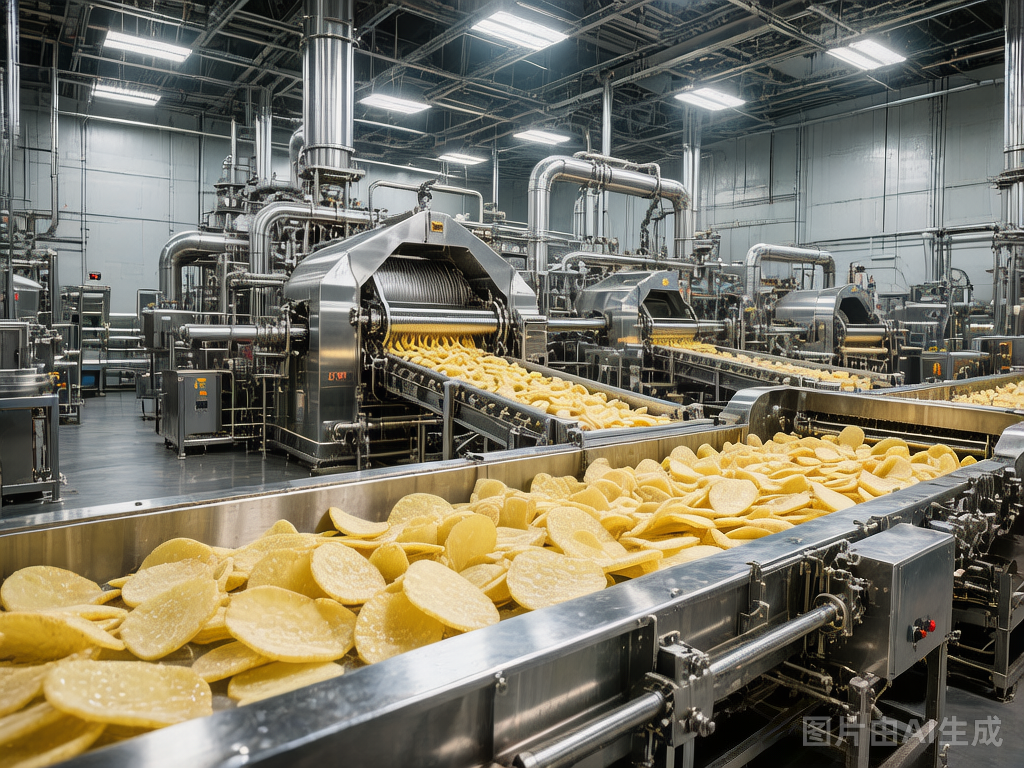
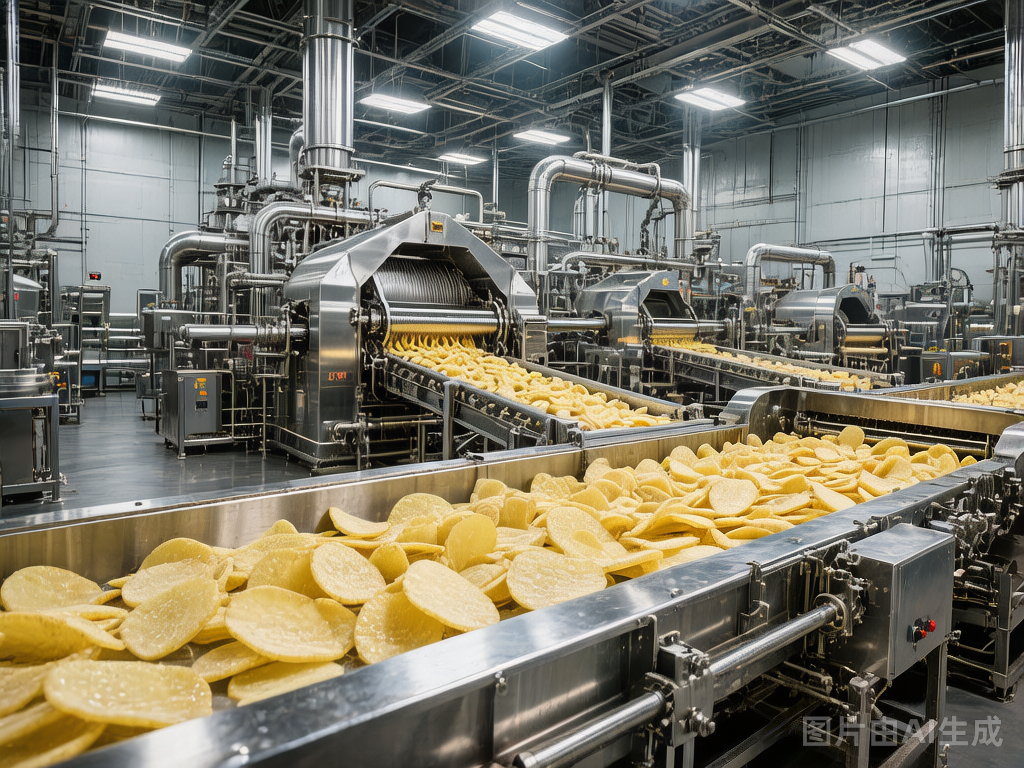
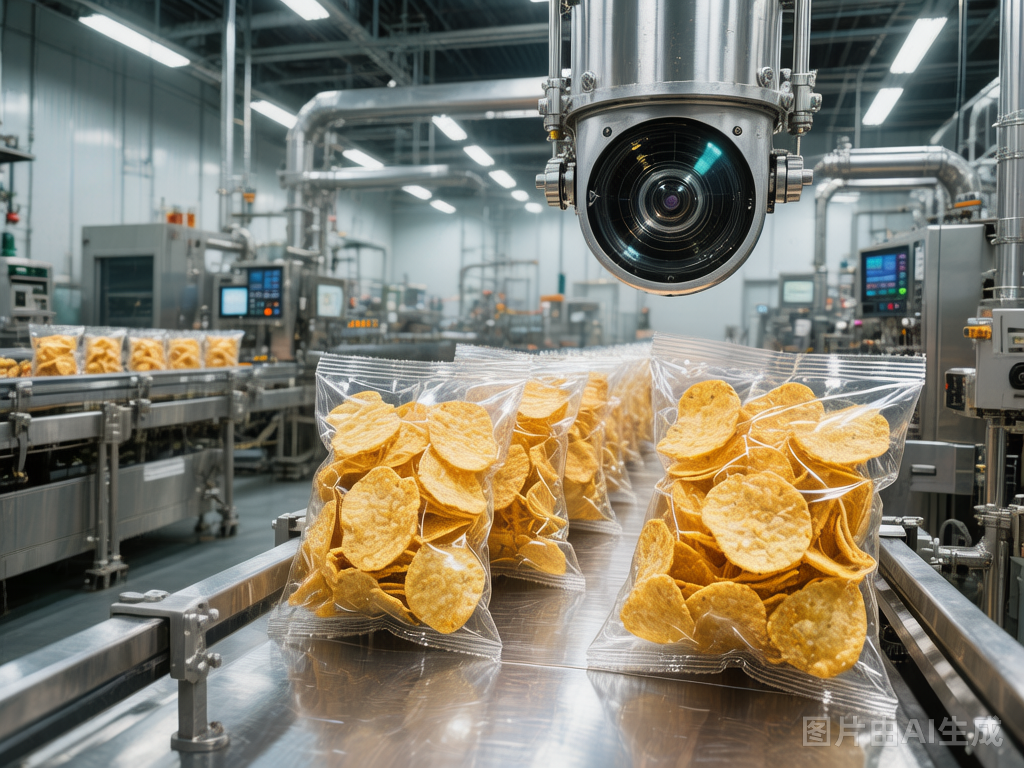
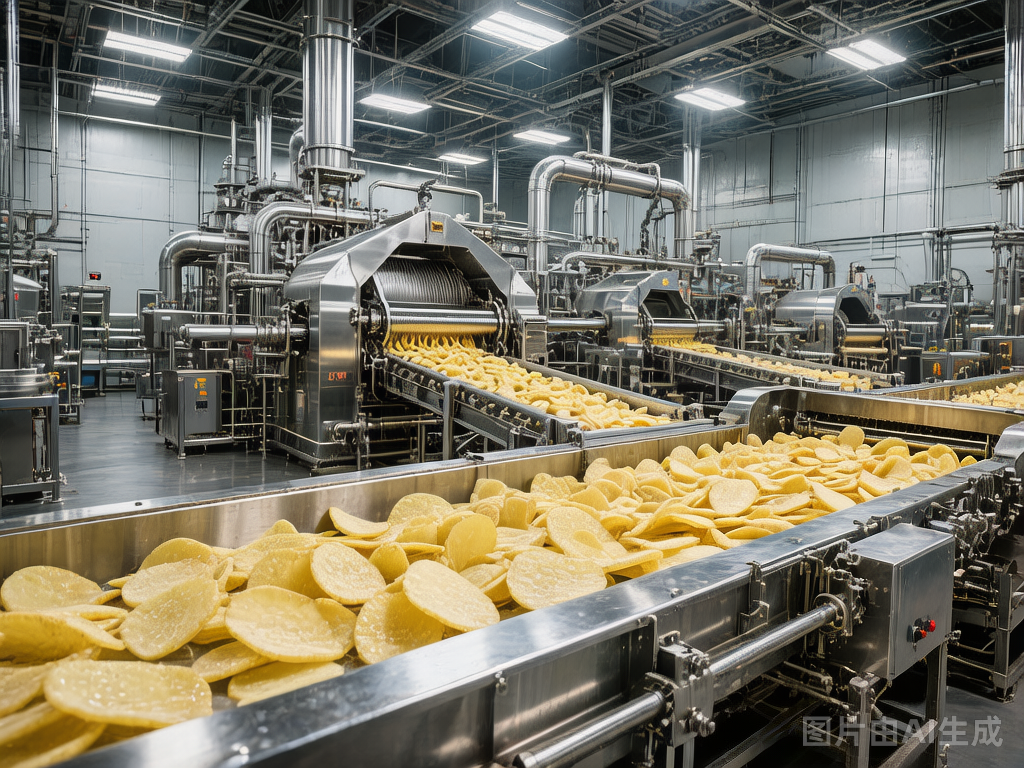
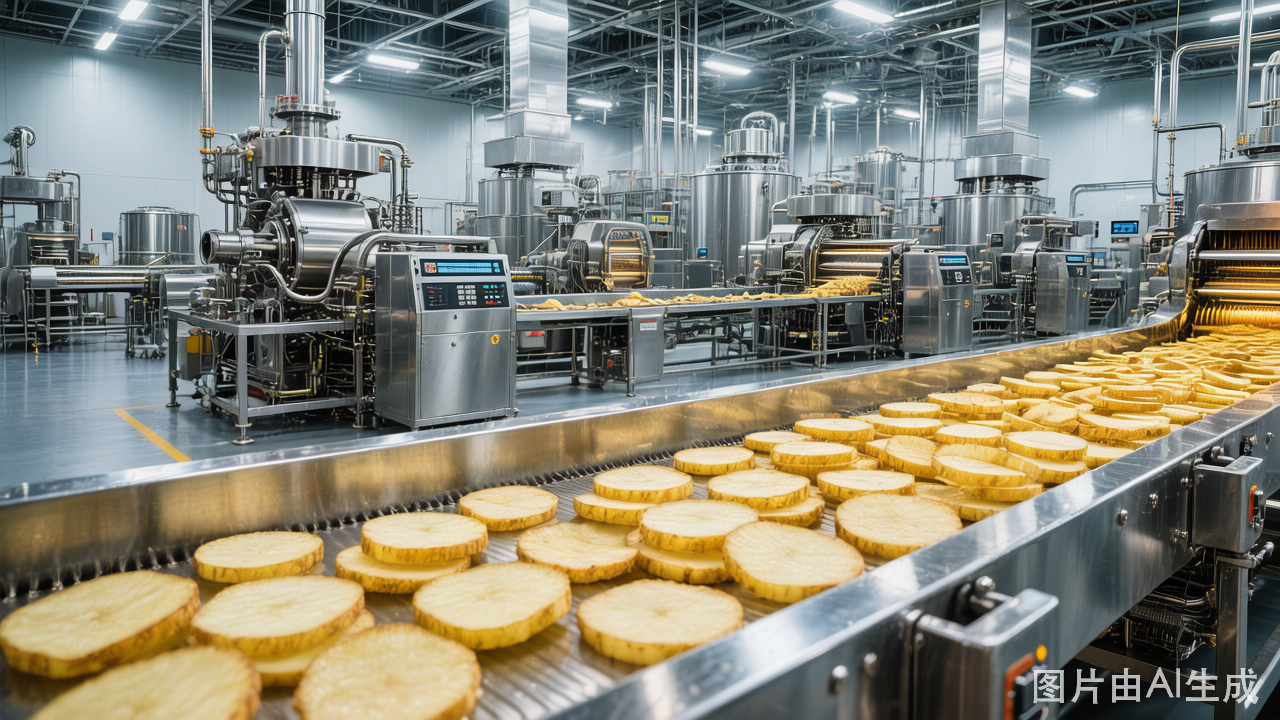
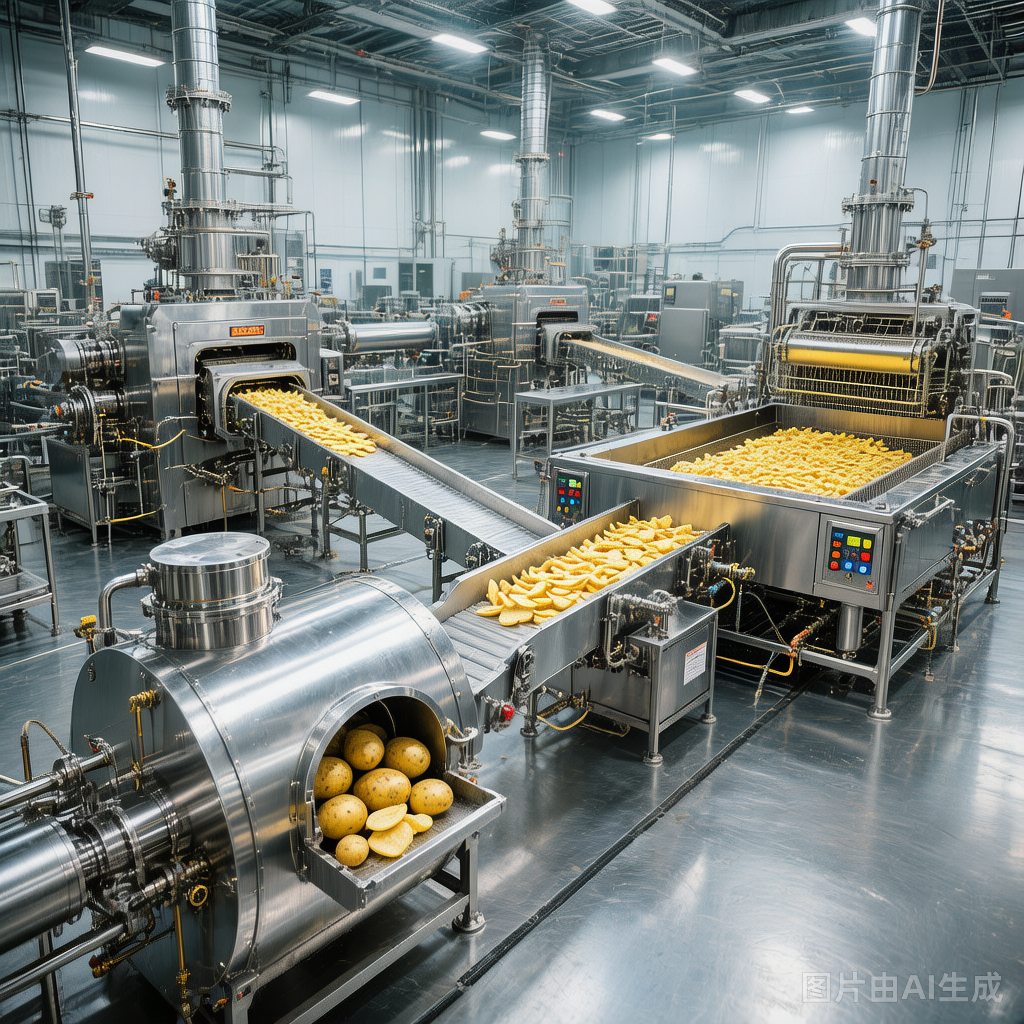
A complete potato chips production line transforms raw potatoes into packaged, ready-to-eat chips through a series of interconnected stages. Each stage uses specialized machinery designed to handle specific processing tasks. Understanding these components is the first step toward making an informed purchasing decision.
Core Equipment Stages
| Stage | Equipment | Function | Key Parameter |
|---|---|---|---|
| 1. Washing & Peeling | Brush roller peeler / abrasive peeler | Remove dirt, skin, and defects | Peeling rate ≥95% |
| 2. Sorting & Grading | Optical sorter / manual inspection belt | Remove defective potatoes | Rejection accuracy ≥98% |
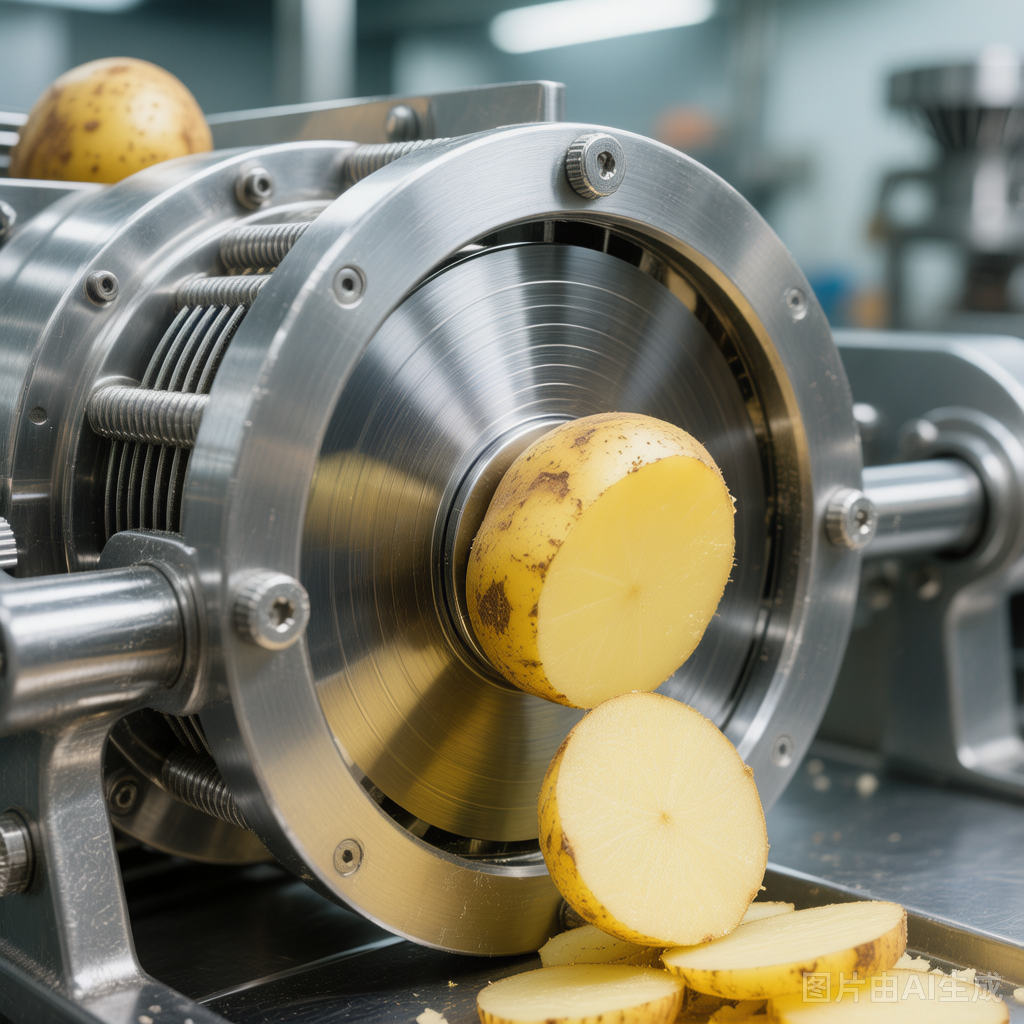
| 3. Slicing | Centrifugal slicer / rotary blade slicer | Cut uniform chips (1.0–2.5mm) | Slice thickness tolerance ±0.1mm |
| 4. Washing (blanching) | Rinsing conveyor / blanching tank | Remove surface starch, prevent browning | Water temp 60–85°C |
| 5. Dewatering | Centrifugal dewaterer / air knife system | Remove surface moisture before frying | Residual moisture ≤5% |
| 6. Frying | Batch fryer / continuous belt fryer | Cook chips to target moisture & color | Oil temp 160–190°C, moisture ≤2% |
| 7. Deoiling | Vibration deoiler / centrifugal deoiler | Remove excess surface oil | Oil content ≤30% |
| 8. Seasoning | Drum flavoring machine / spraying system | Apply even seasoning coating | Coating uniformity ≥90% |
| 9. Cooling | Vibration cooling conveyor | Bring chips to packaging temperature | Exit temp ≤35°C |
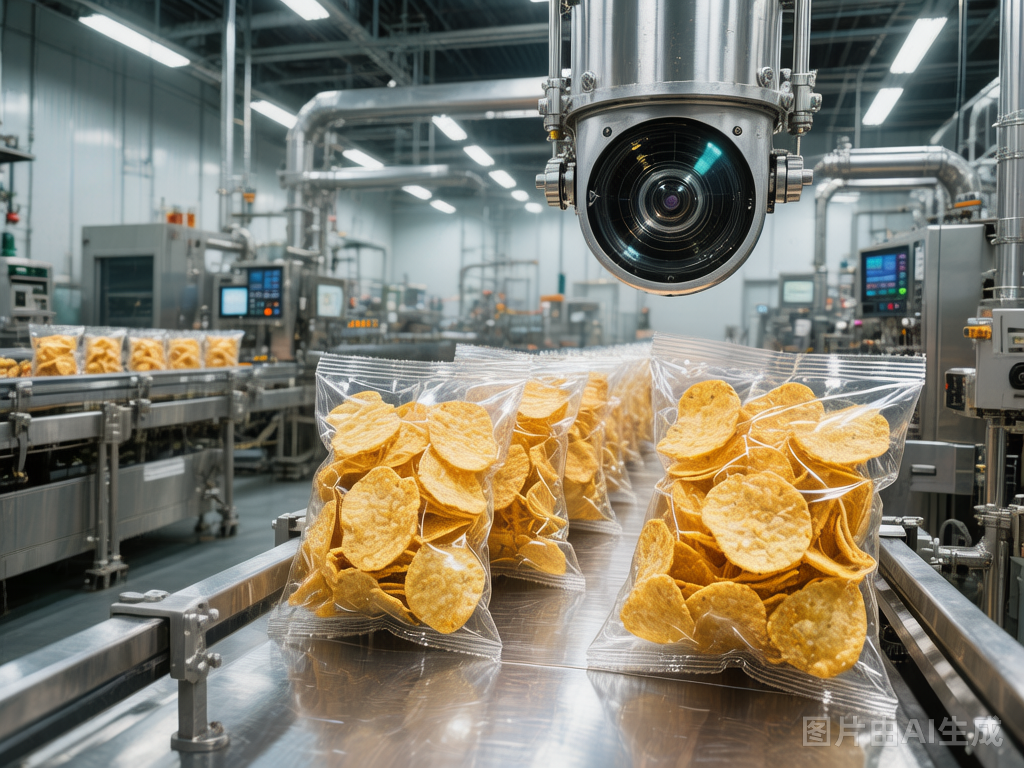
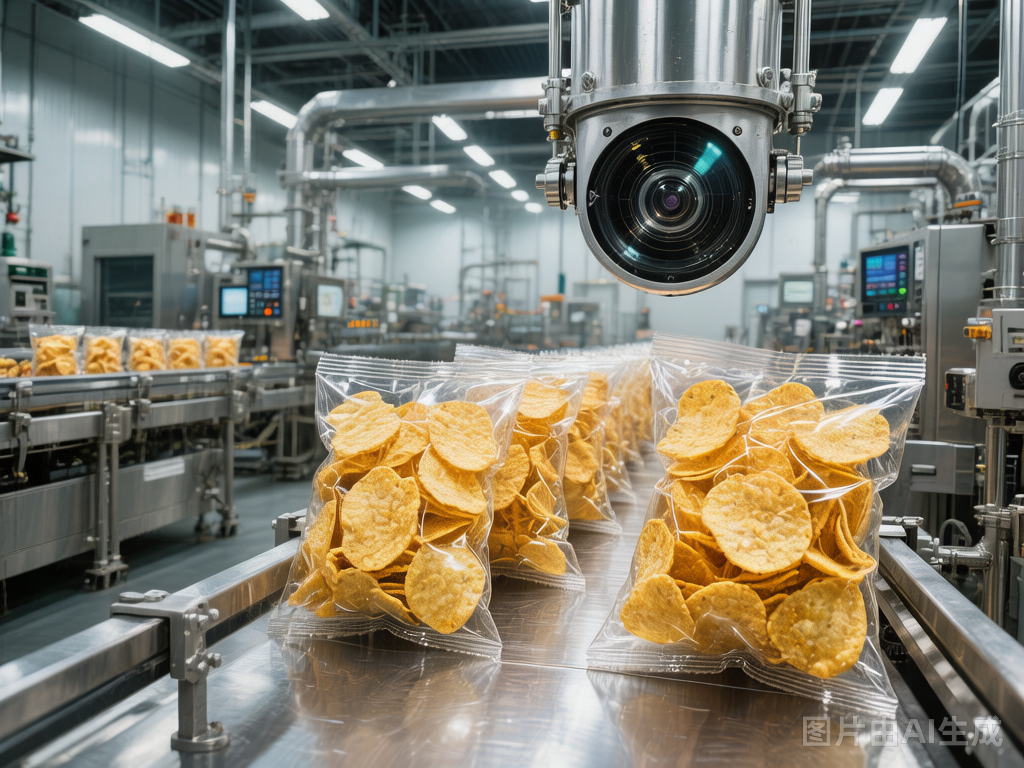
| 10. Packaging | Vertical form-fill-seal machine | Weigh, bag, seal, and date-code | Speed 30–120 bags/min |
Semi-Automatic vs. Fully Automatic: Which Suits Your Factory?
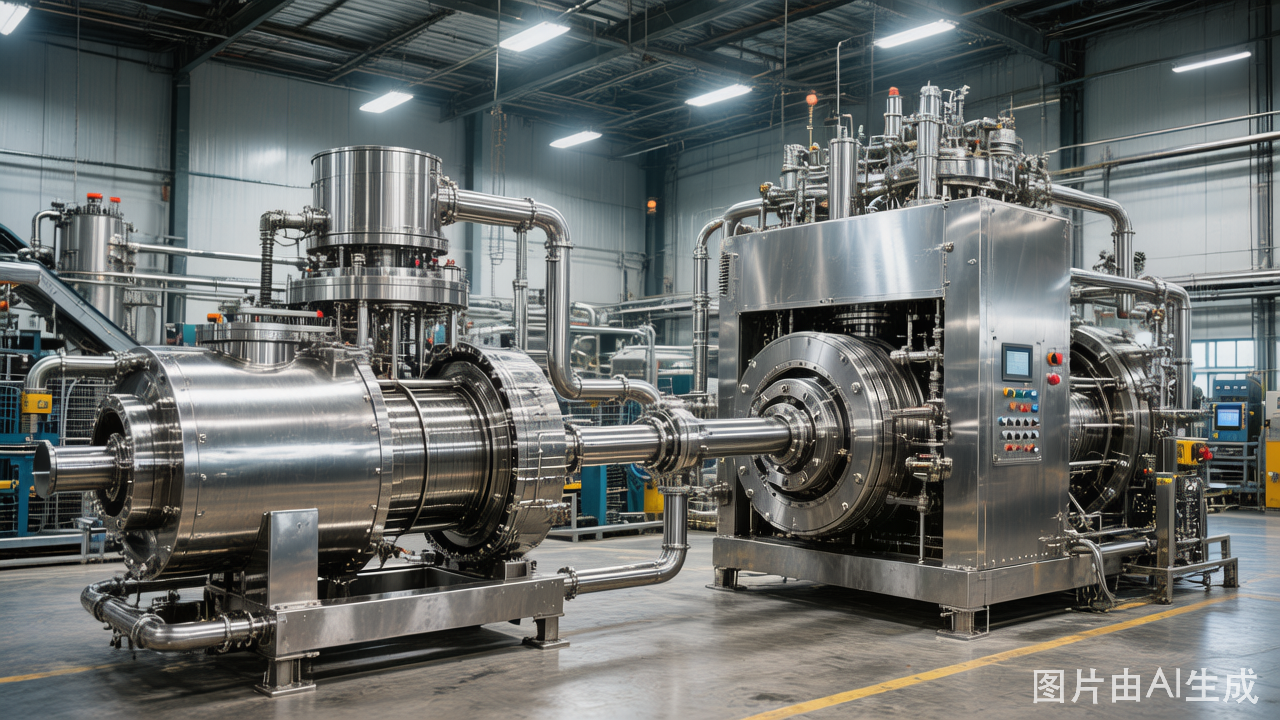
The automation level is the single biggest factor affecting both your initial investment and your long-term operating costs. Here is a detailed comparison to help you decide.
| Factor | Semi-Automatic Line | Fully Automatic Line |
|---|---|---|
| Capacity | 50–200 kg/h | 200–2000 kg/h |
| Labor Required | 8–15 workers | 2–4 workers |
| Equipment Cost (USD) | $15,000–$50,000 | $50,000–$300,000 |
| Product Consistency | Moderate (operator-dependent) | High (PLC-controlled) |
| Oil Consumption | Higher (manual control) | Lower (auto temperature control) |
| Floor Space | 50–100 m² | 150–400 m² |
| Setup Time | 2–4 weeks | 4–8 weeks |
| Payback Period | 8–14 months | 14–24 months |
Choose Semi-Automatic If:
- You are a startup or small business with limited capital
- You plan to produce multiple snack types on the same line
- Your target market is local or regional (not export-scale)
- You want to train operators gradually before upgrading
Choose Fully Automatic If:
- Your daily output target exceeds 1 ton of finished chips
- You are supplying retail chains, export markets, or contract manufacturing
- Consistent product quality is non-negotiable (color, thickness, oil content)
- Labor costs in your region are high relative to equipment costs
Step-by-Step Selection Process
Step 1: Define Your Production Target
Calculate your required hourly output based on your business plan. A common mistake is buying exactly what you need today—instead, plan for 1.5× your current target to accommodate growth.
| Business Scale | Daily Output (8h) | Recommended Capacity | Line Type |
|---|---|---|---|
| Small workshop | 200–500 kg | 50–80 kg/h | Semi-automatic |
| Mid-size factory | 500–2000 kg | 100–300 kg/h | Semi or fully automatic |
| Large-scale plant | 2000–8000 kg | 300–1000 kg/h | Fully automatic |
| Industrial operation | 8000+ kg | 1000+ kg/h | Fully automatic (custom) |
Step 2: Select Your Fryer Type
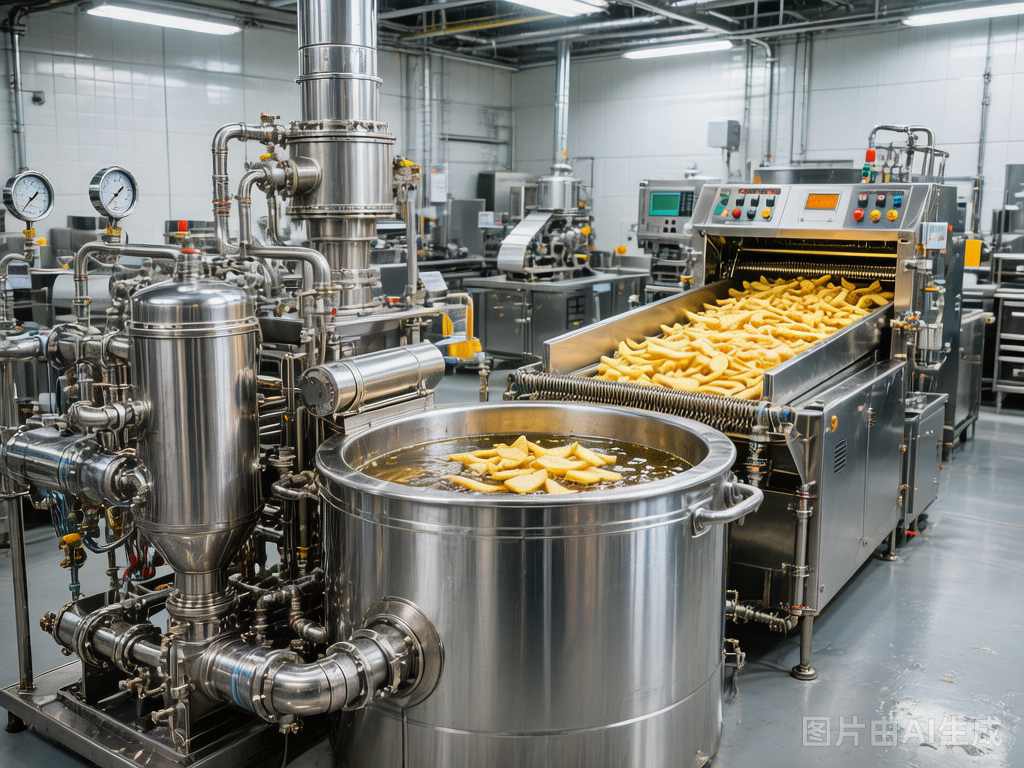
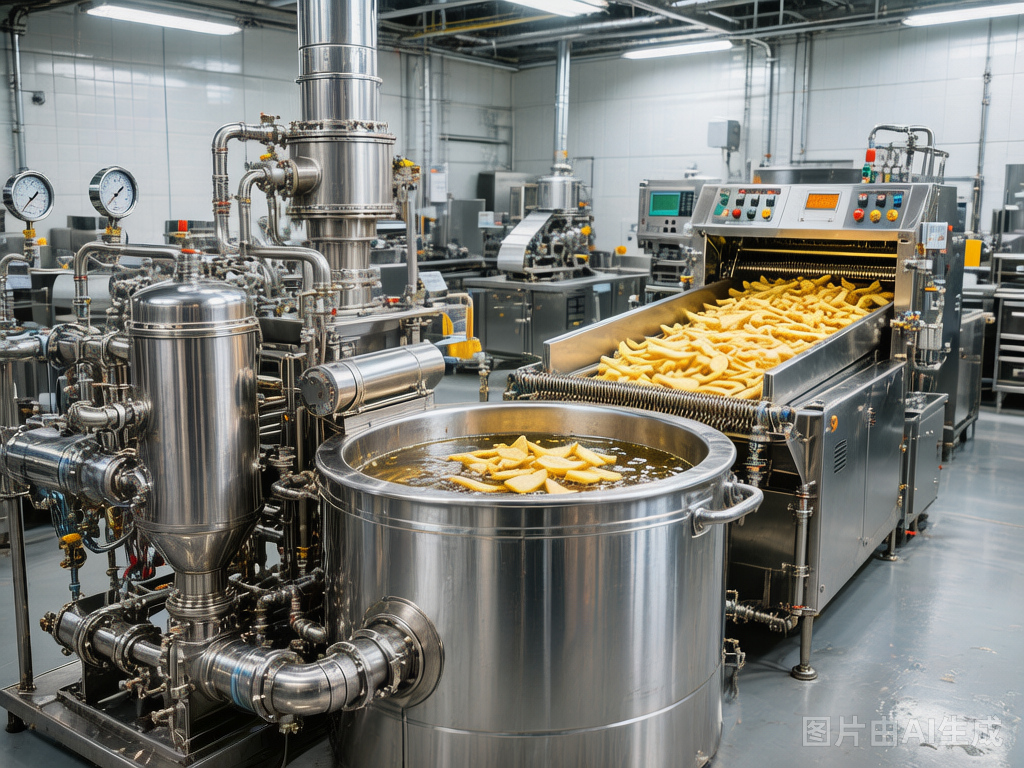
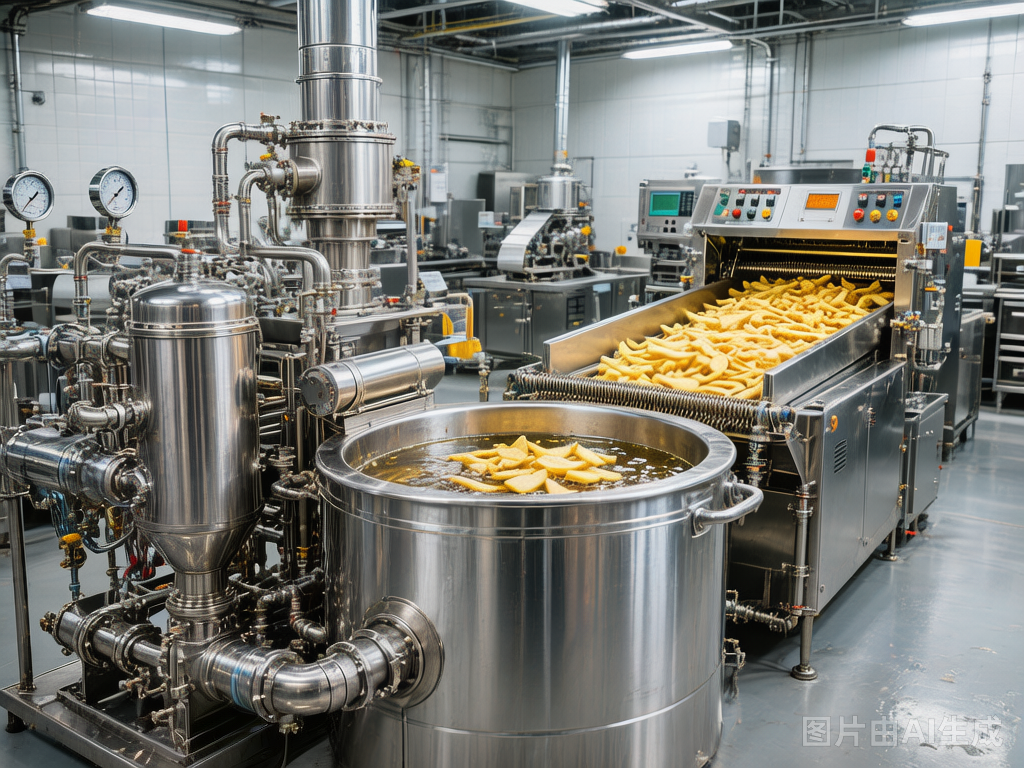
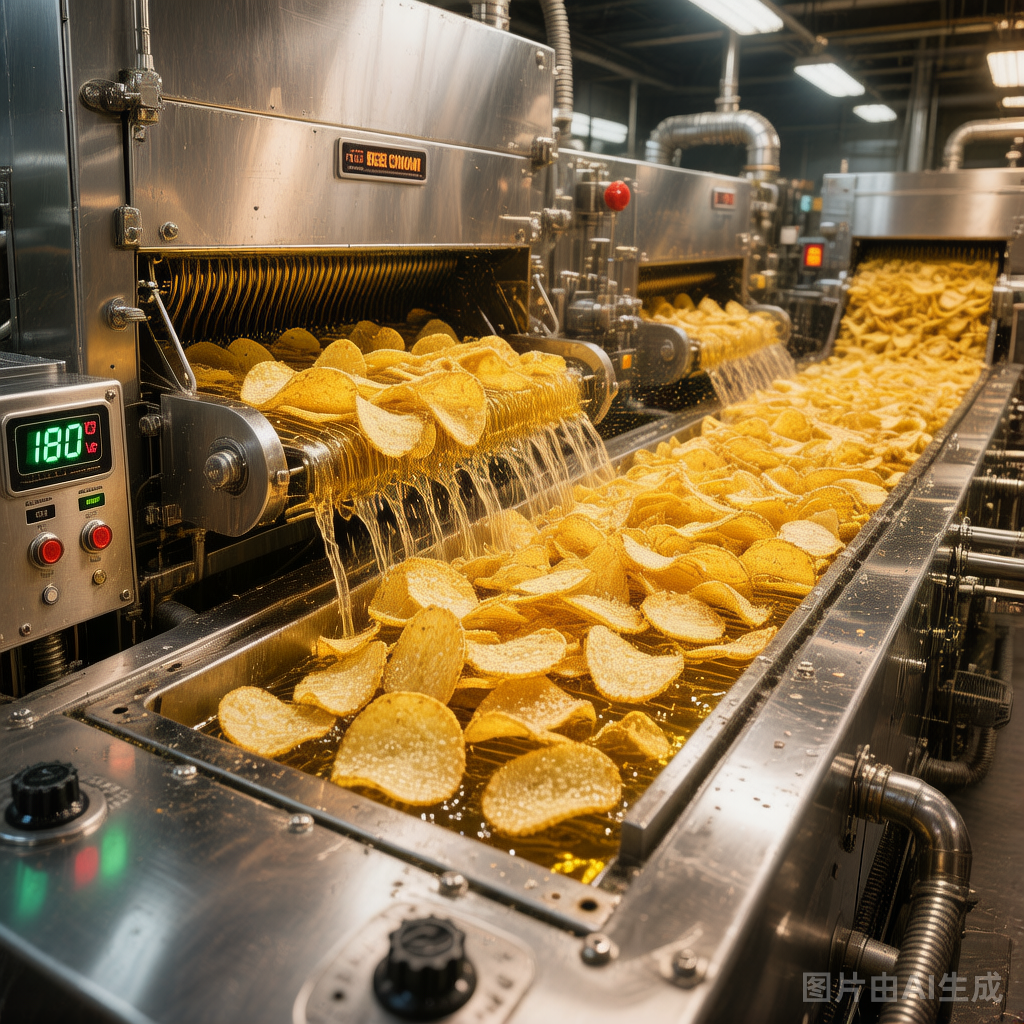
The fryer is the heart of your production line. The choice between a batch fryer and a continuous belt fryer determines your product range and throughput.
| Feature | Batch Fryer | Continuous Belt Fryer |
|---|---|---|
| Operation | Load → fry → unload cycle | Constant throughput |
| Capacity per batch | 20–100 kg | 100–500 kg/h continuous |
| Oil management | Manual oil change | Auto filtration & topping |
| Product flexibility | High (different products per batch) | Moderate (line changeover needed) |
| Oil quality control | Lower (degrades faster) | Higher (continuous filtration) |
| Energy efficiency | Lower for small batches | Higher at scale |
| Best for | Kettle-style chips, small runs | Standard flat-cut chips at scale |
Step 3: Evaluate Key Machine Specifications
- Material: All food-contact parts must be SUS304 or SUS316 stainless steel (compliant with CE and ISO 22000 food safety standards)
- Heating method: Electric heating (precise, clean) vs. gas/diesel heating (lower operating cost, higher output)
- Oil filtration: Auto-circulating filtration systems extend oil life by 40–60% and reduce free fatty acid buildup
- Control system: PLC + touch screen (HMI) allows recipe storage, temperature profiling, and remote monitoring
- Safety features: Over-temperature protection, emergency stop, oil level alarms, and fire suppression systems
Step 4: Calculate Total Cost of Ownership
The purchase price is only part of the picture. Factor in these ongoing costs to make a realistic financial decision:
| Cost Category | Semi-Auto (annual) | Full-Auto (annual) |
|---|---|---|
| Equipment purchase | $15,000–$50,000 (one-time) | $50,000–$300,000 (one-time) |
| Labor (operators) | $30,000–$80,000 | $8,000–$25,000 |
| Energy (electricity/gas) | $5,000–$15,000 | $10,000–$40,000 |
| Cooking oil | $10,000–$30,000 | $8,000–$25,000 (auto filtration saves oil) |
| Maintenance & parts | $2,000–$5,000 | $3,000–$10,000 |
| Total Year 1 | $62,000–$180,000 | $79,000–$400,000 |
| Year 2+ (operating only) | $47,000–$130,000 | $29,000–$100,000 |
Step 5: Verify the Supplier
- Request a factory tour or video call to see equipment running
- Ask for references from customers in your target market
- Confirm after-sales support: spare parts availability, remote diagnostics, on-site installation
- Check certifications: CE marking, ISO 9001 (quality management), ISO 22000 (food safety)
- Negotiate warranty terms: standard is 12 months; push for 18–24 months on major components
Common Mistakes to Avoid
- Over-sizing: Buying a 500 kg/h line when you only need 100 kg/h wastes capital and increases energy costs disproportionately.
- Ignoring local power supply: A 3-phase 380V line will not run on a single-phase 220V supply without a transformer.
- Skipping the blanching stage: Removing starch before frying prevents chips from sticking together and improves color consistency.
- Underestimating oil management: Without proper filtration, free fatty acid levels rise quickly, producing dark, bitter-tasting chips and increasing oil consumption by 20–30%.
- No spare parts plan: A single worn belt or damaged slicer blade can halt production for weeks if replacements are not stocked.
Frequently Asked Questions
How much does a potato chips production line cost?
A semi-automatic line costs $15,000–$50,000, while a fully automatic line ranges from $50,000 to $300,000 depending on capacity, brand, and features. The total investment including installation, utilities, and initial raw materials typically adds 20–30% to the equipment cost.
What is the ROI of a potato chips production line?
Semi-automatic lines typically achieve payback in 8–14 months at 70% capacity utilization. Fully automatic lines take 14–24 months but offer higher margins at scale due to lower per-unit labor costs. Key ROI drivers: retail price per bag, daily output, and raw material (potato) cost in your region.
Can one production line make both potato chips and french fries?
Yes, with modifications. The frying temperature and time differ (chips: 160–180°C for 2–4 minutes; fries: 170–190°C for 3–5 minutes). You will need adjustable slicing/cutting equipment and different seasoning stations. Most manufacturers offer modular lines that can switch between products with a 30–60 minute changeover.
What certifications should potato chips processing equipment have?
Look for CE marking (European market), FDA-compliant materials (US market), ISO 22000 (food safety management), and ISO 9001 (quality management). For export to certain markets, you may also need GMP certification and local food authority registration.
Ready to Choose Your Production Line?
Selecting the right potato chips production line comes down to matching your equipment to your production goals, budget, and growth plans. Start with capacity, decide on automation level, choose your fryer type, and verify your supplier thoroughly. The right investment today will pay dividends for years to come.
As a food processing equipment manufacturer with over 15 years of experience, we help businesses worldwide select, install, and optimize potato chips production lines from 50 kg/h to 2000 kg/h. Contact our engineering team for a free consultation and custom line proposal tailored to your factory.