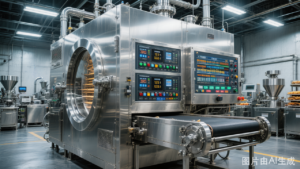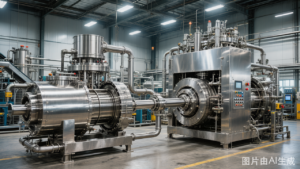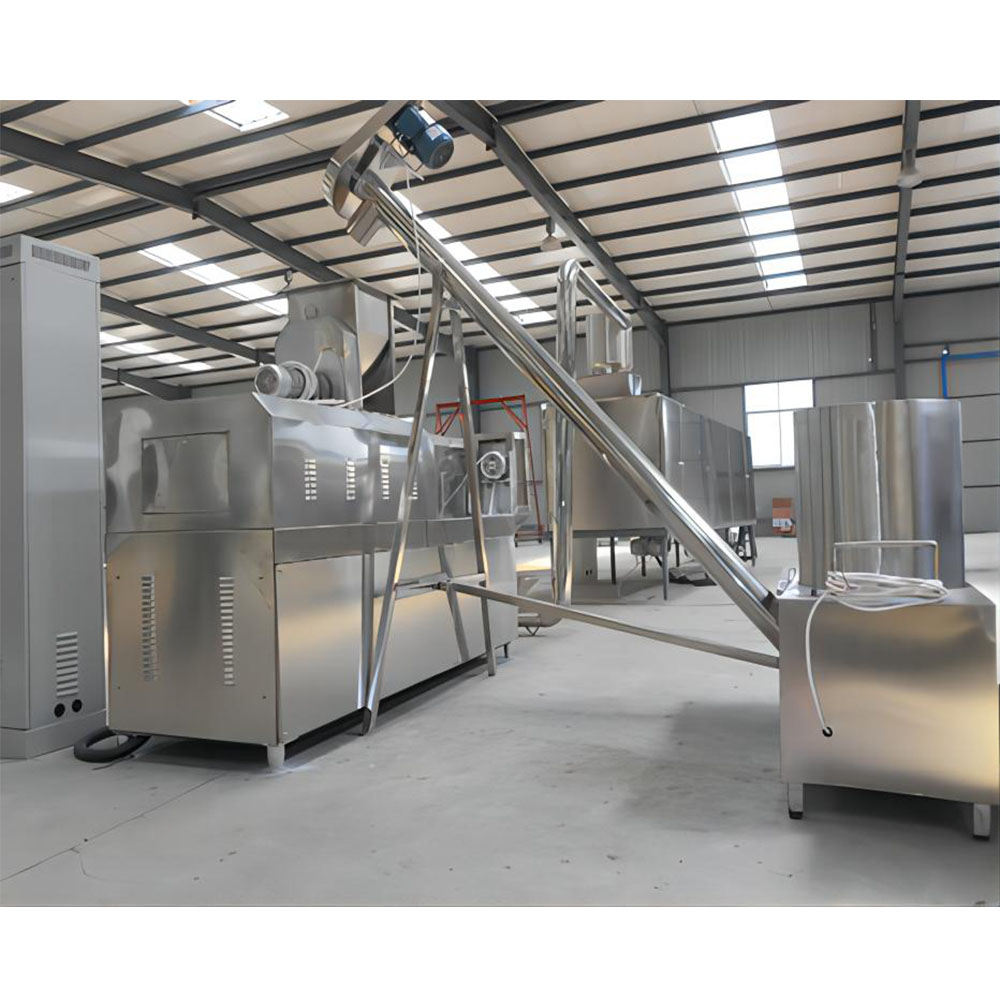
A microwave drying machine uses electromagnetic radiation at 915 MHz or 2450 MHz to generate heat within food products through dielectric heating, reducing moisture content by 50-95% in a fraction of the time required by conventional hot-air drying. In food preservation applications, industrial microwave dryers achieve drying rates 4-12 times faster than conventional methods while preserving heat-sensitive nutrients, colors, and flavors that conventional thermal processes degrade. Microwave drying systems for food processing typically operate at power levels of 10-200 kW and process 50-2000 kg/h of product depending on configuration.
TL;DR
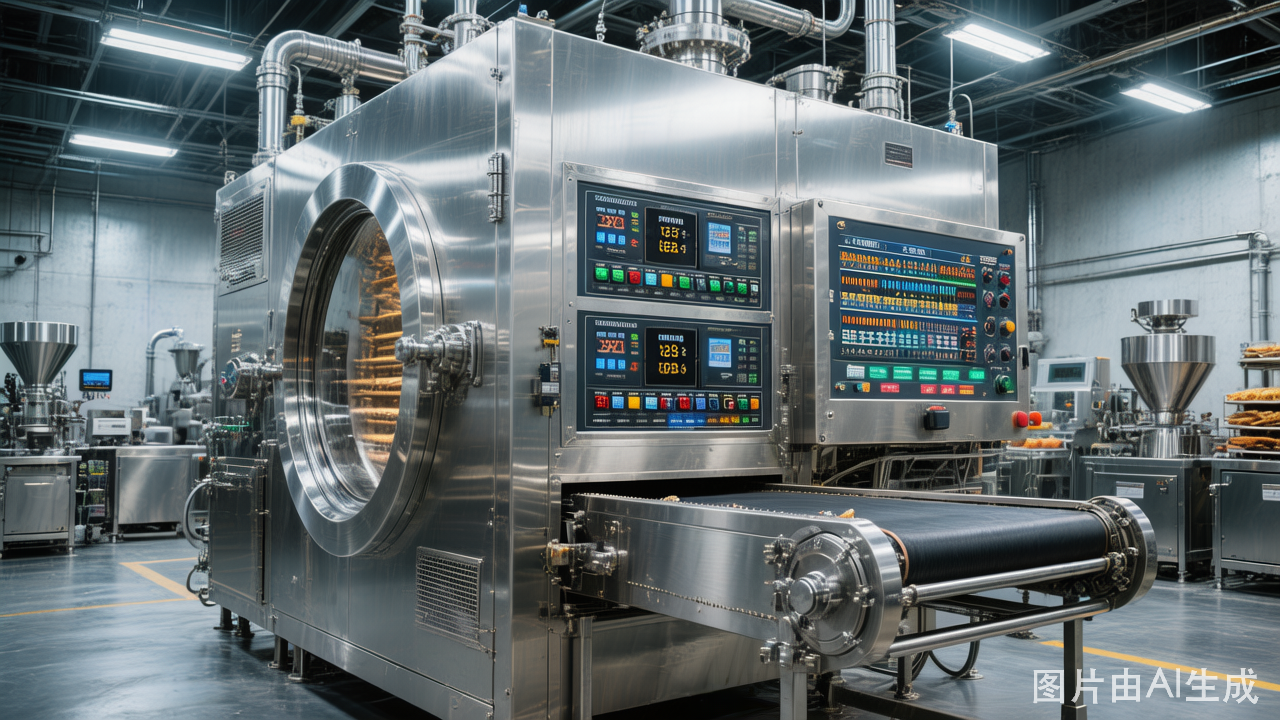
- Microwave drying uses 915 MHz or 2450 MHz electromagnetic waves to heat food products volumetrically—from the inside out—rather than relying on surface heat transfer.
- Drying speeds are 4-12 times faster than conventional hot-air drying, with typical processing times of 5-30 minutes versus 2-12 hours for hot-air methods.
- Industrial microwave dryers operate at 10-200 kW power and process 50-2000 kg/h of product, with energy efficiency of 70-80% compared to 30-50% for conventional dryers.
- Microwave drying preserves heat-sensitive compounds (vitamins, enzymes, pigments) better than conventional methods because of shorter exposure time and lower average product temperature.
- Common food applications include drying fruits, vegetables, herbs, spices, meat jerky, and seafood, as well as sterilization of packaged foods.
What Is Microwave Drying?
Microwave drying is a thermal dehydration process that uses microwave energy to remove moisture from food products. Unlike conventional drying methods that apply heat to the product surface and rely on thermal conduction to transfer heat inward, microwave energy penetrates the product and generates heat throughout the entire volume simultaneously. This volumetric heating is the fundamental advantage of microwave drying—it eliminates the slow thermal conduction step that limits conventional drying speed.
The heating mechanism is dielectric heating. When microwave radiation interacts with polar molecules—primarily water molecules in food—the electromagnetic field causes these molecules to rotate rapidly (at approximately 2.45 billion rotations per second for 2450 MHz radiation). This molecular rotation creates friction at the molecular level, which manifests as heat. Because water is the most polar molecule in most foods, microwave energy preferentially heats moisture, making it inherently efficient for drying applications.
Working Principle: Step by Step
1. Magnetron generation: The microwave generator (magnetron) converts electrical energy into microwave radiation. Industrial systems use either 915 MHz magnetrons (25-100 kW each, offering deeper penetration depth of 80-120 mm in high-moisture foods) or 2450 MHz magnetrons (1-5 kW each, with penetration depth of 20-40 mm). Large systems may combine multiple magnetrons to achieve total power outputs of 50-200 kW.
2. Waveguide transmission: The microwave energy travels from the magnetron through waveguides (rectangular metal ducts sized for the operating frequency) into the drying chamber. Waveguide dimensions are frequency-dependent: 915 MHz systems use waveguides approximately 248 x 124 mm; 2450 MHz systems use approximately 86 x 43 mm waveguides.
3. Energy absorption by the product: Inside the drying chamber, the microwave energy interacts with the food product. The penetration depth depends on the product’s dielectric properties—essentially, how effectively the material absorbs microwave energy. High-moisture foods absorb microwave energy more readily than dry foods, which means the drying rate naturally decreases as moisture content drops, providing a self-limiting characteristic that helps prevent overdrying.
4. Moisture evaporation and removal: As water heats throughout the product volume, internal vapor pressure drives moisture toward the surface. An airflow system (typically 1-3 m/s cross-flow air) removes the evaporated moisture from the chamber and carries it to the exhaust system. The combination of microwave heating and air convection is called microwave-assisted drying or microwave-convective drying, and it is more effective than microwave-only drying because the air stream continuously removes surface moisture.
5. Moisture endpoint control: Modern microwave dryers monitor product moisture content in real-time using near-infrared (NIR) sensors or load cell weight measurement. The control system modulates microwave power to maintain the target drying rate and shut off when the final moisture content is reached. This closed-loop control prevents over-drying, which can cause case hardening (a tough outer layer that traps internal moisture) and product quality degradation.
Key Parameters Explained
| Parameter | What It Means | How It Affects Results | Typical Range |
|---|---|---|---|
| Frequency | Microwave radiation frequency | 915 MHz penetrates deeper (80-120 mm); 2450 MHz provides finer control for thin products | 915 MHz or 2450 MHz |
| Power density | Microwave power per unit mass of product | Higher power density = faster drying, but excessive power causes uneven heating and hot spots | 1-10 kW/kg of product |
| Penetration depth | Depth at which microwave power drops to 37% of surface value | Determines maximum product thickness for uniform drying | 20-120 mm (product-dependent) |
| Drying temperature | Product temperature during drying | Lower temperatures preserve nutrients; higher temperatures speed drying | 40-100°C |
| Air velocity | Cross-flow air speed in the drying chamber | Removes surface moisture; too fast cools the surface and reduces drying rate | 1-3 m/s |
| Final moisture content | Target moisture percentage after drying | Determines product shelf life; most dried foods target 3-10% moisture | 3-15% |
Types of Microwave Drying Equipment
| Type | Characteristics | Best For | Limitations |
|---|---|---|---|
| Batch cabinet dryer | Product loaded on trays in a microwave-transparent enclosure; batch processing | Small batches, R&D, specialty products, herbs and spices | Limited throughput; manual loading/unloading |
| Continuous conveyor dryer | Product on a microwave-transparent belt (PTFE or ceramic) passes through a tunnel with multiple microwave zones | Medium to high volume continuous production; uniform products | Product thickness must be relatively uniform for even drying |
| Continuous rotary dryer | Product tumbles inside a rotating microwave-transparent drum; ensures even exposure | Granular products, small pieces, nuts, seeds, grain | Not suitable for fragile or sheet-form products |
| Microwave freeze dryer (hybrid) | Combines microwave heating with vacuum freeze-drying; ice sublimates directly to vapor | High-value products requiring maximum quality preservation | Very high equipment cost; complex operation |
Microwave Drying vs Conventional Hot-Air Drying
| Metric | Microwave Drying | Conventional Hot-Air Drying |
|---|---|---|
| Drying time (fruit slices, 85% to 10% moisture) | 15-40 minutes | 4-12 hours |
| Energy efficiency | 70-80% | 30-50% |
| Vitamin C retention (fruit) | 75-90% | 40-65% |
| Color retention | 80-95% | 50-75% |
| Rehydration ratio | Higher (less cellular damage) | Lower (case hardening common) |
| Equipment footprint | Compact (shorter process length) | Large (long drying tunnels) |
| Equipment cost | Higher initial cost ($30,000-200,000) | Lower initial cost ($10,000-100,000) |
| Operating cost (energy) | Lower per kg of water removed | Higher per kg of water removed |
Common Problems and Solutions
Uneven Heating and Hot Spots
Non-uniform microwave field distribution creates hot spots that overheat some areas while under-processing others. Solutions include using mode stirrers (rotating metal fans that scatter the microwave field), designing the drying chamber with multiple microwave entry points, and implementing product movement (conveyor or tumbling) that exposes all product surfaces evenly. For batch dryers, rotating the product tray during processing improves uniformity by 30-40%.
Thermal Runaway
Thermal runaway occurs when a slightly warmer area absorbs more microwave energy (because dielectric loss increases with temperature in many materials), making it even warmer in a positive feedback loop. This phenomenon can cause localized burning or charring. Prevention requires monitoring product temperature with fiber-optic probes (which are microwave-transparent) and modulating microwave power in response to temperature feedback. Modern systems use PID-controlled power modulation to maintain temperature within ±3°C of setpoint.
Case Hardening
Case hardening is less common with microwave drying than conventional methods but can occur when drying rates are too high, causing the product surface to dry and harden before internal moisture can escape. This traps moisture inside the product, leading to mold growth during storage. Solution: reduce the initial microwave power density and use a stepped drying profile—high power for initial moisture removal, then progressively lower power as the product dries.
Industry Applications
Microwave drying is applied across a wide range of food products, each with specific processing requirements. Fruits (apple slices, banana chips, mango leather) benefit from the short processing time that preserves color and vitamin content. Vegetables (carrot cubes, green beans, potato granules) dry to low moisture content for long shelf life while maintaining rehydration capacity. Herbs and spices (basil, oregano, turmeric, chili) retain volatile aromatic compounds that are lost during prolonged conventional drying.
Meat and seafood products (beef jerky, dried fish, shrimp) use microwave drying to achieve the low moisture content (10-25%) required for shelf stability without the extended drying times of conventional methods. The shorter processing time also reduces the risk of microbial growth during the drying process itself.
In addition to drying, industrial microwave systems perform sterilization of packaged foods. Microwave sterilization achieves commercial sterility (reduction of Clostridium botulinum spores by 12D) in 5-10 minutes compared to 20-40 minutes for conventional retort processing, with measurably better retention of texture and flavor in the packaged product.
How to Choose a Microwave Dryer for Your Application
| If You Need… | Choose… | Because… |
|---|---|---|
| Small batches of high-value product | Batch cabinet dryer (5-20 kW) | Lower cost ($30,000-60,000); flexible for product changes; suitable for herbs, spices, specialty fruits |
| Continuous production above 200 kg/h | Continuous conveyor dryer (50-200 kW) | Consistent throughput; multiple zones for staged drying profile; automated operation |
| Granular or small-particle products | Continuous rotary dryer | Tumbling action ensures uniform exposure; handles variable particle sizes |
| Maximum quality preservation | Microwave freeze dryer (hybrid) | Lowest thermal degradation; highest rehydration quality; lowest nutrient loss |
| Deep product bed (above 50 mm) | 915 MHz system | Deeper penetration depth (80-120 mm) ensures heating throughout the product layer |
Maintenance and Best Practices
- Magnetron maintenance: Magnetrons have a rated service life of 5,000-8,000 operating hours. Monitor output power monthly using a microwave power meter—when output drops below 80% of rated power, plan for magnetron replacement. Keep magnetron cooling fins clean and verify cooling fan operation to prevent premature magnetron failure.
- Waveguide inspection: Inspect waveguides quarterly for arc damage, moisture accumulation, or material buildup. Any metallic debris inside the waveguide causes arcing that damages the waveguide interior and can ignite dry product dust.
- Belt maintenance: PTFE conveyor belts in continuous dryers should be inspected weekly for tears, edge damage, and tracking alignment. Replace belts when surface contamination cannot be removed by cleaning or when belt stretch exceeds the take-up adjustment range.
- Safety interlocks: Test all door interlock switches and microwave leakage monitors monthly. Microwave leakage must not exceed 5 mW/cm2 at 5 cm from any surface per IEC 62233 safety standards. Post a warning sign at the equipment location indicating microwave radiation hazard.
- Calibration: Calibrate NIR moisture sensors and temperature probes quarterly against reference measurements to maintain accurate drying endpoint control.
Frequently Asked Questions
Is microwave-dried food safe to eat?
Microwave-dried food is safe for consumption. Microwave energy is non-ionizing radiation—it causes molecular vibration that produces heat but does not induce radioactivity or create harmful chemical changes in food. The microwave drying process reduces moisture to levels (typically 3-10%) that inhibit microbial growth, achieving the same food safety outcome as conventional drying methods. Microwave-dried products must meet the same food safety standards (HACCP, FDA 21 CFR) as conventionally dried products.
What is the difference between 915 MHz and 2450 MHz microwave drying?
The primary difference is penetration depth. At 915 MHz, microwaves penetrate 80-120 mm into high-moisture food products, making this frequency suitable for thick products or deep product beds. At 2450 MHz, penetration depth is 20-40 mm—sufficient for thin slices, sheets, and small-particle products. Industrial operations processing large volumes typically prefer 915 MHz for its deeper penetration and higher available magnetron power (25-100 kW per unit vs. 1-5 kW for 2450 MHz units).
How much energy does a microwave dryer consume?
Industrial microwave dryers consume 1.0-1.5 kWh of electrical energy per kg of water removed from the product. Compared to conventional hot-air dryers that consume 2.0-4.0 kWh/kg of water removed (including thermal energy from gas or steam), microwave drying reduces energy consumption by 50-65% per unit of water removed. For a production line drying 500 kg/h of product from 80% to 10% moisture (removing approximately 394 kg of water per hour), the microwave system consumes approximately 394-591 kWh/h of electrical energy.
Can microwave drying replace all conventional drying in food processing?
Microwave drying is not a universal replacement for conventional methods. Products with very low initial moisture content, products in large whole forms (whole fruits, large root vegetables), and products requiring specific texture development through slow drying (some cured meats, certain dried fruits with developed flavor profiles) may not benefit from microwave processing. Microwave drying is most effective for products that are sliced, diced, or in particulate form with thickness below the penetration depth. Many industrial operations use a combination—microwave pre-drying for rapid initial moisture removal followed by conventional finish-drying for precise endpoint control.
Conclusion
Microwave drying provides food processors with a technology that reduces drying time by 4-12x compared to conventional hot-air methods while preserving heat-sensitive quality attributes. The volumetric heating mechanism—generating heat within the product rather than applying it to the surface—enables rapid moisture removal from sliced, diced, and particulate food products at energy efficiencies of 70-80%.
Industrial systems operating at 915 MHz provide deep penetration for thick products and high throughput, while 2450 MHz systems offer precise control for thin products. Both frequencies are available in batch and continuous configurations spanning 10-200 kW power range and 50-2000 kg/h processing capacity.
To evaluate whether microwave drying suits your specific food product and processing requirements, contact our technical team. We provide laboratory-scale testing, process development, and full-scale equipment specification for microwave drying applications across all food categories.