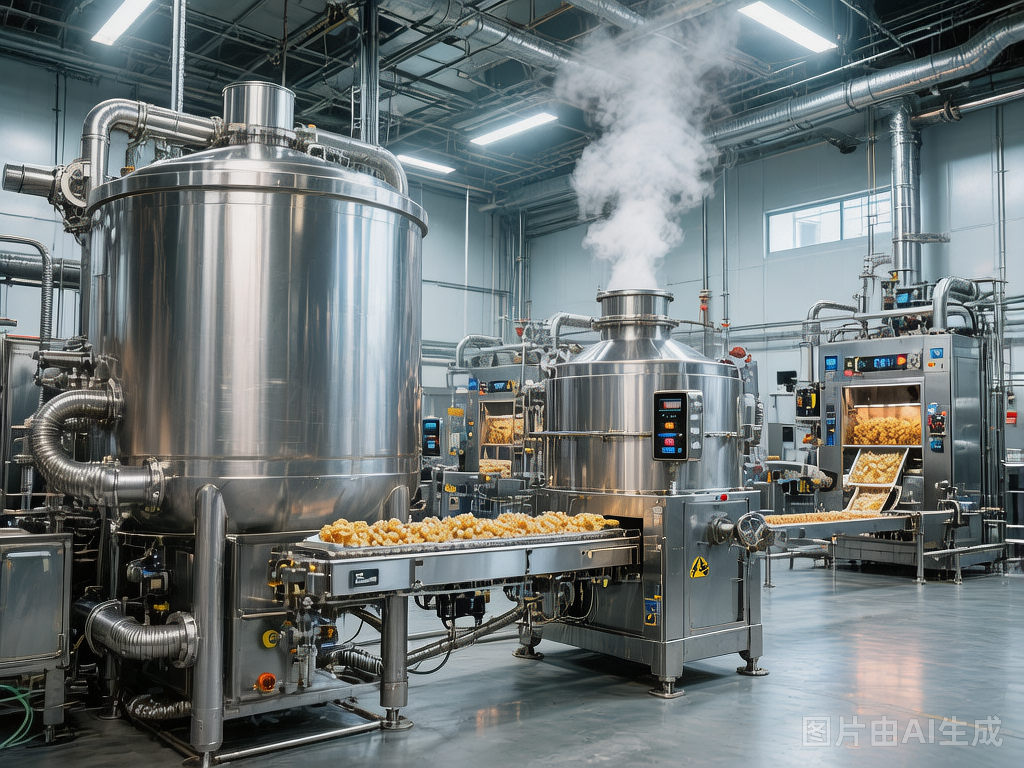
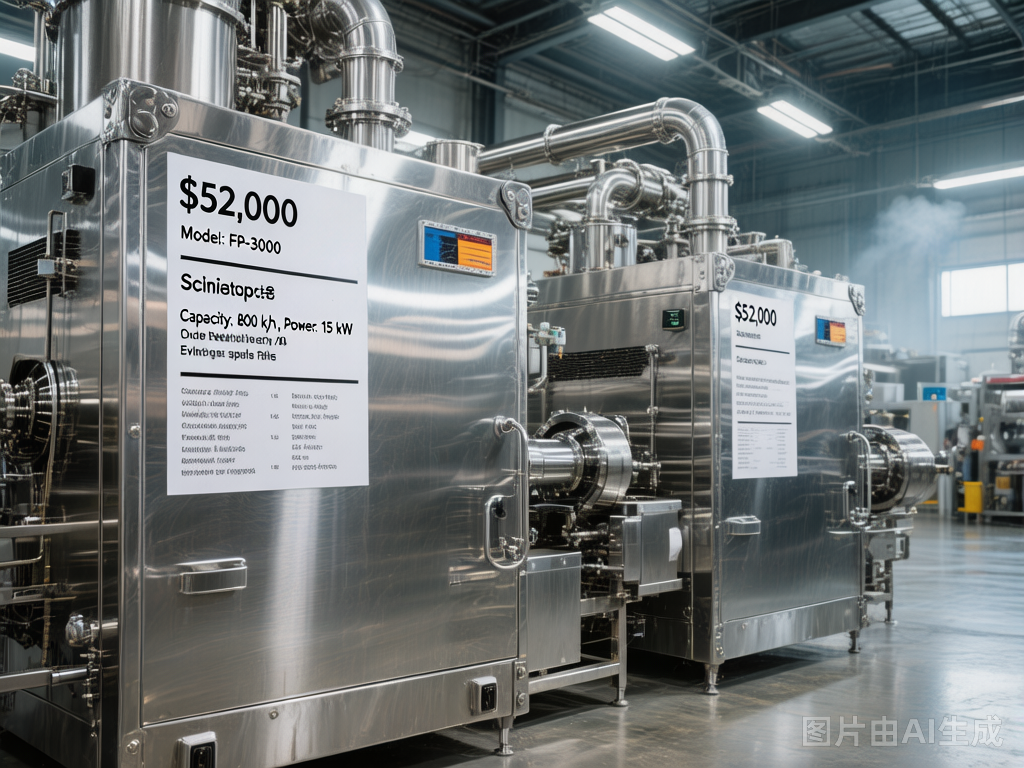
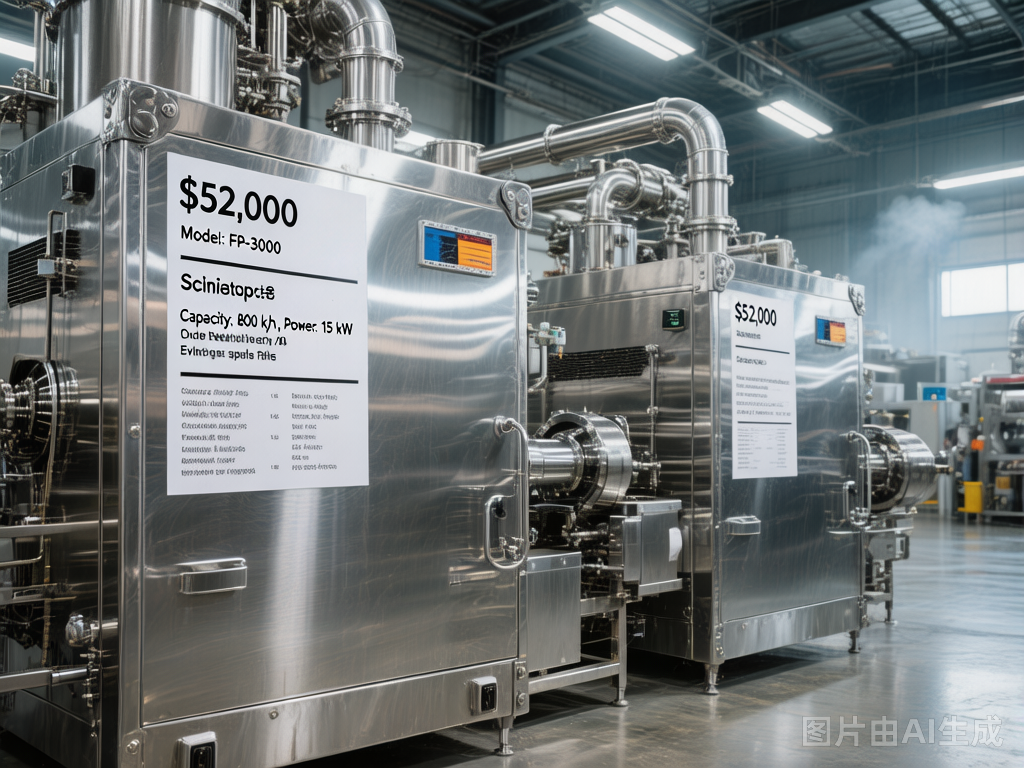
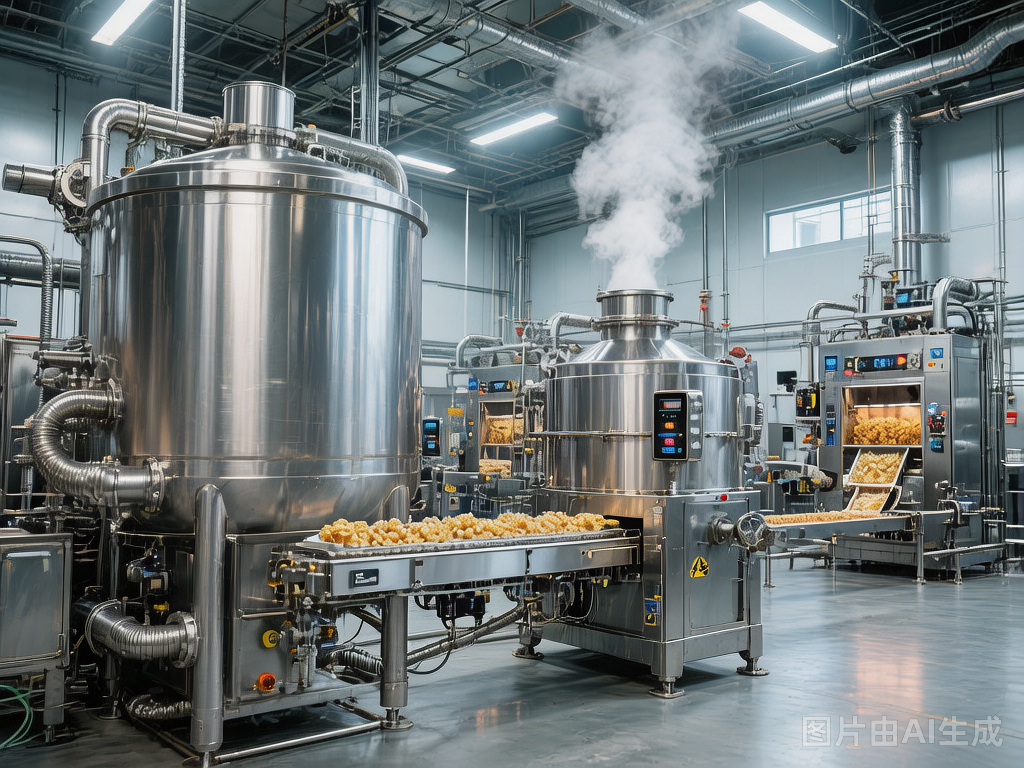
Planning a food processing line investment in 2026 means navigating volatile raw material prices, rising energy costs, evolving food safety regulations, and an equipment market that has seen significant price adjustments since the supply chain disruptions of 2020–2023. This guide breaks down the real cost of setting up a complete food processing line—by capacity tier, by product category, and including the hidden costs that most equipment quotations do not mention. Whether you are launching a potato chip brand, scaling a meat processing facility, or building a juice production plant from scratch, these numbers will give you a realistic baseline for budgeting.
TL;DR — Key Takeaways
- Small lines (50 kg/h) start at $15,000–$50,000; industrial lines (1,000 kg/h) range from $200,000 to over $800,000 depending on the product.
- Meat and dairy lines cost 30–60% more than snack or juice lines at the same capacity due to stainless steel grades, cold chain requirements, and hygiene standards.
- Hidden costs (shipping, installation, training, spare parts inventory, certifications) typically add 20–35% to the equipment purchase price.
- Total Cost of Ownership (TCO) over 10 years is 2.5–4× the initial equipment investment when energy, labor, maintenance, and consumables are included.
- 2026 pricing trend: Equipment prices from Chinese manufacturers have stabilized after 2024’s raw material cost peak, while European and American brands carry a 40–100% premium for equivalent specifications.
- Get a custom quote: No two lines are identical. The numbers below are industry baselines—contact suppliers for project-specific pricing.
Food Processing Line Cost by Capacity Tier
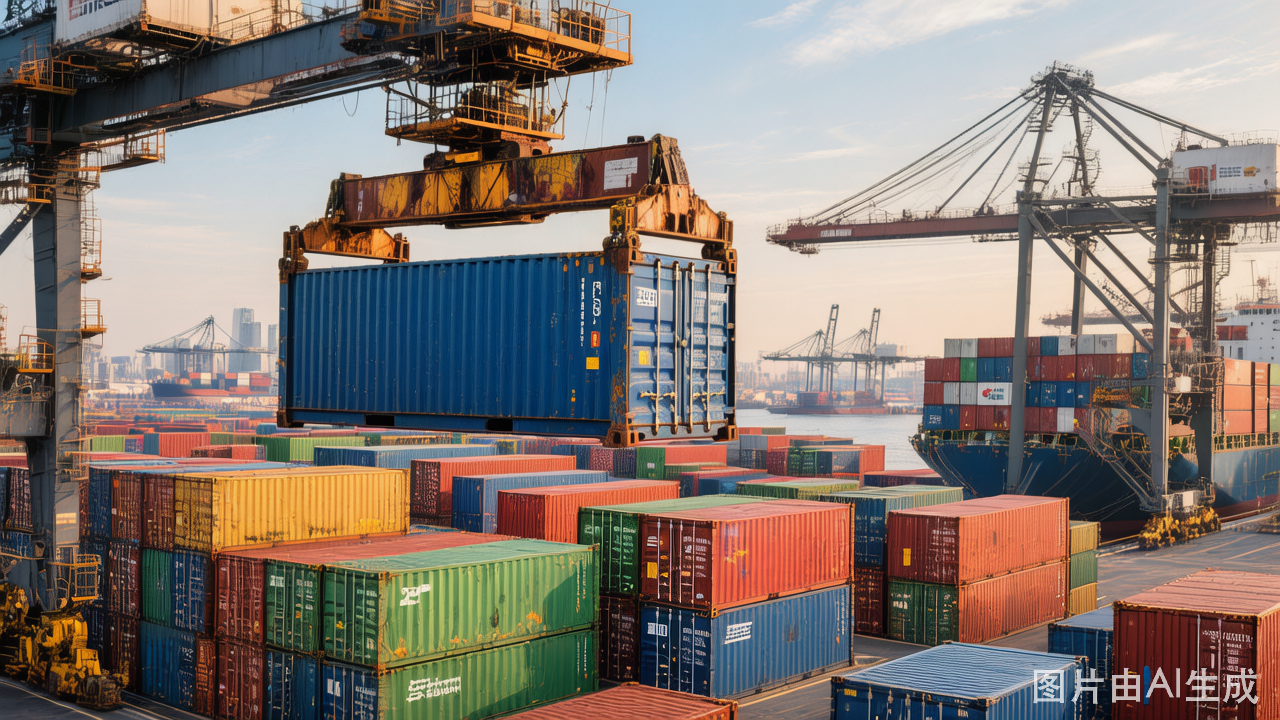
Capacity is the single largest cost driver. Below are representative price ranges for complete, turnkey lines including core processing equipment, basic conveyors, and control panels. Prices exclude building construction, utilities connection, and raw material sourcing.
| Capacity Tier | Output | Typical Products | Equipment Cost Range (USD) | Floor Space | Typical Buyers |
|---|---|---|---|---|---|
| Small / Pilot | 50 kg/h | Chips, nuts, simple snacks | $15,000–$50,000 | 30–60 m² | Startups, farm-to-table, test labs |
| Medium | 200 kg/h | Chips, sausage, juice, ice cream | $50,000–$150,000 | 80–150 m² | Regional brands, growing exporters |
| Large | 500 kg/h | Full product range | $150,000–$400,000 | 200–400 m² | National distributors, contract manufacturers |
| Industrial | 1,000+ kg/h | Full product range | $400,000–$800,000+ | 400–1,000 m² | Multinational brands, co-packers |
These ranges span from semi-automatic configurations (lower end) to fully automatic PLC-controlled lines (upper end). Within each tier, the product type, automation level, and brand origin shift the final price significantly.
Food Processing Line Cost by Product Category
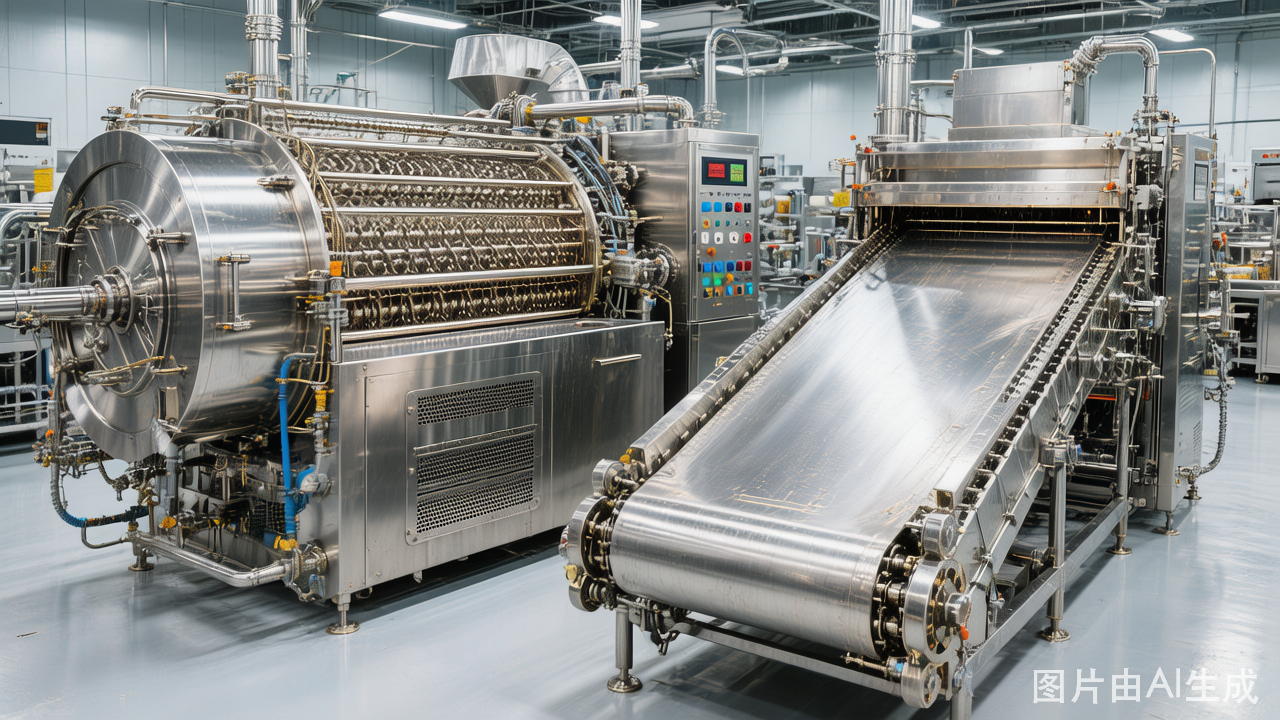
Different product categories carry different equipment complexity, material requirements, and regulatory obligations. Below is a detailed breakdown for five major food processing segments at the 200 kg/h (medium) capacity level.
Meat Processing (Sausage, Ham, Burger Patty)
| Equipment | Function | Price Range (USD) |
|---|---|---|
| Meat grinder (200 kg/h) | Grind meat to target particle size | $2,000–$6,000 |
| Bowl cutter / chopper | Emulsify meat for fine sausages | $3,000–$12,000 |
| Sausage stuffer (vacuum) | Fill casings uniformly | $2,500–$8,000 |
| Smokehouse / oven | Cook, smoke, dry sausages | $5,000–$20,000 |
| Vacuum packaging machine | Extend shelf life | $1,500–$5,000 |
| Cold room (10 m³) | Store raw meat and finished product | $3,000–$8,000 |
| Total (200 kg/h line) | $17,000–$59,000 |
Meat lines require food-grade 304 or 316L stainless steel throughout, and cold chain compliance adds refrigeration infrastructure. Expect to budget 30–40% above the equipment cost for cold room construction, drainage, and wash-down systems.
Potato Chips Production
| Equipment | Function | Price Range (USD) |
|---|---|---|
| Brush peeler + washer | Clean and peel potatoes | $1,500–$4,000 |
| Centrifugal slicer | Uniform chip cutting (1–2.5mm) | $1,200–$3,500 |
| Blanching machine | Remove starch, prevent browning | $2,000–$6,000 |
| Continuous belt fryer | Fry chips to target moisture/color | $8,000–$25,000 |
| Deoiling machine | Reduce surface oil content | $1,500–$4,000 |
| Flavoring drum | Apply seasoning evenly | $1,000–$3,500 |
| Packaging machine (VFFS) | Weigh, fill, seal bags | $3,000–$10,000 |
| Total (200 kg/h line) | $18,200–$56,000 |
Potato chips lines benefit from relatively standard equipment. The fryer is the single most expensive component and the biggest differentiator between economy and premium configurations. Continuous belt fryers with automatic oil filtration and temperature control significantly reduce oil consumption and improve consistency.
Fruit Juice Production
| Equipment | Function | Price Range (USD) |
|---|---|---|
| Fruit washer + sorter | Clean and grade incoming fruit | $2,000–$5,000 |
| Crusher / pulper | Break down fruit for pressing | $1,500–$4,000 |
| Hydraulic juice press or screw juicer | Extract juice from pulp | $3,000–$10,000 |
| Filter / centrifuge | Clarify juice, remove solids | $2,000–$8,000 |
| Pasteurizer (HTST or UHT) | Kill pathogens, extend shelf life | $5,000–$20,000 |
| Homogenizer (optional) | Stabilize texture, prevent separation | $3,000–$12,000 |
| Filling + capping machine | Fill bottles or pouches | $3,000–$10,000 |
| Total (200 kg/h line) | $19,500–$69,000 |
Juice lines vary widely depending on whether you produce NFC (not from concentrate) fresh juice with short shelf life or shelf-stable juice requiring UHT treatment. The pasteurizer is the key cost variable. For fresh juice sold refrigerated, a basic HTST pasteurizer at $5,000–$8,000 may suffice. For ambient-shelf juice, a UHT system can cost $15,000–$20,000 or more.
Ice Cream Production
| Equipment | Function | Price Range (USD) |
|---|---|---|
| Mixing tank (with heating) | Prepare and pasteurize base mix | $2,000–$6,000 |
| Homogenizer | Create smooth, uniform texture | $3,000–$10,000 |
| Aging tank (refrigerated) | Age mix 4–24 hours for flavor development | $1,500–$5,000 |
| Continuous freezer | Freeze and incorporate air (overrun) | $5,000–$18,000 |
| Extrusion / filling machine | Shape into cups, cones, or tubs | $2,000–$8,000 |
| Hardening tunnel / blast freezer | Final freeze to –18°C to –25°C | $4,000–$15,000 |
| Cold storage room (–25°C) | Store finished product | $3,000–$8,000 |
| Total (200 kg/h line) | $20,500–$70,000 |
Ice cream lines require significant refrigeration infrastructure. The continuous freezer and hardening tunnel are the two most capital-intensive components. Budget for 316L stainless steel in all product-contact surfaces and CIP (clean-in-place) capability for food safety compliance.
Nut Processing (Roasting, Flavoring, Packaging)
| Equipment | Function | Price Range (USD) |
|---|---|---|
| Nut cleaner + sorter | Remove shells, debris, defective nuts | $2,000–$5,000 |
| Roasting oven (continuous or batch) | Roast to target color and moisture | $3,000–$15,000 |
| Cooling conveyor | Stop roasting, bring to packaging temp | $800–$3,000 |
| Flavoring / coating drum | Apply salt, spices, or coatings | $1,000–$4,000 |
| Packaging machine | Weigh and fill pouches or jars | $2,500–$8,000 |
| Total (200 kg/h line) | $9,300–$35,000 |
Nut processing lines are among the most affordable to set up because they require fewer processing stages and no temperature-critical infrastructure beyond the roaster. This makes nut processing an attractive entry point for first-time food manufacturers with limited capital.
Hidden Costs: What the Equipment Quotation Does Not Include
The equipment purchase price is only part of your total investment. Based on project data from food processing line installations across Africa, Southeast Asia, and Latin America, the following hidden costs consistently add 20–35% to the base equipment budget.
| Hidden Cost Category | Typical % of Equipment Cost | Notes |
|---|---|---|
| International shipping (CIF) | 5–12% | Varies by origin, destination, and container size. LCL shipments cost more per cubic meter. |
| Customs duties and import taxes | 0–25% | Depends on destination country’s tariff schedule for food machinery. Many developing countries offer duty exemptions for agro-processing equipment. |
| Installation and commissioning | 3–8% | Often charged as a daily rate for the engineer ($200–$500/day) plus travel expenses. Typical installation: 5–15 working days. |
| Operator training | 1–3% | Usually bundled with installation but may require separate sessions for shift workers. |
| Spare parts inventory (Year 1) | 2–5% | Critical for minimizing downtime. Common spares: belts, bearings, seals, heating elements, blades. |
| Electrical and utilities setup | 3–10% | Transformers, wiring, compressed air systems, water treatment, drainage. Often underestimated. |
| Food safety certifications | 1–4% | HACCP plan development, ISO 22000 or FSSC 22000 audit, local health department permits. |
| Building modifications | 5–15% | Floor reinforcement, ventilation hoods, hygienic wall/floor coatings, drainage channels. |
| Total Hidden Costs | 20–35% | Plan for at least 25% above equipment price for a realistic budget. |
Total Cost of Ownership (TCO): A 10-Year Analysis
The true cost of a food processing line extends far beyond the purchase price. Below is a TCO model for a medium-capacity (200 kg/h) potato chips line, assuming 250 operating days per year, 8 hours per day. This framework can be adapted for other product categories by adjusting the energy, labor, and consumable figures.
| TCO Component | Annual Cost (USD) | 10-Year Total (USD) |
|---|---|---|
| Equipment purchase (one-time) | $35,000 (amortized) | $35,000 |
| Hidden costs (shipping, install, etc.) | $8,750 (amortized) | $8,750 |
| Electricity (25 kW avg × 2,000 h × $0.12/kWh) | $6,000 | $60,000 |
| Labor (4 operators × $8/day × 250 days) | $8,000 | $80,000 |
| Cooking oil (oil consumption + top-up, 15% of product weight) | $18,000 | $180,000 |
| Packaging materials | $12,000 | $120,000 |
| Maintenance and spare parts (5% of equipment/year) | $1,750 | $17,500 |
| Water and wastewater treatment | $1,500 | $15,000 |
| Quality control and lab testing | $2,000 | $20,000 |
| 10-Year TCO Total | $536,250 |
This means the initial equipment purchase of $35,000 represents only about 6.5% of the 10-year total cost of ownership. Cooking oil, packaging, and labor are the dominant recurring costs. This TCO perspective is essential for making informed decisions about automation investment: spending $15,000 more on a fully automatic line that reduces labor from 4 operators to 2 saves $40,000 in labor costs over 10 years—a clear net positive.
2026 Market Pricing Trends
Several market forces are shaping food processing machine prices in 2026:
- Stabilized steel prices: After the 2021–2023 stainless steel price surge, 304 SS prices have returned to $2,800–$3,200/ton range, reducing equipment manufacturing costs by 8–12% compared to peak pricing.
- Chinese manufacturer competitiveness: Equipment from Chinese suppliers (such as those listed on food-processing-machine.com) offers 40–60% savings over equivalent European brands, with improving quality and after-sales support. Lead times have normalized to 15–30 days for standard models.
- Automation premium shrinking: PLC controllers, servo motors, and touch-screen HMIs have dropped in cost, making full automation affordable even on medium-capacity lines. The price gap between semi-automatic and fully automatic lines has narrowed from 2.5–3× to 1.8–2.2× over the past three years.
- Energy efficiency mandates: New regulations in the EU and several Asian markets require minimum energy efficiency ratings for industrial food equipment. Compliant machines cost 5–15% more but reduce operating costs by 10–20% over the equipment lifecycle.
- Shipping cost normalization: Container shipping rates from China to Africa and Latin America have returned to pre-pandemic levels ($1,500–$3,500 for a 20-foot container), down from the $8,000–$15,000 peaks of 2021–2022.
How to Budget for Your Food Processing Line
Based on the data above, here is a practical budgeting framework for new food processing projects:
| Budget Component | % of Total Project Budget |
|---|---|
| Core processing equipment | 45–55% |
| Hidden costs (shipping, install, duties) | 15–20% |
| Building and infrastructure | 15–25% |
| Working capital (first 3 months: raw materials, packaging, salaries) | 10–15% |
| Contingency reserve | 5–10% |
The most common budgeting mistake new food processors make is underestimating the combined impact of hidden costs and working capital needs. Allocating sufficient funds for commissioning, initial operator training, and the first three months of raw material procurement prevents cash flow crises during the critical startup phase.
Frequently Asked Questions
How much does a small food processing line cost in 2026?
A small (50 kg/h) food processing line for products like potato chips, roasted nuts, or simple snacks costs between $15,000 and $50,000 for the equipment alone. Including shipping, installation, and basic infrastructure, the total project budget should be $20,000–$65,000. These entry-level lines are typically semi-automatic and suitable for startups, farm-to-table operations, or pilot production for market testing.
Is it cheaper to buy equipment from China?
In most cases, yes. Food processing equipment from Chinese manufacturers costs 40–60% less than European or American brands with comparable specifications. The trade-offs are longer lead times for custom configurations, less on-site support infrastructure in some regions, and the need to verify quality standards before purchase. Working with a sourcing platform like food-processing-machine.com, which pre-vets suppliers and offers quality assurance, reduces these risks significantly. Many Chinese manufacturers now offer CE certification, ISO 9001 compliance, and video-supported installation assistance as standard.
What is the payback period for a food processing line?
Payback periods range from 6 months to 3 years depending on the product margin, capacity utilization, and local market conditions. High-margin products like specialty snacks, cold-pressed oils, and premium ice cream can achieve payback in 6–12 months on a medium-capacity line. Commodity products like bulk cooking oil or basic potato chips typically require 12–24 months. The key variable is capacity utilization: a line running at 70% capacity pays back approximately 40% faster than one running at 40% capacity, because fixed costs (depreciation, rent, base labor) are spread over more output.
Should I buy a turnkey line or piece equipment together myself?
For first-time buyers, a turnkey line from a single supplier is strongly recommended. The integrator ensures that all machines are capacity-matched, the conveyor system connects properly, and the control system is unified. Piecing together equipment from multiple suppliers often creates bottlenecks at transition points (e.g., a slicer that outputs 250 kg/h feeding a fryer rated for 180 kg/h), and resolving these mismatches during commissioning is expensive and time-consuming. If you have food engineering experience and are comfortable managing interfaces between machines, self-integration can save 10–15% but carries integration risk.
Conclusion: Plan Your Investment with Real Numbers
The cost of a complete food processing line in 2026 spans from $15,000 for a small semi-automatic snack line to over $800,000 for a fully automated industrial plant. Between these extremes, the product category, automation level, equipment origin, and project infrastructure requirements determine where your specific project falls. The hidden costs—shipping, installation, training, spare parts, and certification—consistently add 20–35% to the equipment price and must be budgeted from day one.
The most successful food processing investments we see share a common trait: they were planned with complete cost visibility from the start, including TCO projections and working capital reserves. Whether you are budgeting $20,000 or $500,000, a detailed cost breakdown prevents surprises and accelerates your path to profitability.
Need a custom quote for your food processing project? Contact our team with your product type, target capacity, and budget range. We provide detailed equipment proposals with itemized pricing within 24 hours—no obligation, no hidden fees.