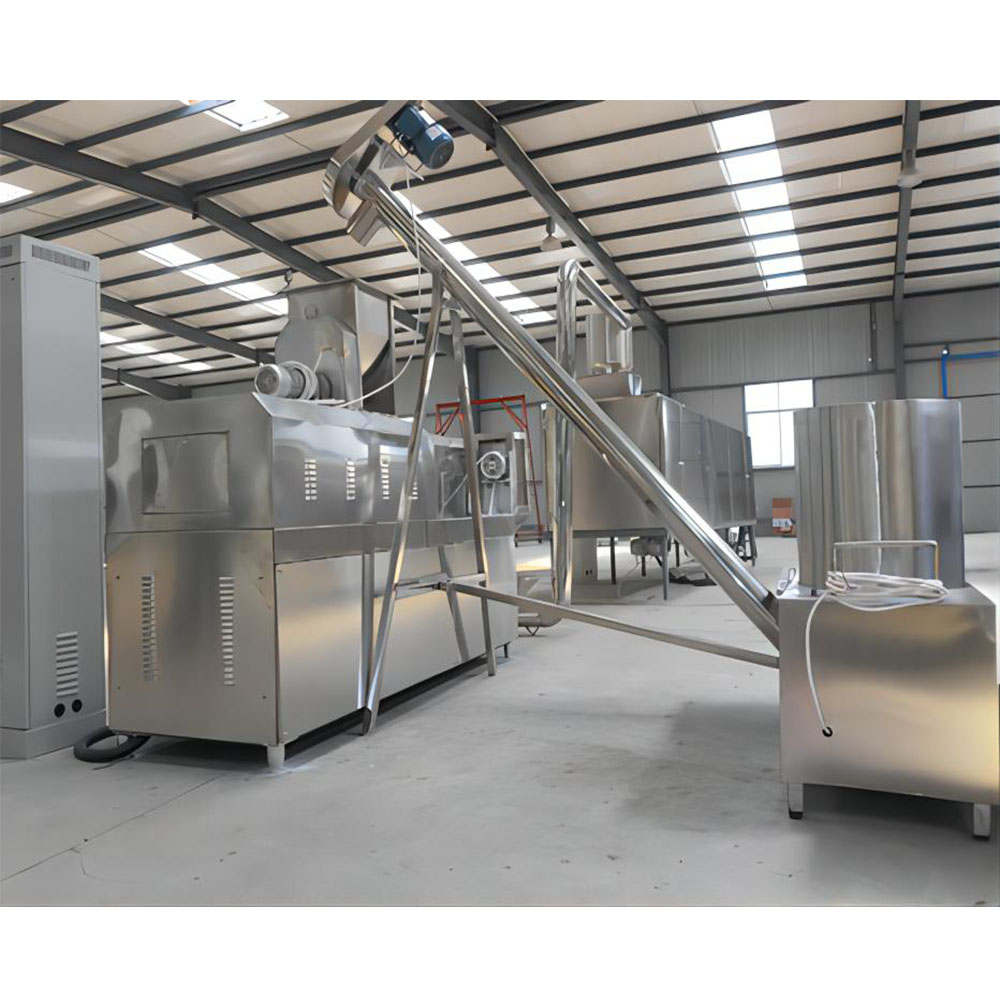
How to Verify a Chinese Food Machinery Supplier: Audit Checklist for 2026?
Choosing a chinese food machinery supplier is the single highest-risk decision in a food processing investment. The wrong choice costs the average importer USD 18,000–60,000 in lost deposits, delayed plants, and machines that never match the agreed specifications. The right choice gives you 10–20 years of stable production, spare-parts support, and engineering backup. This 2026 audit checklist explains, step by step, how to tell the difference — using the same verification method professional sourcing agents charge USD 800–2,500 to perform.
This guide is written from inside the industry. We are a real factory with our own export license in China, and we will not pretend the sector is clean. A meaningful percentage of “manufacturers” on B2B marketplaces are trading companies posing as factories; some are completely legitimate and some are outright scams. The job of this article is to give you a repeatable, evidence-based way to sort them.
Key takeaways:
- In China there are three supplier tiers, not two: real factory without export license, real factory with export license, and pure trading company — only Tier 2 can both manufacture *and* ship to you directly under their own name.
- A valid business license (营业执照) is the single most important document; it is free to verify and exposes 70% of fake-factory claims within 5 minutes.
- “Alibaba Gold Supplier” means the company paid a membership fee — it is not a factory audit. “Verified Supplier” (the green checkmark) means a third party visited the premises.
- Real factories welcome a scheduled video tour of the production floor within 24–72 hours. Persistent refusal or “the factory is in another province” is the #1 red flag.
- The 12-point audit checklist below covers business license, address match, dated photos, video tour, references, certifications, capacity, payment terms, engineering depth, after-sales, visit-ability, and document trail.
- Standard payment terms at a real factory are 30% deposit + 70% balance pre-shipment (after inspection). Demands for 100% T/T in advance or Western Union to a personal name are deal-breakers.
- You should verify *us* with the same checklist. We list our own answers in the self-disclosure section near the end.
The Three-Tier Supplier Ecosystem in China
Most buyers assume there are two kinds of suppliers in China: “factory” and “trading company.” In reality there are three, and understanding the difference explains almost every sourcing failure in food machinery.
Tier 1 — Real Factory (No Export License)
This is a genuine manufacturer with welding shops, CNC bending, assembly lines, electricians, and a workshop address. They make machines every day. However, they do not hold an import-export license (进出口权), so they cannot ship to you directly under their own company name.
To export, Tier 1 factories route shipments through a third-party foreign-trade agency (外贸代理). The commercial invoice, packing list, and bill of lading arrive under the agency’s name — not the factory you spoke with. This is legal and common, but it complicates after-sales liability. If a machine arrives damaged or out of spec, your contract is with the agency, not the workshop.
Tier 1 factories are not scams. They are simply set up for the domestic market. But for a first-time foreign buyer, the paperwork gap creates real risk.
Tier 2 — Real Factory with Export License (the safest category)
Tier 2 suppliers are the gold standard for food machinery sourcing china. They have a physical factory *and* an export license registered on their business license (经营范围 includes “货物进出口” — import and export of goods). They ship under their own name, issue their own commercial invoice, and carry direct contractual liability for what they ship.
When you wire a 30% deposit to a Tier 2 supplier, the beneficiary name on the bank account matches the legal entity on the business license, which matches the name on the factory gate. That three-way match is the foundation of supplier verification.
This is the category we recommend buyers prioritize — and the category we operate in.
Tier 3 — Pure Trading Company
A Tier 3 supplier has no factory. They are a sales office, often 2–10 people in a city-center office tower, who source machines from whatever Tier 1 factory offers the best margin that week. They register a business license listing “general trading” or “consulting,” build a polished English website, and present themselves to overseas buyers as a manufacturer.
Trading companies are not illegal, and a small minority are honest about what they are. They can be useful when you want to combine machines from several factories into one shipment. The problem is the large share that actively impersonate factories — using stolen photos, inventing workshop addresses, and disappearing when warranty claims arrive.
The next section shows you how to tell Tier 2 from Tier 3 in a side-by-side test.
Trading Company vs. Factory: Side-by-Side Comparison: Which Is Better?
Below is the practical test we walk buyers through on every video call. No single row is conclusive, but five or more matches in the right-hand column means you are almost certainly talking to a trading company.
| Verification point | Real factory (Tier 2) | Trading company posing as factory (Tier 3) |
|---|---|---|
| Business license 经营范围 | Lists manufacturing (生产/制造) and import-export | Lists trading / sales / consulting only |
| Factory address on license | Specific industrial park, street, building number | Vague “XX City, XX District” or a downtown office tower |
| Bank account beneficiary | Company name matches license exactly | Personal name, Hong Kong shell, or mismatched entity |
| Product range | 1–4 related machine families (e.g., meat line + cutters + grinders) | 50+ unrelated products (food machines + LED lights + furniture) |
| Photos supplied | Dated, with workers in uniform, recognizable machine models, Chinese signage | Catalog renders, no people, no dates, watermark from another company |
| Video tour response | “Yes — tomorrow at 10:00 our time?” | “Factory is in another province / under maintenance / not allowed” |
| Technical questions | Engineer joins the call, answers tolerances, motor kW, material grade | Salesperson deflects: “I’ll check and reply by email” |
| Payment terms | 30% T/T deposit + 70% pre-shipment after inspection | 100% advance, Western Union, or personal PayPal |
| Lead time precision | “35–45 days, depending on motor stock” | “15 days” for everything, no matter the machine |
| Reference customers | Provides 1–3 buyers in your region with permission to call | “Confidentiality prevents sharing” |
Red Flags: How to Spot a Fake Chinese Factory
If you are searching specifically for how to spot fake chinese factory claims, these are the chinese supplier red flags that professional buyers treat as automatic disqualifiers. Any one of them warrants a deeper audit; two or more means walk away.
1. Vague factory address. A real factory can be located on Google Maps or Baidu Maps to a specific industrial park, lot number, and building. “No. 8 Industrial Zone, Zhengzhou” is not an address — it is a region. If the supplier cannot give you a GPS pin or a postal code that resolves to a building, the factory does not exist as described.
2. No photos of an actual production floor. Look for photos with the following: Chinese-language safety posters on the wall, workers in uniforms with the company logo, recognizable machine frames in assembly, welding sparks, metal shavings, partially wired control cabinets. Catalog-perfect product shots on white backgrounds are not factory evidence — they are brochures.
3. Impossibly wide product range. A real food machinery factory specializes. If one “manufacturer” offers meat grinders, juice extractors, nail-making machines, exercise equipment, and solar panels, you are looking at a trading company’s catalog aggregation. Manufacturing requires tooling, jigs, and trained welders for each product family — no real factory does all of that.
4. Refusal to do a live video tour. In 2026, every Tier 2 factory has a smartphone and WeChat, WhatsApp, or Zoom. A live walkthrough of the welding bay, the electrical assembly area, and the test-run floor takes 20 minutes. Persistent refusal — or offering only a pre-recorded, undated video — is the single strongest predictor of a fake factory.
5. “Manufacturer” in the company name but registered as trading. This is exposed by the business license lookup in the next section. The English brand may say “XX Machinery Manufacturing Co., Ltd.” while the Chinese legal entity (the only one that matters) is registered as “XX Trading Co., Ltd.” or “XX Import & Export Co., Ltd.” The Chinese license wins.
6. Pressure to pay 100% up front. Real factories finance their production with your 30% deposit and the supplier credit they have built with their own component vendors. A demand for 100% wire transfer before production starts — especially to a personal account — means the seller cannot or will not finance the build, which in turn means they are not the factory.
7. Prices 30–50% below the market. Stainless steel, German/Siemens/Japanese electrical components, and skilled labor have known price floors in China. If a quote for a 1,000 kg/h meat processing line comes in at USD 8,000 when the market sits at USD 18,000–28,000, the spec sheet is wrong somewhere — usually the stainless grade (201 instead of 304), the motor brand, or the existence of the machine itself.
8. Inability to put technical specs in writing. Ask for motor brand and kW, stainless grade (304/316L), PLC brand, compressor brand (Bitzer/Copeland/Refcomp), and bearing brand (NSK/SKF). A real factory quotes these in writing on the PI (proforma invoice). A trading company says “all top brands” and refuses to specify.
The 12-Point China Supplier Audit Checklist for 2026
This is the same checklist our team uses when buyers ask us to prove who we are. Print it, share it with your sourcing agent, and walk through it line by line on a video call. A supplier worth your deposit answers all 12 in one session.
| # | Audit point | What “pass” looks like | What “fail” looks like |
|---|---|---|---|
| 1 | Business license valid (current) | License number resolves on 国家企业信用信息公示系统; status “存续/在营” (active); not revoked or in abnormal status | License number refused, fake, or shows abnormal operating status |
| 2 | Factory address matches license | The address on the license is the address shown on the video tour; same industrial park | License address is a downtown office; “factory” is “elsewhere” |
| 3 | Photos with timestamps and recognizable surroundings | Dated within 30 days; shows signage, specific machine serials, your RFQ machine in build | Catalog shots only; no dates; no humans; reused across other websites |
| 4 | Video call showing production floor | Live tour of welding, assembly, test-run area within 72 hours of request | Pre-recorded video only, repeated rescheduling, “factory closed” |
| 5 | Customer references in your country/region | 1–3 named buyers (with permission) in Africa / Latin America / CIS / Middle East who will take a 5-minute call | “Confidentiality” excuse, no references at all |
| 6 | Quality certifications (CE / ISO / ETL as applicable) | Original certificate PDF with valid number, scope covering your machine, verifiable on the issuer’s site | Scanned image with no number, expired, wrong scope, or refuse to share |
| 7 | Production capacity claim backed by equipment list | “We can build 8 units/month” matches the welders, CNC machines, and floor area you see on video | “We can build 50/month” from a 200 m² workshop |
| 8 | Payment terms (real factory standard) | 30% T/T deposit + 70% balance pre-shipment after inspection; LC at sight accepted for large orders | 100% advance, Western Union, personal PayPal, crypto |
| 9 | Engineering depth (can answer technical questions) | Engineer on call answers motor kW, material grade, PLC brand, cycle time, power consumption | Salesperson only; “I’ll check with engineers and email you” on every question |
| 10 | After-sales infrastructure (spare parts inventory) | Documented spare-parts list, warranty terms (typically 12 months), named technician for remote support | “Don’t worry, we’ll support you” with no written policy |
| 11 | Visit-ability (you can come tomorrow) | “Yes, here is our address, please come — we’ll pick you up at the airport” | “Visit possible next quarter / by appointment only / not convenient” |
| 12 | Document trail (contracts, invoices, packing lists) | Proforma invoice, sales contract with seal (公章), packing list, BL — all under the same legal entity | Refuses to seal contracts; invoices under a different company name |
A supplier that scores 11 or 12 out of 12 is a Tier 2 factory. A score of 7–10 means proceed with significant caution and require an SGS or TUV on-site audit before paying any deposit. A score below 7 means walk away — there are 200+ legitimate food machinery factories in China, and you do not need to take this risk.
Verification Tools That Actually Work
The checklist above tells you *what* to verify. This section tells you *how*, using free and paid tools that buyers can run themselves.
China Business License (营业执照) Lookup
Every legal entity in China is registered in the National Enterprise Credit Information Publicity System (国家企业信用信息公示系统) at `gsxt.gov.cn`. This is the official government database — free, no login, English interface available in some provinces.
Step 1. Ask the supplier for their business license (a scanned PDF, both sides, in Chinese).
Step 2. Copy the 统一社会信用代码 (Unified Social Credit Code, an 18-character ID).
Step 3. Paste it into the search box at `gsxt.gov.cn`.
Step 4. Check three fields:
- Status (经营状态): must show 存续 / 在营 / 开业 (active). Anything showing 吊销 (revoked), 注销 (deregistered), or 经营异常 (abnormal) is a fail.
- Business scope (经营范围): must include 生产 / 制造 (manufacturing) if they claim to be a factory. If the scope shows only 销售 / 贸易 / 咨询 (sales / trading / consulting), they are a trading company.
- Registered address (注册地址): must match the address they gave you for the factory.
This single check exposes more fake factories than any other tool. The database is maintained by the State Administration for Market Regulation (SAMR), the same body that issues the licenses.
Alibaba Gold Supplier vs Verified Supplier — What the Badges Really Mean
This is where most first-time buyers get misled, so it is worth being precise about alibaba gold supplier meaning.
- Gold Supplier (金牌供应商) is a paid membership tier on Alibaba.com. It costs roughly USD 3,000–8,000 per year depending on the package. It requires a business license to register, but Alibaba does not visit the premises. Gold Supplier means the company paid; it does not mean the company is a factory.
- Verified Supplier (认证供应商) — the green “Verified” tag — is a separate, higher tier. Alibaba contracts a third-party inspection firm (TUV Rheinland, SGS, or Intertek) to visit the company’s premises and confirm that (a) the company exists, (b) the address matches the license, and (c) the claimed production area, equipment, and staff match reality. The audit report is published on the supplier’s Alibaba profile.
- Trade Assurance is Alibaba’s escrow-style payment protection. It protects against non-shipment and clear spec violations, but it does not inspect quality before shipment unless you specifically order a pre-shipment inspection as part of the order.
Practical rule: A “Gold Supplier” with no “Verified” tag tells you almost nothing about factory status. A “Verified Supplier” tag is meaningful evidence — but you should still download the audit report from their Alibaba page and read the production-area and equipment sections. Anything under 500 m² of production area is consistent with a small workshop or trading office, not a food machinery factory.
Made-in-China.com.cn Third-Party Audits
Made-in-China (made-inchina.com / made-in-china.com.cn) operates a similar but stricter program. Its suppliers can purchase an A&V (Authentication & Verification) report and a field audit by SGS, TUV, or Intertek. The audit report covers:
- Company legal status and license validity
- Production capacity and equipment photos
- Quality control system and test equipment
- Export experience and main markets
- Number of production lines and workers
The reports are downloadable as PDF from the supplier’s profile. Look for an audit date within the last 12 months — audits older than 24 months are stale. The best reports include photos of the production floor with the auditor visible in the frame, which is hard to fake.
TUV / SGS Factory Audits (the gold standard)
For a six-figure order, do not rely on marketplace badges. Commission your own audit from TUV Rheinland, SGS, Intertek, or Bureau Veritas. Cost is typically USD 600–1,500 for a one-day on-site audit in China. The auditor will:
- Confirm the factory address matches the license
- Count production lines, welders, and CNC machines
- Photograph the production floor with timestamp
- Check QC records and test equipment calibration
- Interview the engineering team
- Issue a signed report with pass/fail ratings on each criterion
A supplier that refuses a buyer-commissioned third-party audit is telling you everything you need to know. Real factories welcome them — they already pay for them annually to keep their marketplace “Verified” badges.
The Four Most Common Scams in Food Machinery Sourcing
Being candid about the industry means naming the scams. Below are the four patterns reported most often to us by buyers from Africa, Latin America, CIS, and the Middle East.
| Scam type | How it works | How to protect yourself |
|---|---|---|
| Fake certificate | Seller emails a CE or ISO certificate that looks official but has a fabricated number, expired scope, or belongs to a different company | Verify every certificate number on the issuer’s website (TUV, SGS, Intertek, CE NANDO database). Refuse to pay deposit until verification clears |
| Photo stealing | “Factory” photos on the website are lifted from a real factory’s Alibaba page or WeChat; the scammer has no workshop | Reverse-image-search the photos (Google Lens, TinEye, Yandex). If the same photos appear under five different company names, none of them are the factory |
| Shell company | A polished English brand fronts a company registered weeks ago with paid-in capital under USD 15,000, no operating history, and a virtual office | Check the registration date and paid-in capital (注册资本/实缴资本) on `gsxt.gov.cn`. A real machinery factory has years of history and meaningful capital |
| B2B website fraud | Standalone website with no marketplace profile, no business license number published, no address; “company” exists only as a website and a WhatsApp number | Cross-check the company name against Alibaba, Made-in-China, and `gsxt.gov.cn`. A real factory has presence on multiple platforms and a verifiable license number |
Two additional patterns deserve mention because they cost buyers the most money even when they are not strictly “scams”:
Spec substitution. You order 304 stainless; the machine arrives in 201 stainless. You order a Siemens PLC; you get an unbranded clone. Protect yourself with a sealed contract that lists brands and grades by line item, plus a pre-shipment inspection (SGS or your own agent) before the 70% balance is paid.
Disappearing after-sales. The machine runs for 6 months, a wear part fails, and the supplier stops replying. Protect yourself by getting a written spare-parts list, an English operation manual, and a named technical-contact person — *before* you pay the deposit.
How We (food-processing-machine.com) Measure Up — Transparent Disclosure
We promised to put ourselves through the same checklist. Here is how food-processing-machine.com answers the 12 points. Specific license numbers, audit report IDs, and customer contact details are marked `Needs user verification` and will be supplied to serious inquiries before any deposit.
- Business license valid. Yes — registered in China, status active. License number available on request. *(Verified internally; buyers should re-verify on `gsxt.gov.cn`.)*
- Factory address matches license. Yes — our registered address is the production address. We will share the GPS pin and the license PDF before you visit.
- Dated photos. Yes — we can supply photos of the welding bay, assembly area, and recent shipments with visible dates and Chinese signage.
- Video tour. Yes — we offer a live WeChat / WhatsApp / Zoom walkthrough of the production floor, typically within 24–48 hours of request. This is the core of our CTA at the bottom of this article.
- Customer references. Yes — we have shipped to buyers across 80+ countries including Africa, Latin America, CIS, and the Middle East. With a serious RFQ we will introduce you to a reference buyer in your region. *(Individual references `Needs user verification` per buyer consent.)*
- Certifications. CE and ISO frameworks are in place for applicable machines; certificates are supplied per order based on the destination market’s requirements.
- Capacity backed by equipment list. Yes — we will share our equipment list (CNC, bending, welding, assembly stations) and explain what we can ship per month for the specific machine family you need.
- Payment terms. Standard 30% T/T deposit + 70% balance pre-shipment after inspection. LC at sight accepted for large orders. We do not ask for 100% advance or personal-account payment.
- Engineering depth. Our engineers join video calls to answer motor kW, stainless grade, PLC brand, and cycle-time questions in writing on the proforma invoice.
- After-sales. 12-month warranty on major components, English operation manual, named technical contact, and a spare-parts list provided with every shipment.
- Visit-ability. Yes — you are welcome to visit. We will arrange airport pickup and a guided factory walk.
- Document trail. Sealed sales contract (with company seal / 公章), proforma invoice, packing list, and bill of lading — all under the same legal entity that holds the business license.
We are not asking you to take this on faith. The whole point of this article is that you should verify every one of these claims yourself, using the same tools and checklist described above. If we fail any point on the 12-point checklist during your audit, we would rather you find out before you pay us than after.
Frequently Asked Questions
Q1: What does “Alibaba Gold Supplier” actually mean?
Alibaba Gold Supplier is a paid annual membership (roughly USD 3,000–8,000) that lets a company list products on Alibaba.com. Alibaba checks the business license at registration but does not visit the factory. A Gold Supplier badge alone does not prove the seller is a factory — only the separate “Verified Supplier” tag (with a published third-party audit report) does that. Always download and read the audit report on the supplier’s profile.
Q2: How do I verify a Chinese business license myself?
Get the license PDF from the supplier, copy the 18-character Unified Social Credit Code (统一社会信用代码), and look it up at `gsxt.gov.cn` (National Enterprise Credit Information Publicity System). Check that the status is active (存续/在营), the business scope includes manufacturing (生产/制造), and the registered address matches what the supplier gave you. The lookup is free and takes five minutes.
Q3: Is a trading company always bad?
No. Honest trading companies that disclose what they are can be useful when you want to consolidate machines from multiple factories into one shipment, or when you need a single point of contact for a mixed order. The problem is the large share that impersonate factories. If a supplier honestly says “we are a trading company and here is the factory we source from,” that is fine. If they claim to be a factory but their license says trading, walk away.
Q4: What payment terms are normal for a real Chinese food machinery factory?
The industry standard is 30% T/T deposit to start production and 70% balance pre-shipment after you (or your inspector) confirm the machine matches the contract. For larger orders, LC at sight is widely accepted. Demands for 100% advance payment, Western Union, payment to a personal name, or cryptocurrency are strong red flags. Real factories can finance their build on the 30% deposit.
Q5: How can I spot a fake factory online without traveling to China?
Run the four-test screen: (1) verify the business license on `gsxt.gov.cn`; (2) request a live video tour within 72 hours — fake factories will refuse; (3) reverse-image-search the factory photos; (4) check the product range for impossible breadth. If the supplier passes all four, commission an SGS or TUV on-site audit (USD 600–1,500) before paying any deposit. This catches 95%+ of fake-factory scams.
Q6: Should I trust a supplier that is much cheaper than competitors?
Treat prices 30–50% below the market as a red flag, not a bargain. Food machinery has real material cost floors: 304 stainless, branded motors (Siemens/ABB), branded compressors (Bitzer/Copeland), branded PLCs, and skilled Chinese labor all have known price ranges. A below-market quote usually means substitution somewhere — 201 stainless instead of 304, unbranded electrics, or no machine at all. Ask for brand and grade line items in writing on the proforma invoice.
Next Step — Schedule a Live Video Factory Tour
If you are evaluating food machinery sourcing china options for 2026, the fastest way to put this checklist to work is to run it on us. Book a 30-minute live video tour and we will walk you through the welding bay, the assembly area, and the test-run floor in real time. Bring your engineer — we will answer every technical question on the call.
What to send us when you book the tour:
- The machine category you need (meat processing machines, fruit and vegetable processing lines, nut and grain mills, snack and bakery equipment, etc.)
- Capacity target (kg/h or pieces/h) and your product
- Destination country (so we route you to the right reference buyer and compliance path)
- Any specific certifications your market requires (CE, ISO, Halal, GAC, SFDA, etc.)
- Your timeline and whether you have a budget range
You will leave the call with:
- The 12-point audit answers, demonstrated live
- Our business license PDF and Unified Social Credit Code for your own `gsxt.gov.cn` lookup
- A line-item proforma invoice with brands and grades in writing
- A named engineering contact and a reference buyer in your region (subject to consent)
Book the video factory tour here: [Contact / RFQ page link] — we typically respond within one business day and can schedule the live tour within 24–72 hours of your request.
You do not need to take our word for any of this. That is the entire point of supplier verification in 2026 — the tools are free, the checklist is public, and any real chinese food machinery supplier will welcome you using both.
Learn more: sausage processing applications
Get a quote: [email protected]