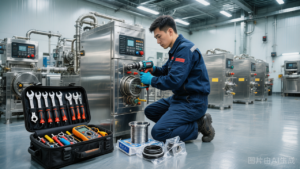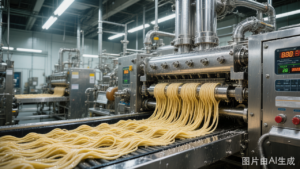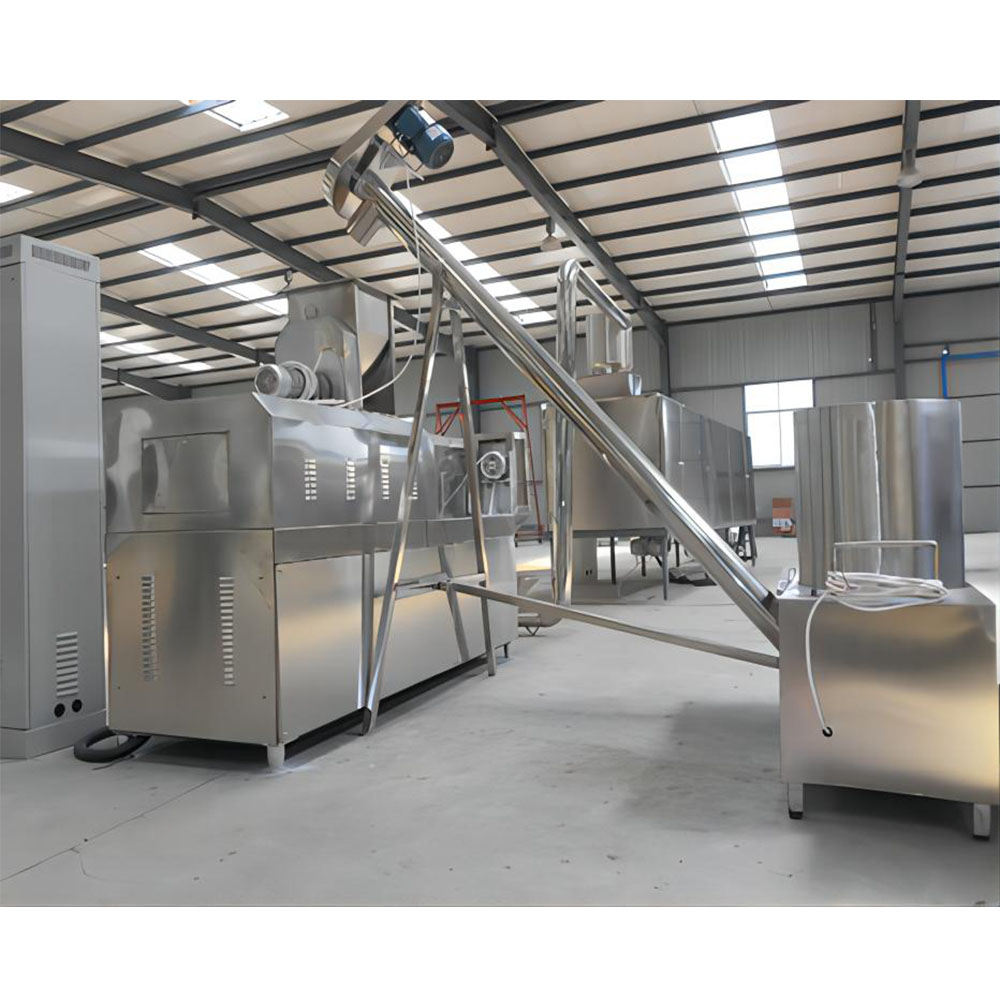
A food processing machine is any mechanical, electrical, or automated device used in a factory to transform raw agricultural ingredients into finished or semi-finished food products through unit operations such as washing, cutting, grinding, mixing, cooking, drying, frying, extruding, filling, sealing, and packaging. In a typical factory setting, these machines are arranged in a production line — a sequential chain where raw materials enter at one end, pass through specialized processing stages, and emerge as packaged consumer-ready products at the other. Food processing machines range from single-function units like a 500 kg/h meat grinder to fully integrated lines processing 5,000+ kg/h, and are built from food-grade stainless steel (304 or 316L) to meet FDA, EU, and GB food contact material standards. The global food processing equipment market reached $67.4 billion in 2025, driven by rising demand for processed foods, stricter food safety regulations, and the trend toward factory automation with Industry 4.0 technologies including PLC controls, IoT sensors, and real-time quality monitoring systems.
TL;DR — Key Takeaways
- Definition: A food processing machine is a mechanical or automated device that transforms raw ingredients into food products through unit operations — washing, cutting, grinding, mixing, cooking, drying, frying, extruding, filling, and packaging.
- Factory workflow: Machines operate in production lines where raw materials pass through sequential stages (receiving → preprocessing → processing → post-processing → packaging) to produce finished products at throughputs of 100–10,000+ kg/h.
- 12 core machine types: Washers, peelers, cutters/slicers, grinders/mills, mixers/blenders, cookers/steamers, dryers, fryers, extruders, fillers/dosers, sealers/packagers, and inspection/detection systems.
- Material standard: Food-grade stainless steel (AISI 304 or 316L) is required for all food-contact surfaces to comply with FDA 21 CFR, EU 1935/2004, and China GB 4806 standards.
- Automation levels: Manual (operator-controlled), semi-automatic (operator + machine cycles), and fully automatic (PLC-controlled continuous operation) — each suited to different production volumes and budgets.
- Market size: The global food processing equipment market was valued at $67.4 billion in 2025, growing at 5.8% CAGR, with China as the largest manufacturing hub.
What Is a Food Processing Machine?
A food processing machine is defined by its function: it performs a specific unit operation on food materials to change their physical, chemical, or biological properties. Unlike kitchen appliances designed for domestic use, food processing machines are engineered for continuous or batch industrial operation with throughputs measured in hundreds to thousands of kilograms per hour.
The formal definition from ISO 14159 and food engineering literature states that a food processing machine is “a machine intended to process, handle, package, or store food materials in commercial or industrial settings, designed for cleanability, durability, and compliance with food safety standards.”
Core Attributes of Every Food Processing Machine
| Attribute | Specification | Why It Matters |
|---|---|---|
| Food-contact material | AISI 304 or 316L stainless steel | Corrosion resistance, non-toxic, easy to clean (CIP compliant) |
| Throughput capacity | 50–10,000+ kg/h | Determines factory output and ROI payback period |
| Power supply | 220V/380V/440V, 50/60Hz, 3-phase | Industrial power standard for continuous operation |
| Control system | Manual switches, PLC (Siemens/Mitsubishi), or SCADA | Automation level affects labor cost and product consistency |
| Cleanability | CIP (Clean-in-Place) or COP (Clean-out-of-Place) | Required by HACCP, ISO 22000, and FDA regulations |
| Safety features | Emergency stops, guards, interlocks, overload protection | Compliance with CE, OSHA, and machinery directive 2006/42/EC |
| Motor type | AC induction, servo, or stepper | Affects speed control precision and energy consumption |
| IP rating | IP54–IP66 (dust and water protection) | Wash-down environment requires sealed electrical components |
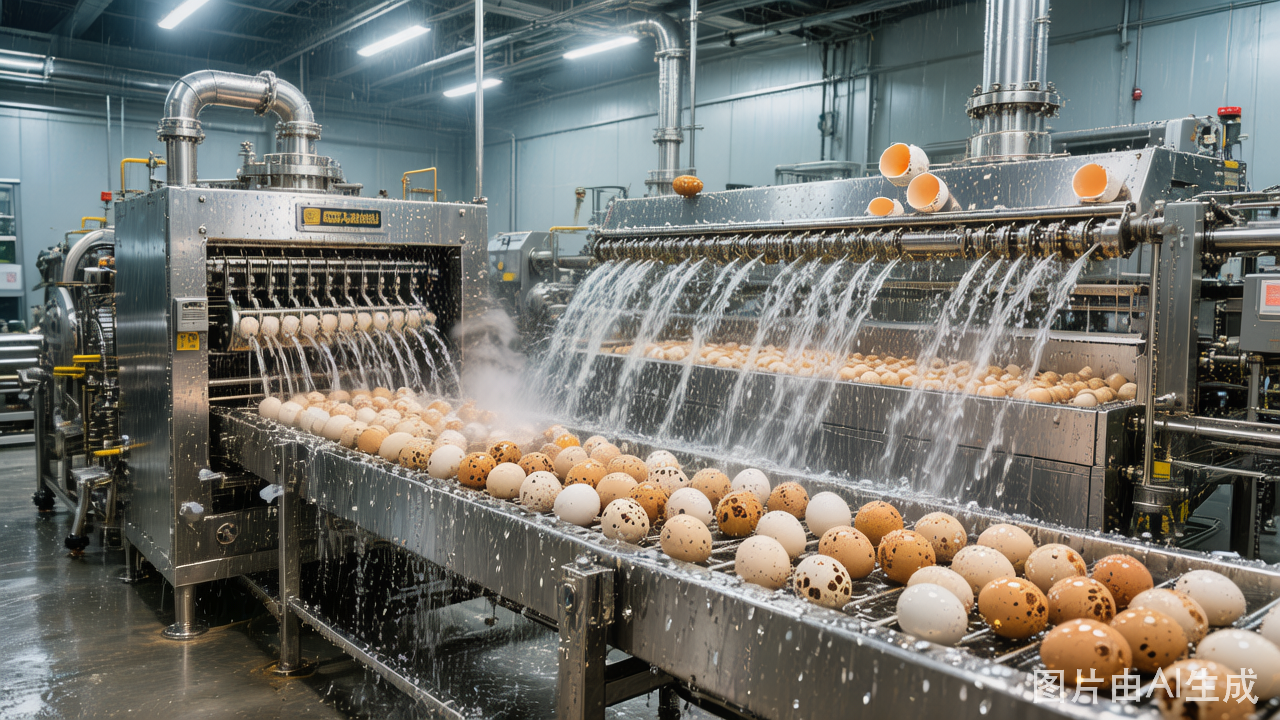
How Food Processing Machines Work in a Factory
In a factory, food processing machines are organized into production lines — sequential arrangements where each machine performs one or more unit operations. The material flows from raw receiving through processing to final packaging, with conveyors, pumps, or gravity connecting each stage.
The 5-Stage Factory Production Flow
| Stage | Operations | Typical Machines | What Changes |
|---|---|---|---|
| 1. Raw Material Receiving | Unloading, weighing, visual inspection | Platform scales, metal detectors, inspection tables | Quality screening — foreign objects and defective materials removed |
| 2. Pre-Processing | Washing, peeling, sorting, cutting | Brush washers, steam peelers, optical sorters, slicers/dicers | Raw materials cleaned, sized, and prepared for processing |
| 3. Core Processing | Grinding, mixing, cooking, extruding, frying | Hammer mills, ribbon blenders, steam kettles, twin-screw extruders, continuous fryers | Chemical and physical transformation — texture, flavor, and form changed |
| 4. Post-Processing | Drying, cooling, flavoring, freezing | Microwave dryers, cooling tunnels, drum flavorers, IQF freezers | Moisture reduced, temperature stabilized, flavor applied |
| 5. Packaging | Filling, sealing, labeling, case packing | Volumetric fillers, heat sealers, labelers, case packers | Product protected, shelf life extended, branded for retail |
Example: Potato Chips Production Line
A complete potato chips production line demonstrates how multiple machines work together in a factory:
- Stage 1: Raw potatoes received and weighed → elevator feeds into the line
- Stage 2: Brush peeler removes skins (2-3% waste) → optical sorter removes green/damaged potatoes → slicer cuts to 1.2–1.5mm thickness
- Stage 3: Water bath removes surface starch → continuous fryer at 170-180°C for 2-3 minutes → excess oil removed by vibration conveyor
- Stage 4: Drum flavoring machine applies seasoning (3-5% by weight) → cooling tunnel reduces temperature to 25°C
- Stage 5: Vertical form-fill-seal machine packs into nitrogen-flushed bags → metal detector scans every package → case packer groups for shipping
This line processes 200–2,000 kg/h of raw potatoes into finished chips with 5-8 operators or 1-2 operators for the fully automatic version.
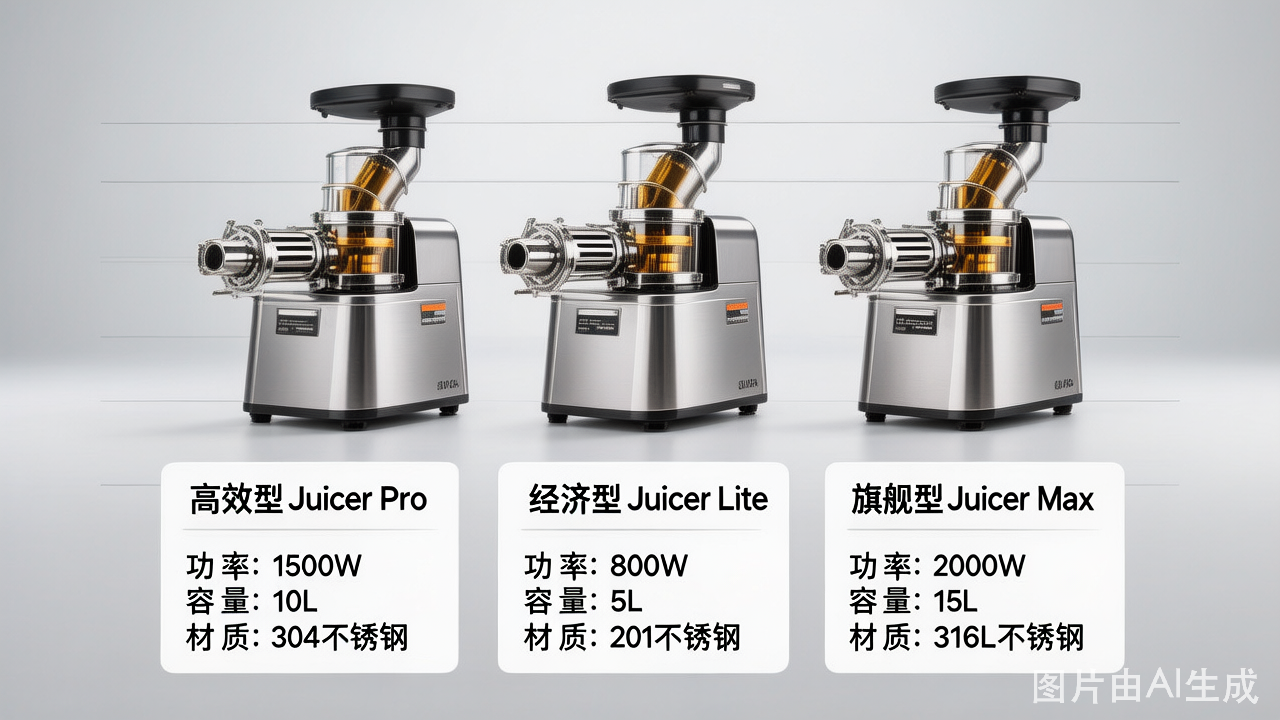
12 Core Types of Food Processing Machines
| # | Machine Type | Primary Function | Throughput Range | Typical Applications |
|---|---|---|---|---|
| 1 | Washing machines | Remove soil, debris, and surface contaminants | 500–5,000 kg/h | Vegetables, fruits, seafood, tubers |
| 2 | Peeling machines | Remove outer skin or shell | 200–3,000 kg/h | Potatoes, carrots, eggs, nuts |
| 3 | Cutting & slicing machines | Size reduction to specific shapes | 200–4,000 kg/h | Chips, fries, julienne, dicing |
| 4 | Grinders & mills | Reduce particle size by mechanical force | 100–5,000 kg/h | Meat, grains, spices, nuts |
| 5 | Mixers & blenders | Combine ingredients uniformly | 50–2,000 L/batch | Dough, batter, paste, seasoning |
| 6 | Cookers & steamers | Apply heat to change texture and kill pathogens | 100–5,000 kg/h | Sausages, buns, vegetables, sauces |
| 7 | Dryers | Remove moisture to extend shelf life | 50–3,000 kg/h | Fruits, vegetables, pet food, herbs |
| 8 | Fryers | Cook by immersion in hot oil (150-200°C) | 100–5,000 kg/h | Chips, snacks, chicken, donuts |
| 9 | Extruders | Force material through a die to form shapes | 100–2,000 kg/h | Puffed snacks, pet food, pasta, texturized protein |
| 10 | Fillers & dosers | Dispense precise quantities into containers | 20–500 units/min | Liquids, pastes, powders, granules |
| 11 | Sealers & packaging machines | Enclose product in protective packaging | 30–300 packs/min | Bags, pouches, cans, bottles, trays |
| 12 | Inspection & detection | Identify foreign objects, verify weight, ensure quality | Line speed dependent | Metal, glass, bone fragments; weight check |
Power and Energy Requirements
| Machine Type | Typical Power | Energy Source | Annual Energy Cost (2 shifts) |
|---|---|---|---|
| Meat grinder (300 kg/h) | 5.5–11 kW | Electric | $3,200–6,400 |
| Continuous fryer (500 kg/h) | 45–90 kW (heating) | Electric, gas, or diesel | $26,000–52,000 |
| Microwave dryer (200 kg/h) | 30–60 kW | Electric | $17,400–34,800 |
| Twin-screw extruder (500 kg/h) | 55–110 kW | Electric | $32,000–64,000 |
| Volumetric filler (60 units/min) | 1.5–3 kW | Electric + compressed air | $870–1,740 |
| Complete packaging line | 8–20 kW | Electric + compressed air | $4,600–11,600 |
A medium-scale food processing factory (2,000 kg/h output) typically requires 200–500 kW total installed power with an electricity cost of $80,000–200,000 per year for two-shift operation. Compressed air systems (6–8 bar) are also required for pneumatic actuators in fillers, sealers, and sorting machines.
Automation Levels Explained
| Feature | Manual | Semi-Automatic | Fully Automatic |
|---|---|---|---|
| Operator involvement | Continuous — operator runs every step | Partial — operator loads/unloads | Minimal — supervisor monitors PLC |
| Control system | On/off switches, manual valves | Timers, thermostats, basic PLC | Full PLC/SCADA with recipe management |
| Throughput | 50–200 kg/h | 200–1,000 kg/h | 1,000–10,000+ kg/h |
| Typical investment | $5,000–30,000 | $20,000–100,000 | $100,000–1,000,000+ |
| Operators per line | 3–6 | 2–4 | 0.5–1.5 |
| Product consistency | Variable (±5-10%) | Good (±3-5%) | Excellent (±0.5-2%) |
| Best for | Startups, small batches, artisan products | Medium-scale, growing businesses | Large-scale, established manufacturers |
Food Safety and Compliance Standards
Every food processing machine must comply with applicable regulations based on the target market:
| Standard | Region | Scope |
|---|---|---|
| FDA 21 CFR Part 117 | United States | Current Good Manufacturing Practice (cGMP) for food |
| EU Regulation 1935/2004 | European Union | Food contact materials — safety and migration limits |
| ISO 22000 / HACCP | International | Food safety management system |
| CE Marking (2006/42/EC) | European Union | Machinery safety directive |
| GB 4806 series | China | National food contact material standards |
| 3-A Sanitary Standards | United States / Global | Dairy and food equipment cleanability design |
| EHEDG Guidelines | Europe / Global | Hygienic equipment design for food processing |
Key design requirements for compliance include: smooth food-contact surfaces (Ra ≤ 0.8 μm), no dead legs or crevices where bacteria can accumulate, CIP compatibility for cleaning without disassembly, and food-grade lubricants on all bearings and seals.
How to Choose the Right Food Processing Machine
5-Step Selection Process
- Define your product and throughput: What food product are you making? How many kg/h do you need? This determines machine type and size.
- Determine automation level: Match your budget and labor availability — manual for startups (<$30K), semi-auto for growing businesses ($20-100K), fully automatic for established manufacturers ($100K+).
- Check material compliance: Require AISI 304/316L stainless steel for food-contact parts. Request material test certificates (MTC) from the manufacturer.
- Evaluate total cost of ownership: Add machine price + shipping + installation + energy + maintenance + spare parts over 5-10 years. The cheapest machine may have the highest operating cost.
- Verify supplier capabilities: Check factory audit reports, customer references, after-sales support (spare parts, remote diagnostics), and warranty terms. China-based manufacturers typically offer 30-50% lower prices than European brands with comparable specifications.
Common Food Processing Machine Applications by Industry
| Industry | Typical Machines Used | End Products |
|---|---|---|
| Snack foods | Fryers, flavoring drums, extruders, packaging lines | Potato chips, puffed snacks, popcorn, nuts |
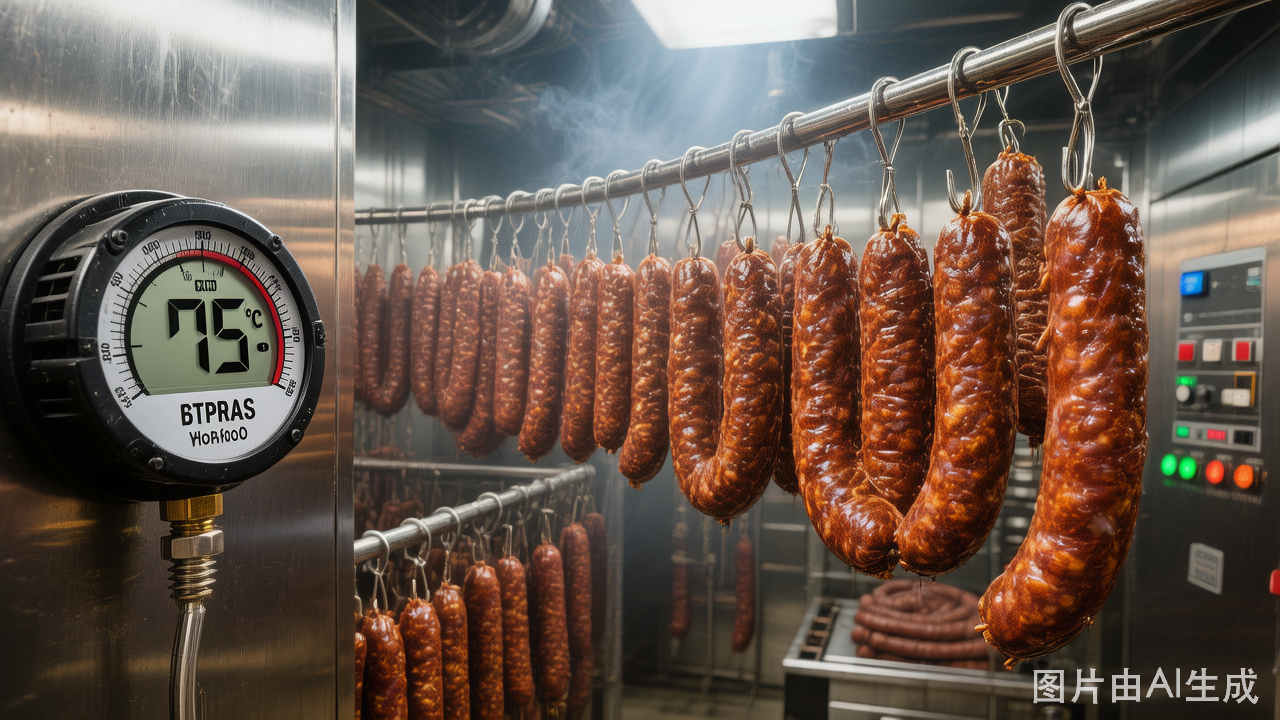
| Meat processing | Grinders, stuffers, smokers, slicers, vacuum packers | Sausages, burgers, smoked meat, deli slices |
| Beverage & juice | Washers, juicers, pasteurizers, fillers, labelers | Fruit juice, soy milk, sugarcane juice |
| Bakery | Mixers, dough sheeters, proofers, ovens, packaging | Bread, cookies, donuts, steamed buns |
| Dairy & frozen | Pasteurizers, homogenizers, ice cream freezers | Ice cream, milk, cheese, frozen desserts |
| Oil extraction | Screw presses, oil refineries, filling machines | Cooking oil, essential oils, peanut butter |
| Egg processing | Washers, sorters, breakers, peelers, packaging | Boiled eggs, egg liquid, quail eggs |
| Grain & cereal | Hullers, mills, extruders, dryers | Rice, flour, pasta, breakfast cereal |
Frequently Asked Questions
What is the difference between food processing and food manufacturing?
Food processing refers to the transformation of raw ingredients into food products — the mechanical, thermal, and chemical operations performed by machines. Food manufacturing encompasses the entire business operation: processing plus quality control, packaging, labeling, storage, distribution, and regulatory compliance. All food manufacturing involves food processing, but not all food processing is food manufacturing (e.g., restaurant kitchens process food but do not manufacture packaged products).
How much does a food processing machine cost?
Prices range from $1,000 for a small manual meat grinder to $500,000+ for a fully automatic production line. Mid-range machines (semi-automatic, 200-500 kg/h) typically cost $10,000–50,000. China-manufactured machines are generally 30-50% less expensive than European or American brands for comparable specifications. See our complete cost guide for detailed pricing by machine type and capacity.
What certifications should a food processing machine have?
Essential certifications include: CE marking (for machinery safety), ISO 9001 (quality management), and material compliance (FDA 21 CFR, EU 1935/2004, or GB 4806 for food contact surfaces). For specific markets, additional certifications like UL/ETL (US), GOST (Russia), or SNI (Indonesia) may be required. Always request certificates of compliance from the manufacturer before purchase.
How long do food processing machines last?
With proper maintenance, industrial food processing machines have a service life of 10–20 years. Stainless steel frames and food-contact components last 15-25 years. Wear parts (blades, seals, belts, bearings) require replacement every 6-24 months depending on usage intensity. Preventive maintenance programs following manufacturer schedules extend machine life by 30-50% compared to reactive maintenance.
Can one machine process different types of food?
Some machines are versatile — for example, a meat grinder can process beef, pork, chicken, and fish with a simple blade change and cleaning. However, cross-contamination risks mean that in practice, separate machines or thorough cleaning between product changes are required, especially when processing allergens. Extruders are among the most versatile machines, capable of producing snacks, pet food, pasta, and texturized vegetable protein with die and recipe changes.
Why Source Food Processing Machines from China
- 30-50% cost advantage over European and American brands for comparable specifications and materials
- Complete production lines available from a single manufacturer — reduces integration complexity and warranty management
- Fast lead times — standard machines ship in 15-30 working days; custom lines in 45-60 days
- OEM/ODM capability — Chinese manufacturers can customize machine dimensions, voltage, and control systems for any market
- Global shipping experience — most established manufacturers export to 50+ countries and handle all documentation (CO, Form A, fumigation certificates)
As a leading food processing machine manufacturer from China with over 15 years of export experience, we provide complete production line solutions from consultation and design to installation and training. Contact our engineering team for a custom quote tailored to your production requirements.