# How to Automate a Potato Chips Production Line from Washing to Packaging
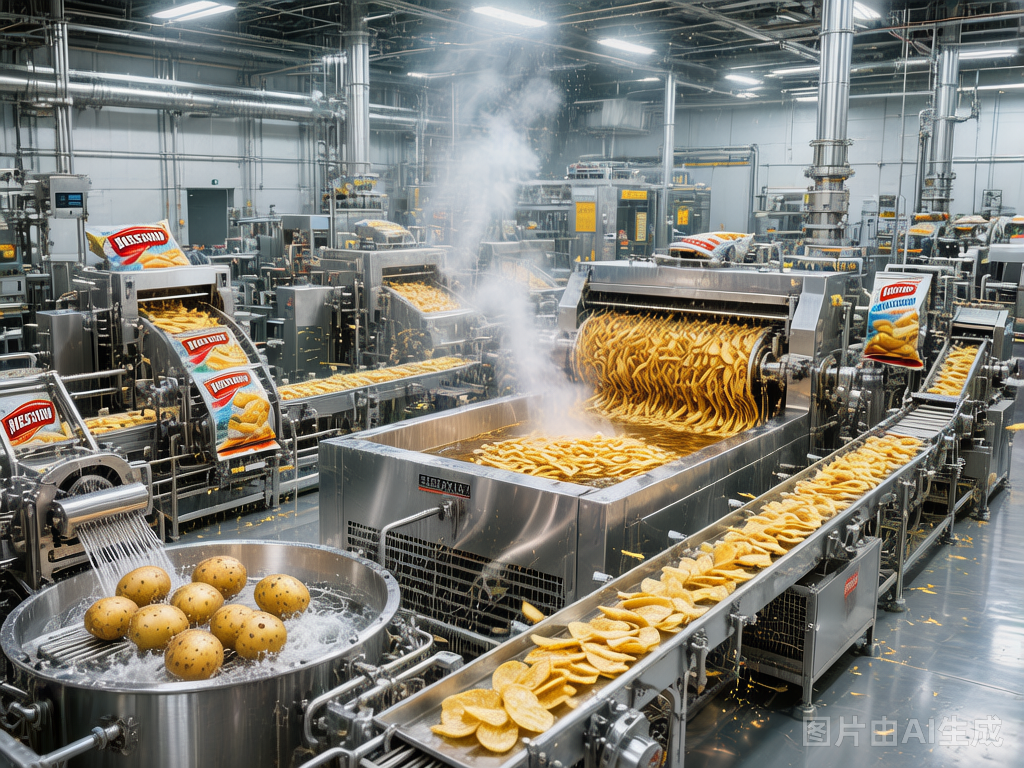
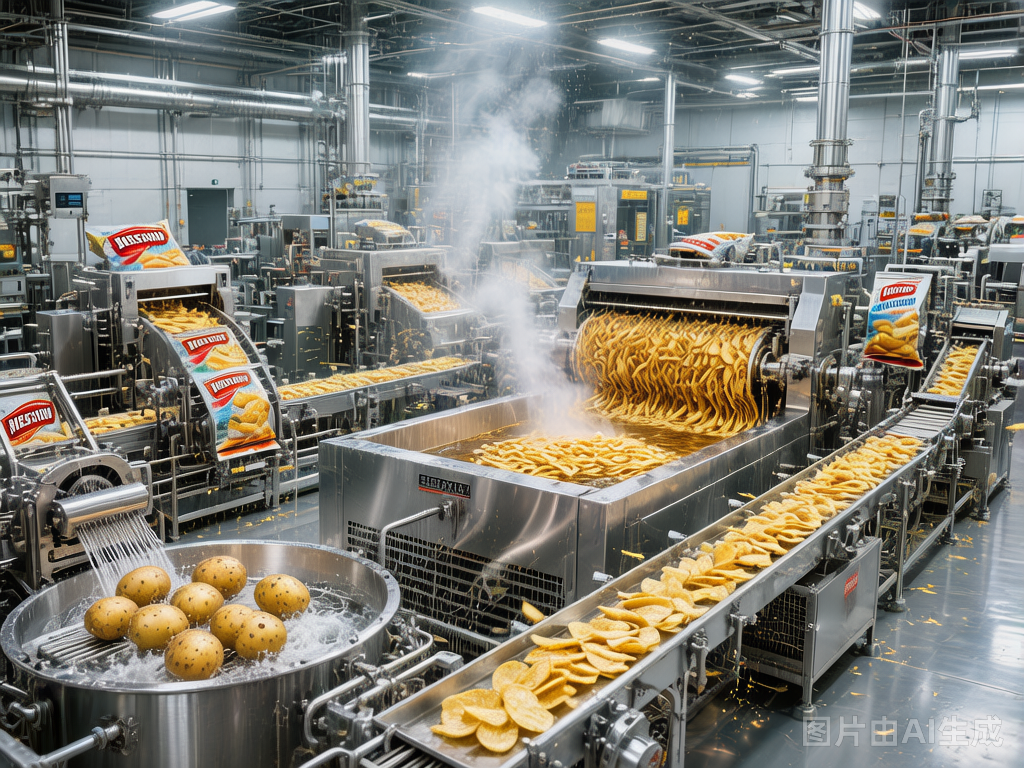
Automating a potato chips production line transforms a labor-intensive process into a high-efficiency, consistent-quality manufacturing operation. A fully automated line processes raw potatoes through ten distinct stages — from receiving and washing through frying, seasoning, and packaging — with minimal manual intervention. Modern automation systems using PLC controls, industrial sensors, and integrated monitoring software can achieve production rates of 200-5,000 kg/hour while maintaining product consistency that manual operations cannot match. This guide details the automation approach for each stage, the control system architecture, sensor requirements, and the financial return on automation investment.
## TL;DR
- A fully automated potato chips line covers 10 stages: receiving, washing, peeling, slicing, washing/blanching, frying, de-oiling, seasoning, cooling, and packaging.
- PLC-based control systems (Siemens S7-1500 or Allen-Bradley ControlLogix) coordinate all stages with recipe management for multiple product variants.
- Key sensors include load cells for portion control, optical sorters for defect removal, temperature probes for frying control (+/-1C), and metal detectors for safety.
- Automated lines reduce labor from 12-20 workers to 3-5 operators while increasing output consistency by 40-60%.
- Automation investment ROI: 12-24 months for medium-scale lines (500-1,000 kg/hour) and 18-36 months for large-scale lines (2,000+ kg/hour).
- Remote monitoring and predictive maintenance reduce unplanned downtime by 60-80%.
Stage 1: Automated Receiving and Storage
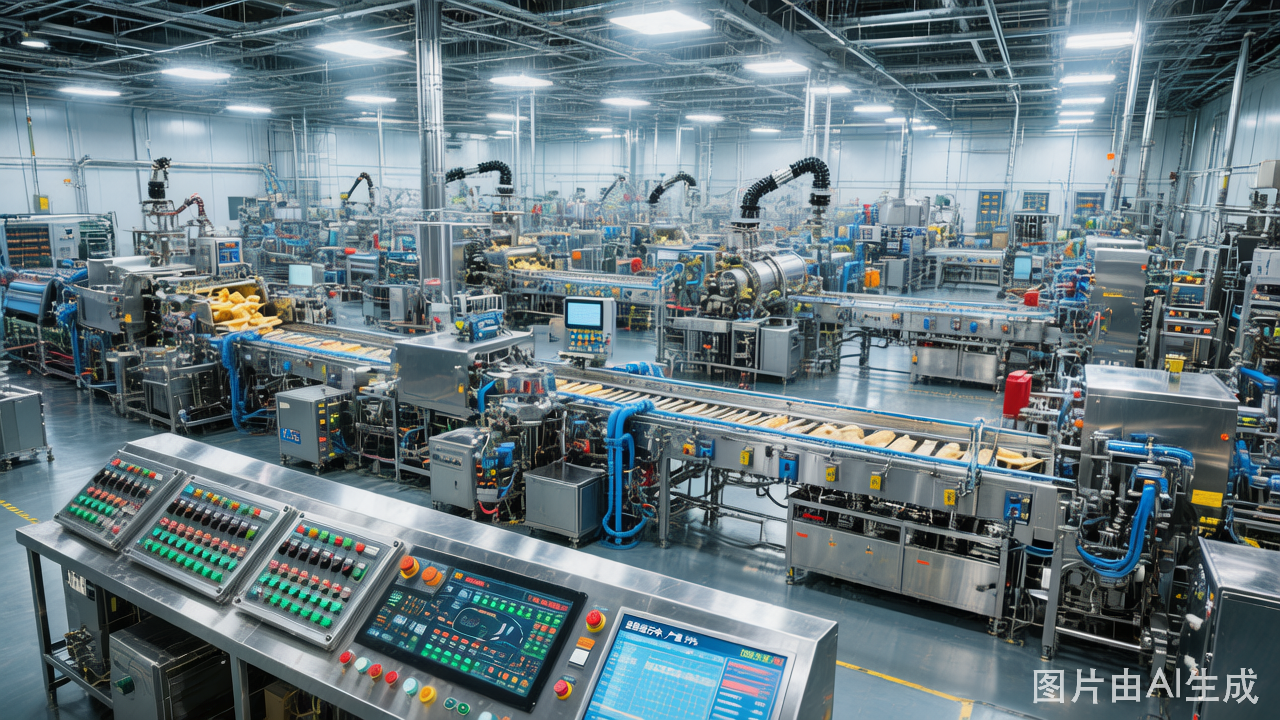
Raw potatoes arrive at the facility in bulk trucks or bags. Automated receiving systems weigh, inspect, and store potatoes under controlled conditions before processing begins.
- Truck dump platform: Hydraulic tipping platform tilts delivery trucks 40-45 degrees to unload potatoes into a receiving hopper. Capacity: 10-25 tons per cycle. Automatic cycle time: 3-5 minutes.
- Weighing system: Inline belt weigher (load cell accuracy: +/-0.25%) records incoming weight. Data logged to MES/ERP system for inventory tracking and supplier payment.
- Optical inspection: Camera system at receiving point identifies green potatoes, sprouts, and foreign material. Rejection rate adjustable: 2-15%. Records defect rates by supplier for quality-based procurement decisions.
- Storage control: Automated climate control in storage bins maintains 7-10C and 90-95% relative humidity. CO2 monitoring prevents accumulation above 1%. Ventilation cycles: 4-6 per hour. Storage duration: up to 8 months with proper conditions.
Stage 2: Washing and Destoning
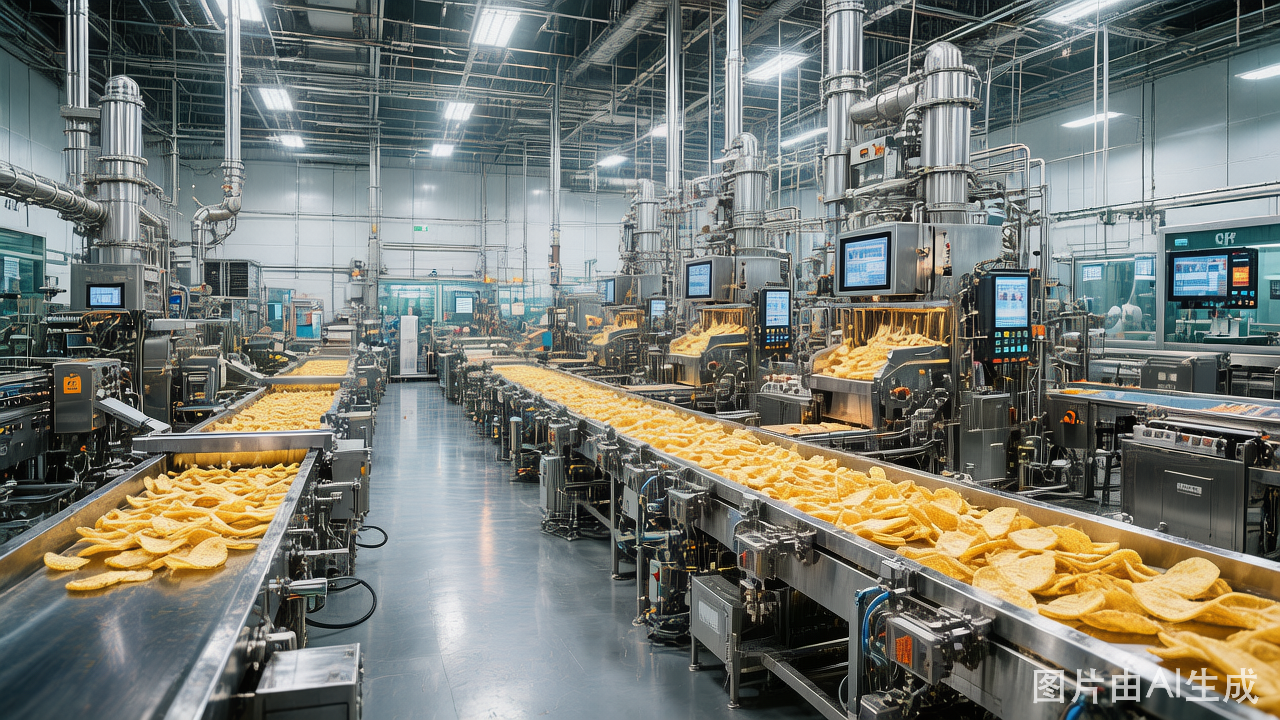
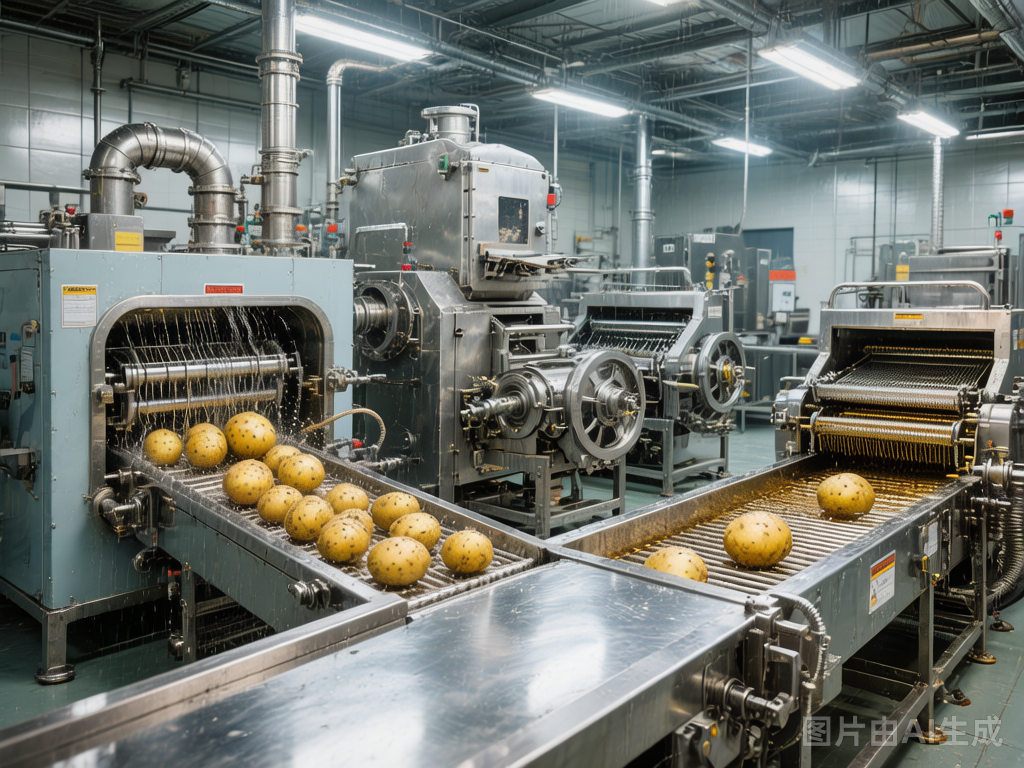
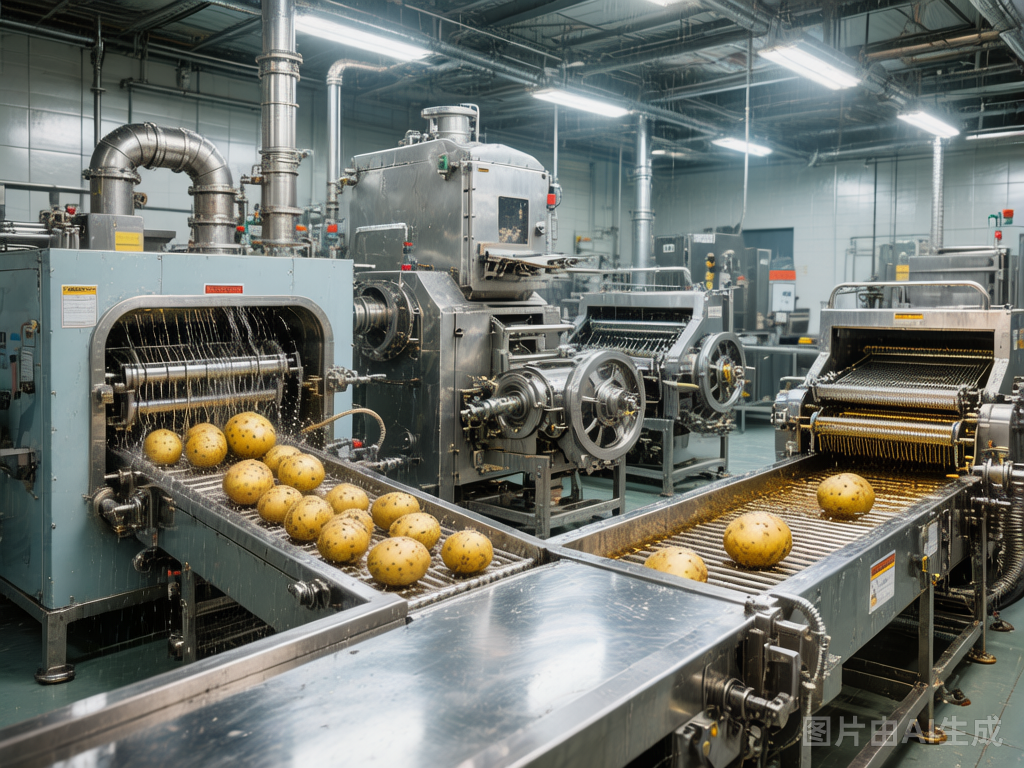
Potatoes pass through a washing system that removes soil, stones, and debris before peeling. Automation at this stage focuses on water management and throughput control.
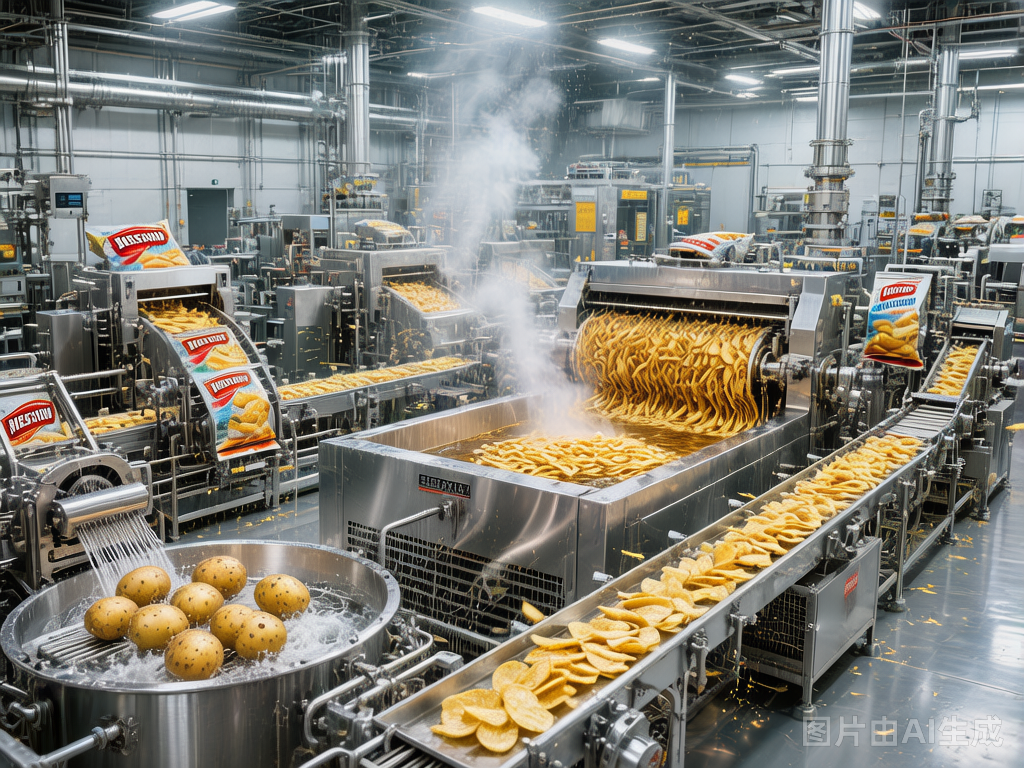
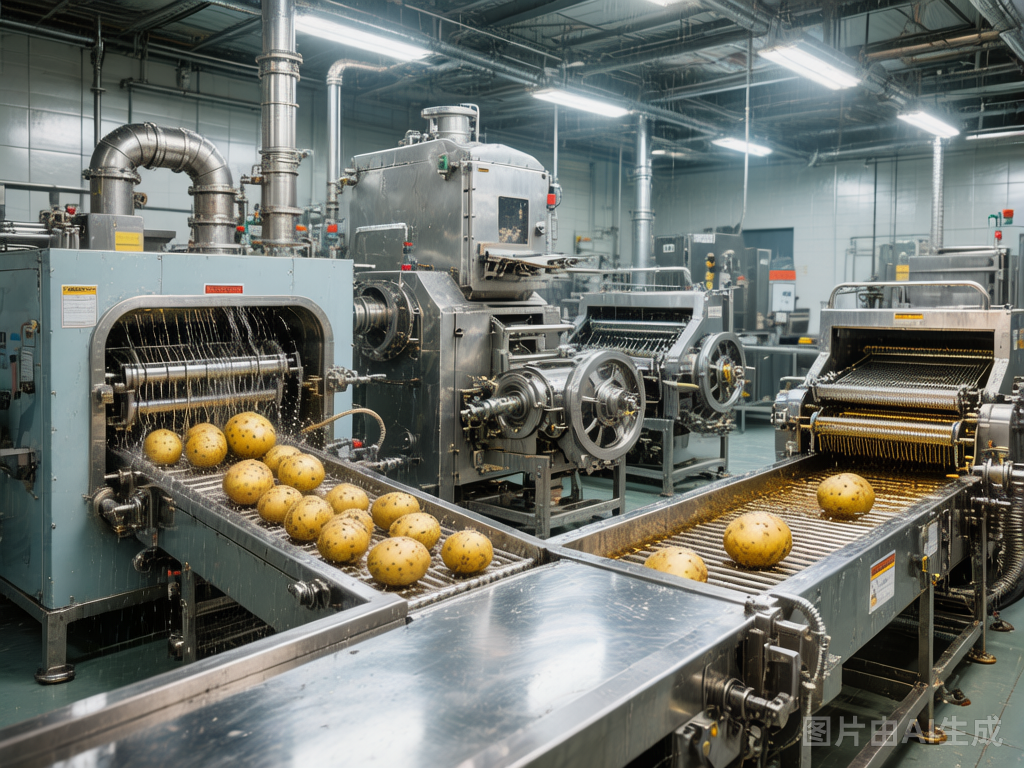
- Destoner: Density-based separation using upward water flow. Stones and heavy debris sink to the bottom and are automatically discharged via a screw conveyor. Potato separation efficiency: 98-99%. Water consumption: 3-5 L/kg of potatoes.
- Bubble washer: Air agitation in a water bath loosens remaining soil. Automatic water level control maintains consistent wash quality. Recirculation system with sediment filter reduces water consumption by 60-70% compared to single-pass washing.
- Brush washer: Rotating nylon brushes (4-8 pairs) provide final cleaning. Brush speed adjustable: 100-300 RPM. Automatic brush wear detection signals replacement at 60% wear.
- Automatic flow control: Variable-speed feed conveyor regulates potato flow to match downstream capacity. Load cell sensors on the conveyor provide real-time throughput data to the PLC.
Stage 3: Automated Peeling
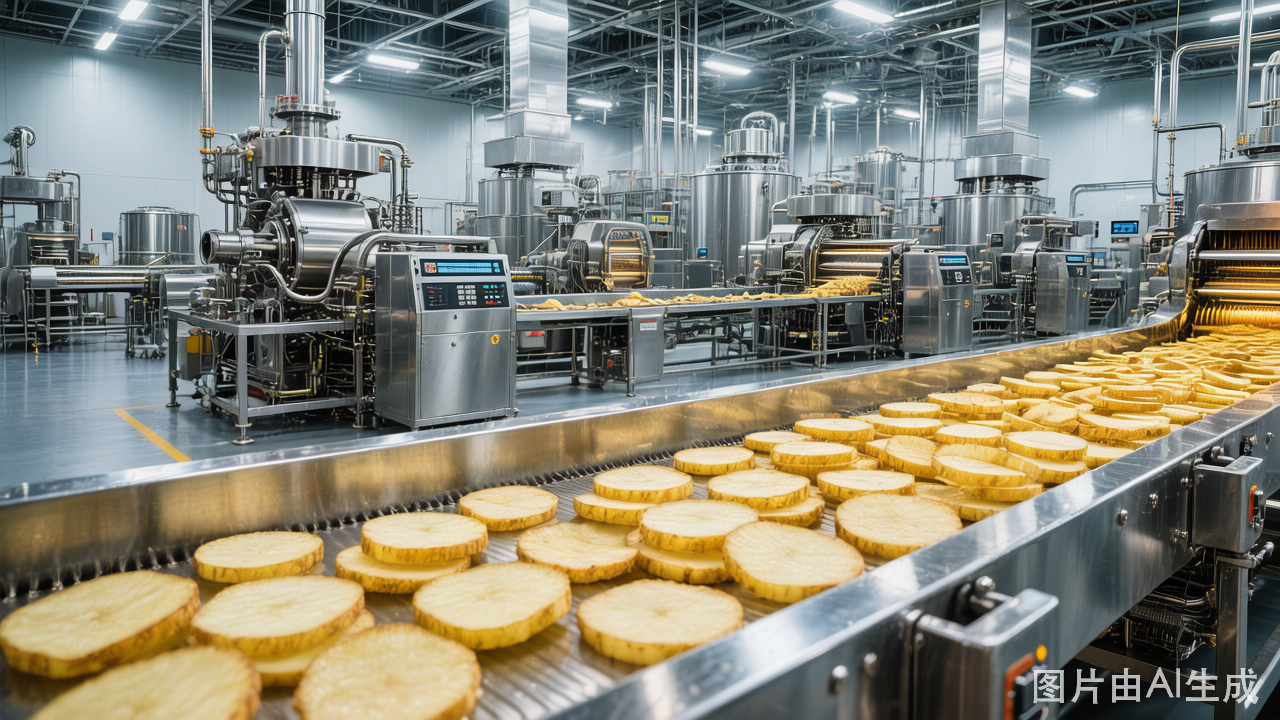
- Steam peeling: Pressurized steam vessel (6-10 bar, 160-185C) for 15-45 seconds. Steam pressure ruptures the potato skin. Peeling efficiency: 95-98%. Peel loss: 6-10%. Throughput: 2-15 tons/hour. Automatic pressure relief and skin separation after each cycle. Batch cycle time: 60-90 seconds.
- Abrasive peeling: Rotating abrasive-lined drum. Suitable for smaller operations. Peel loss: 10-18% (higher than steam). Throughput: 1-5 tons/hour. Continuous operation. Automatic abrasive wear monitoring via torque sensors on the drum motor.
- Peel waste handling: Screw conveyor transports peel waste to a collection bin or animal feed processing system. Automatic bin level sensors trigger waste hauler scheduling.
Stage 4: Slicing with Automated Thickness Control
Slicing is the stage where automation has the most direct impact on product uniformity. Consistent slice thickness is critical for even frying and consistent texture.
- Centrifugal slicer: Potatoes are fed into a rotating impeller (200-600 RPM) that forces them against stationary cutting blades. Slice thickness adjustable from 0.8-3.0 mm by blade gap setting. Throughput: 2-10 tons/hour per unit.
- Automated blade adjustment: Servo-driven blade gap control allows remote thickness changes via the PLC. Recipe management stores thickness settings for each product variant. Changeover time: 15-30 seconds between thickness settings.
- Blade condition monitoring: Current sensors on the slicer motor detect increased cutting resistance indicating blade dullness. Automatic alert when motor current exceeds baseline by 15-20%. Blade replacement interval: 4-8 hours depending on potato variety and volume.
- Slice thickness verification: Laser micrometer or camera system measures slice thickness on the discharge conveyor at 50-100 readings per second. Out-of-spec slices trigger automatic blade adjustment or operator alert. Tolerance: +/-0.05 mm for 1.5mm target thickness.
Stage 5: Slice Washing and Blanching
- Slice washer: Counter-current water wash removes surface starch and sugars that cause excessive browning during frying. Water temperature: 10-20C. Residence time: 30-90 seconds. Starch removal efficiency: 80-90%. Automatic water turbidity monitoring triggers water replacement when turbidity exceeds setpoint.
- Blancher: Hot water immersion at 65-85C for 2-5 minutes. Partially cooks the potato slices to set texture and reduce frying time. Enzyme inactivation (peroxidase negative test). Reduces reducing sugars by 15-30%, improving chip color uniformity. Automatic temperature control: +/-1C.
- Water management: Counter-current flow design uses fresh water only at the final rinse stage, with overflow cascading back through earlier wash stages. Total water consumption: 2-4 L/kg of slices (vs 8-12 L/kg without recirculation).
Stage 6: Automated Frying
The frying stage is the core of potato chip production and the most automation-intensive process in the line.
- Continuous fryer with multi-zone control: 3-5 independently controlled temperature zones. Zone 1 (infeed): 180-190C for rapid moisture removal. Zone 2 (mid-fry): 170-180C for color development. Zone 3 (exit): 165-175C for final texture. Temperature control accuracy: +/-1C per zone.
- Automatic oil level management: Oil level sensors (capacitive or float type) maintain constant oil depth. Fresh oil is automatically added from a holding tank to compensate for oil absorbed by the product. Oil addition rate: typically 5-12% of product weight.
- Inline oil filtration: Continuous paper or mesh belt filter removes crumbs and particles from the frying oil. Filtration fineness: 10-50 microns. Automatic paper advance triggered by pressure differential across the filter. Extends oil life by 40-60%.
- Free fatty acid (FFA) monitoring: Inline FFA sensor provides real-time oil quality data. Alarm at 0.5% FFA (action level) and automatic oil dump at 1.0% FFA (critical limit). Historical FFA trend data enables predictive oil change scheduling.
- Moisture endpoint detection: Near-infrared (NIR) moisture sensor at the fryer exit measures final chip moisture content. Target: 1.0-2.5%. Feedback loop adjusts conveyor speed to maintain target moisture. Sampling rate: continuous (10 readings/second).
Stage 7: De-Oiling
- Vibrating de-oiling conveyor: High-frequency vibration (15-25 Hz, 2-4 mm amplitude) shakes excess surface oil from the chips. De-oiling efficiency: removes 1-3% surface oil. Conveyor length: 1.5-4 meters.
- Centrifugal de-oiler (optional): Spinning drum at 200-400 RPM for 30-60 seconds reduces total oil content by 3-8%. Batch process: 5-20 kg per cycle. Automatic load weighing ensures consistent fill levels. Preferred for reduced-fat chip products.
- Air knife system: High-velocity air (30-60 m/s) blown across the chip surface removes residual oil droplets. Effective as a secondary de-oiling step after vibration. Energy consumption: 3-8 kW.
Stage 8: Automated Seasoning
- Drum seasoning machine: Rotating drum (10-25 RPM) with internal flights that tumble chips while seasoning is applied. Coating uniformity: 85-95%. Drum angle: 5-15 degrees (adjustable for residence time control).
- Automatic seasoning dosing: Loss-in-weight feeder dispenses seasoning powder at a programmable rate. Typical dosage: 3-8% of chip weight. Dosing accuracy: +/-1%. Recipe management stores dosing parameters for up to 100 product variants.
- Electrostatic seasoning (optional): Applies an electrostatic charge to the seasoning powder, causing it to adhere uniformly to the chip surface. Improves coating uniformity to 92-98% and reduces seasoning waste by 20-30%. Additional equipment cost: $15,000-$40,000.
- Seasoning changeover: Quick-clean design with CIP-compatible seasoning hopper and drum. Changeover time between flavors: 15-25 minutes (vs 45-90 minutes on manual systems). Automated cleaning cycle: 8-12 minutes.
Stage 9: Cooling and Quality Inspection
- Cooling conveyor: Ambient or forced-air cooling over a 3-8 meter conveyor belt. Chip temperature reduced from 60-80C (post-fry) to 25-35C. Cooling time: 2-5 minutes. Required to prevent moisture condensation inside the packaging, which causes sogginess.
- Optical color sorting: Camera-based system inspects every chip for color defects (dark spots, green areas, uncooked pieces). Rejection accuracy: 95-99%. Processing speed: up to 5,000 chips/minute per lane. Reject stream is collected for animal feed or waste.
- Metal detection: Inline metal detector with sensitivity: ferrous 0.8mm, non-ferrous 1.2mm, stainless steel 1.5mm. Automatic reject diverter. Test procedure every 2 hours using certified test pieces.
- Weight checking: Inline checkweigher verifies package weight compliance. Accuracy: +/-0.5g for 50-500g packages. Automatic feedback to the packaging machine to adjust fill weights. Rejects out-of-spec packages to a separate bin.
Stage 10: Automated Packaging
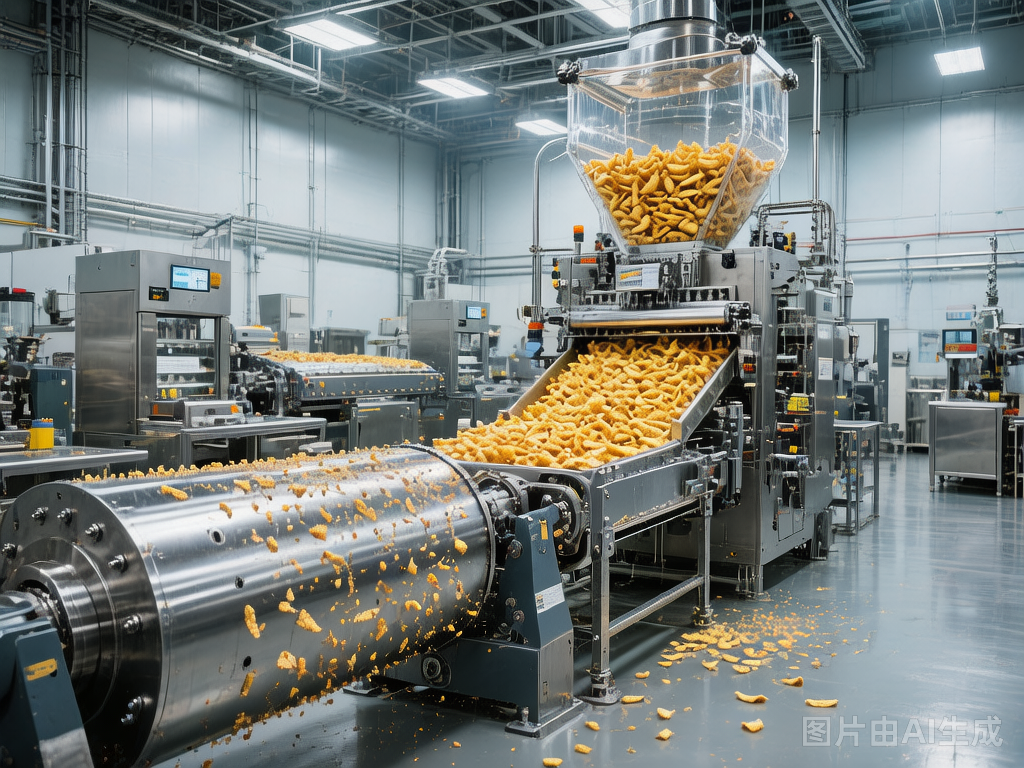
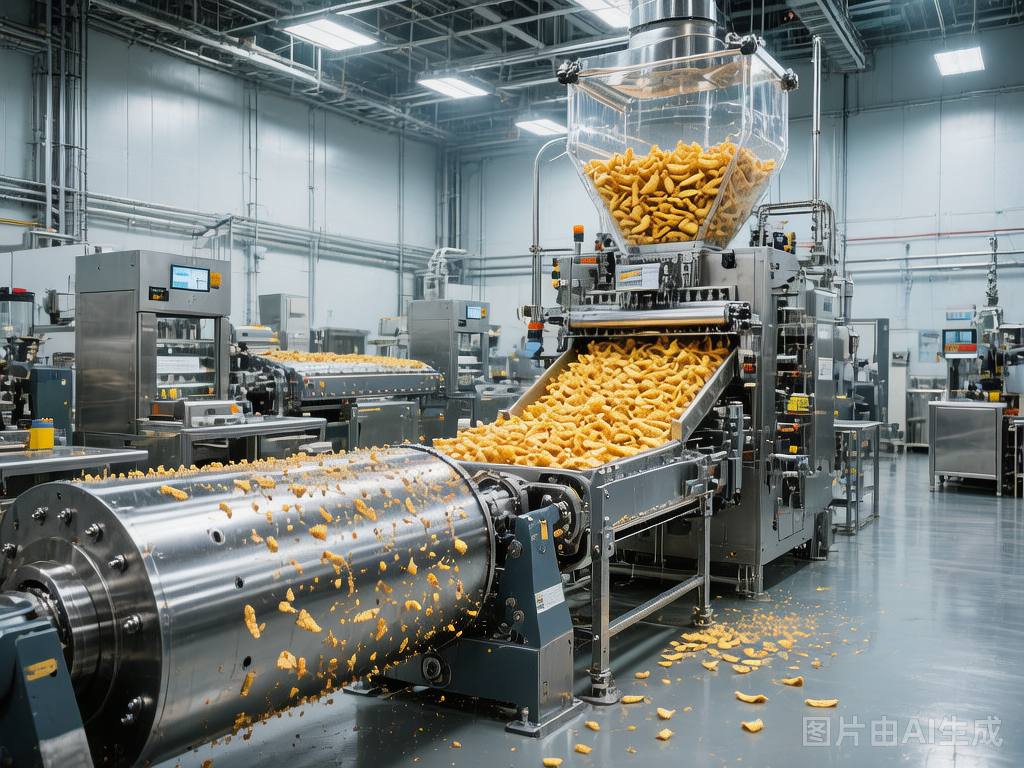
- Vertical form-fill-seal (VFFS): Forms bags from a roll of film, fills with chips, and seals in a continuous operation. Speed: 30-120 bags/minute. Film types: metallized PET/PE, BOPP, or foil laminate. Automatic film splicing eliminates changeover downtime between film rolls.
- Multihead weigher: 10-24 head combination weigher selects the optimal head combination to achieve target weight with minimal giveaway. Weighing accuracy: +/-0.5-1.0g for 150g target. Maximum speed: 120+ drops/minute. communicates with VFFS machine for synchronized filling.
- Nitrogen flushing: Inert gas flushing (99.5% nitrogen) displaces oxygen inside the sealed bag. Residual oxygen: less than 2%. Extends shelf life from 2-3 months (air-filled) to 6-12 months. Nitrogen consumption: 0.5-1.5 L per bag.
- Date coding: Inkjet or laser printer applies production date, batch number, and expiry date to each package. Automatic synchronization with line speed. Data logged to traceability system.
- Case packing: Robotic or mechanical case packer places individual bags into shipping cartons. Speed: 10-30 cases/minute. Automatic case erecting, product placement, and sealing. Bar code verification on each case for warehouse tracking.
PLC Control System Architecture
A centralized PLC (Programmable Logic Controller) coordinates all stages of the production line. The recommended architecture for a medium-to-large automated potato chips line:
Hardware Configuration
- Central PLC: Siemens S7-1500 (CPU 1516F or higher) or Allen-Bradley ControlLogix 5580. Safety-integrated controller with integrated motion control. Scan time: less than 10ms for the main program cycle.
- Remote I/O modules: Distributed I/O stations at each processing stage, connected via PROFINET or EtherNet/IP. Reduces wiring complexity and enables modular installation.
- HMI panels: 12-22 inch touchscreen operator panels at each major stage. Central SCADA workstation in the control room with overview of the entire line. Recipe management interface for product changeovers.
- Communication: Industrial Ethernet (PROFINET or EtherNet/IP) at 100 Mbps or 1 Gbps. All devices on a dedicated automation network separated from the office IT network.
- Data historian: OPC-UA server collects real-time process data from all stages. Historical data stored for 12-36 months for trend analysis and regulatory compliance.
Software Features
- Recipe management: Store 50-200 product recipes with parameters for each stage (slice thickness, frying temperature profile, seasoning dosage, packaging format). One-touch recipe recall changes all stage settings simultaneously.
- Alarm management: Prioritized alarm system (critical, warning, informational) with configurable notification routing. Critical alarms (e.g., fryer over-temperature, metal detector failure) trigger automatic line shutdown.
- Batch tracking: Every production batch is tracked from raw material receiving to finished goods. Traceability includes supplier lot numbers, processing parameters, quality test results, and packaging date/time.
- Remote access: Secure VPN connection enables remote monitoring and troubleshooting by maintenance engineers or equipment suppliers. Reduces response time for technical support from days to minutes.
Sensor Selection Guide
| Process Point | Sensor Type | Range/Accuracy | Function |
|---|---|---|---|
| Potato feed rate | Load cell on conveyor | 0-5,000 kg, +/-0.25% | Throughput monitoring |
| Wash water turbidity | Turbidity sensor (NTU) | 0-4,000 NTU, +/-2% | Water change scheduling |
| Blancher temperature | PT100 RTD | 0-120C, +/-0.3C | Enzyme inactivation control |
| Slice thickness | Laser micrometer | 0.5-5.0mm, +/-0.02mm | Slice quality verification |
| Fryer oil temperature | Thermocouple Type K | 0-250C, +/-1C | Frying profile control |
| Oil level | Capacitive level probe | 0-500mm, +/-2mm | Automatic oil make-up |
| Oil FFA content | Inline FFA sensor | 0-2.0%, +/-0.05% | Oil quality monitoring |
| Chip moisture (post-fry) | NIR moisture sensor | 0-10%, +/-0.2% | Frying endpoint control |
| Metal detection | Electromagnetic detector | Fe 0.8mm, NF 1.2mm | Product safety |
| Package weight | Checkweigher (load cell) | 10-1000g, +/-0.5g | Fill weight compliance |
| Nitrogen purity | Zirconia O2 sensor | 0-25% O2, +/-0.1% | Flush quality verification |
Fault Diagnosis and Predictive Maintenance
Automated monitoring systems detect developing problems before they cause production stoppages:
- Motor current trending: Current sensors on all motors (slicer, conveyor, fryer, packaging) establish baseline current profiles. Deviation of 10-15% above baseline indicates developing mechanical issues (bearing wear, blade dullness, conveyor misalignment). Predictive alerts allow scheduled maintenance during planned downtime.
- Vibration analysis: Accelerometers on critical rotating equipment (slicer motor, blancher agitator, seasoning drum) detect bearing degradation, imbalance, and misalignment. FFT (Fast Fourier Transform) analysis identifies specific fault frequencies. Warning threshold: 7-10 mm/s RMS. Alarm threshold: 11-14 mm/s RMS.
- Thermal imaging: Infrared cameras monitor electrical panels, motor housings, and steam connections. Hot spot detection identifies loose electrical connections and failing bearings. Automatic scan cycles: every 30-60 minutes.
- Oil quality prediction: FFA trend data combined with total polar compound (TPC) measurements predict oil replacement timing 4-8 hours in advance. This enables planned oil changes during shift transitions rather than emergency stops.
- Production analytics dashboard: Real-time KPIs displayed on the SCADA system: OEE (Overall Equipment Effectiveness), throughput per hour, scrap rate, energy consumption per kg, and MTBF (Mean Time Between Failures). Target OEE for an automated chips line: 75-85%.
Automation ROI Analysis
| Parameter | Manual Line (500 kg/h) | Automated Line (500 kg/h) |
|---|---|---|
| Labor per shift | 12-20 workers | 3-5 operators |
| Annual labor cost (2 shifts) | $480,000-$800,000 | $150,000-$250,000 |
| Product waste rate | 5-12% | 2-5% |
| Annual waste cost | $120,000-$290,000 | $50,000-$120,000 |
| Product consistency (color/texture) | Moderate (batch variation) | High (+/-5% variation) |
| Unplanned downtime | 10-20% of scheduled time | 3-8% of scheduled time |
| Equipment cost | $200,000-$400,000 | $500,000-$1,200,000 |
| Automation system (PLC + sensors + SCADA) | N/A | $80,000-$200,000 |
| Total investment | $200,000-$400,000 | $580,000-$1,400,000 |
| Annual operating cost savings | – | $400,000-$720,000 |
| Payback period | – | 12-24 months |
For larger lines (2,000+ kg/hour), the automation premium is proportionally smaller relative to total equipment cost, and the labor savings are even more significant. At this scale, automation is not optional — it is economically impossible to operate a 2,000 kg/hour line with manual labor while maintaining consistent quality and competitive per-unit cost.
FAQ
Can I automate an existing potato chips line in stages?
Yes. The recommended phasing is: Phase 1 – automate the fryer (highest quality impact) and packaging (highest labor savings) with a basic PLC system. Phase 2 – add automated slicing, optical sorting, and seasoning dosing. Phase 3 – integrate SCADA, remote monitoring, and predictive maintenance. Each phase delivers measurable ROI and the total investment is spread over 12-24 months. Ensure that Phase 1 includes a PLC system with sufficient I/O capacity and communication infrastructure to accommodate future expansion.
What is the minimum production volume that justifies automation?
Automation becomes economically justified at approximately 300-500 kg/hour of sustained production. Below 300 kg/hour, the capital cost of automation exceeds the labor savings within a reasonable payback period (under 36 months). However, even at lower volumes, automating critical quality control points (frying temperature, metal detection, package weight) is recommended for food safety and regulatory compliance regardless of the ROI calculation.
How long does it take to install and commission an automated potato chips line?
For a complete line from washing to packaging, expect 3-6 months from equipment delivery to full production. Mechanical installation: 4-8 weeks. Electrical and control system wiring: 3-6 weeks. PLC programming and commissioning: 3-5 weeks. Operator training: 1-2 weeks. Trial production and fine-tuning: 2-4 weeks. Equipment lead time (order to delivery): 8-16 weeks for standard configurations, 16-24 weeks for custom-engineered lines.
What are the most common automation failures in potato chips production?
The three most frequent issues are: slicer blade failures due to stones or metal passing through the destoner (mitigated by adding a second-stage metal detector before the slicer), temperature sensor fouling in the fryer (mitigated by using self-cleaning thermowells and redundant sensors), and packaging film tracking errors (mitigated by automatic film tension control and web guiding systems). All three issues can be reduced by 80-90% through proper sensor selection, redundancy, and preventive maintenance scheduling. Budget 3-5% of equipment cost annually for spare parts and sensor replacements.
Automate Your Potato Chips Production Line
Automating a potato chips production line is a systematic process of upgrading each of the ten production stages with appropriate sensors, actuators, and control logic, then integrating them through a centralized PLC system. The result is a production line that runs faster, more consistently, and with far less labor than a manual operation. Whether you are building a new line from scratch or upgrading an existing line in phases, the engineering decisions you make about control systems, sensor placement, and process integration will determine the long-term performance and profitability of your operation.
At food-processing-machine.com, we design and supply complete automated potato chips production lines from 200 to 5,000 kg/hour. Our systems include PLC-based control architecture, sensor packages, SCADA software, and operator training. We also provide phased automation upgrades for existing production lines. Contact our engineering team to discuss your automation requirements and receive a detailed proposal with equipment specifications and ROI projections.